




 Send Inquiry
Bicycle Ergograph
Price 179 INR/ Unit
MOQ : 1 Unit
Bicycle Ergograph Specification
- Color
- Black
- Usage
- Laboratory
- Material
- Mild Steel
- Product Type
- Bicycle
- Resistance Adjustment
- Variable Mechanical Control
- Seat Type
- Adjustable Padded
- Frame Finish
- Powder Coated
Bicycle Ergograph Trade Information
- Minimum Order Quantity
- 1 Unit
- Payment Terms
- Cash Advance (CA), Cash in Advance (CID)
- Supply Ability
- 100 Units Per Week
- Delivery Time
- 1 Week
- Sample Available
- Yes
- Sample Policy
- Sample costs shipping and taxes has to be paid by the buyer
- Main Export Market(s)
- Western Europe, Central America, Middle East, South America, Asia, Eastern Europe, North America, Australia, Africa
- Main Domestic Market
- All India
Bicycle Ergograph About
A bicycle frame is supported by a wooden stand, from the front of which two uprights ascend and carry a desk and cross piece, which provide for the attachment, directly in front of the subject, of the tension balances and other pieces in front of the subject, of the tension balances and other pieces of apparatus. A cast iron wheel of 5 1/2 feet in circumference, weighing 22 Kilos and mounted on ball bearing, is substituted for the back wheel. This wheel has slightly beveled edges and is turned true. To the circumference of this, a stout calico is applied, and the two ends of the band ate attached to spring balances of 6 lbs. range (Graduated in one oz.) calico-band to the balance pass round adjustable pulleys in order to give them the right direction. An adjustable record counter records the revolution of the wheel.Research Applications of Bicycle Ergograph
Bicycle Ergographs are crucial in laboratory environments for studying human muscular performance and work efficiency. Utilized in exercise physiology, biomechanics, and medical research, they help quantify the energy expenditure and endurance of subjects using controlled cycling protocols. The ability to precisely adjust resistance and seating enhances the accuracy of data collection for scientific analysis.
Durable Construction and Ergonomic Design
Built with mild steel and a powder-coated frame, the Bicycle Ergograph offers lasting durability and resistance to environmental wear in laboratory settings. The addition of an adjustable padded seat ensures comfort and safety for participants, enabling longer and more effective research sessions without compromising user ergonomics.
FAQs of Bicycle Ergograph:
Q: How is the Bicycle Ergograph typically used in laboratory research?
A: The Bicycle Ergograph is generally used to measure and evaluate human physical work capacity and muscle endurance by requiring subjects to pedal under varying resistance levels. Researchers can collect and analyze data related to power output, energy expenditure, and fatigue during controlled test protocols.Q: What is the process for adjusting resistance on the Bicycle Ergograph?
A: The instrument is equipped with a variable mechanical control for resistance adjustment. This allows experimenters to increase or decrease the pedaling difficulty in real time, adapting the workload to suit specific research needs or the test subjects capabilities.Q: Where are Bicycle Ergographs most frequently utilized?
A: These devices are commonly found in university and medical laboratories, exercise science departments, and research institutions across India that focus on studying physical performance and ergonomics.Q: When should a scientist consider using a Bicycle Ergograph in experiments?
A: Scientists should use a Bicycle Ergograph when their research involves investigating human work output, muscular endurance, fatigue levels, or the physiological effects of sustained physical activity under standardized laboratory conditions.Q: What are the primary benefits of using a Bicycle Ergograph for research?
A: Using a Bicycle Ergograph offers precise control over exercise intensity, reliable data collection, and reproducible testing conditions. Its durable construction and ergonomic design contribute to consistent and accurate measurement of human performance.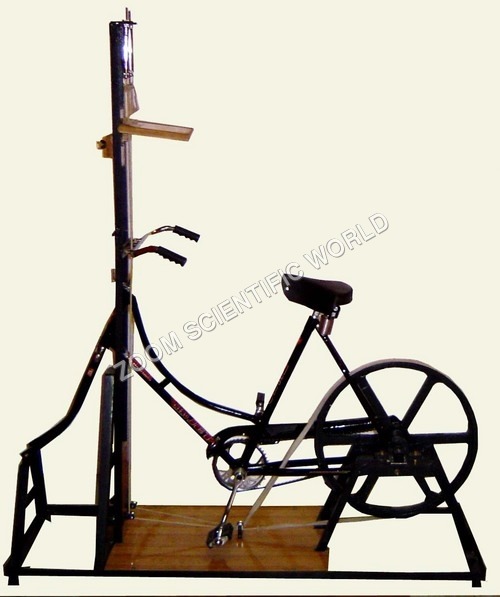
Tell us about your requirement

Price:
Quantity
Select Unit
- 50
- 100
- 200
- 250
- 500
- 1000+
Additional detail
Mobile number
Email

More Products in Scientific Product Category

Karl Fischer Trimeters
Price 141 INR / Unit
Minimum Order Quantity : 1 Unit
Color : White
Usage : Laboratory Use
Material : Mild Steel
Product Type : Fischer Trimeters

Andresen's Pipettes
Price 10 INR / Piece
Minimum Order Quantity : 1 Piece
Color : Transparent
Usage : Chemical Laboratory
Material : Plastic And Glass
Product Type : Pipettes

Plastic Animal Cage
Price 100 INR / Piece
Minimum Order Quantity : 1 Piece
Color : White
Usage : Clinic Purpose
Material : Plastic
Product Type : Animal Cage
Microtome
Price 150 INR / Unit
Minimum Order Quantity : 1 Unit
Color : White
Usage : Industrial, Commercial
Material : Stainless steel
Product Type : Microtome

ZOOM SCIENTIFIC WORLD
GST : 06ALAPA6623N1Z8
GST : 06ALAPA6623N1Z8
Contact Details

- 4537/1 A, Bldg. 13, Deepak Market, Ist Ambala - 133001, Haryana, India
- Phone : 08045478393
- Export Import Code (IEC code) - 3312001811
SSI No. - 060021100476

- Mr Sahil Aggarwal (GENERAL MANAGER)
- Mobile : 08045478393

|



ZOOM SCIENTIFIC WORLD
All Rights Reserved.(Terms of Use)
Developed and Managed by Infocom Network Private Limited.
Developed and Managed by Infocom Network Private Limited.
