



 Send Inquiry
BLOOD VESSEL MODEL
Price 107 INR/ Piece
MOQ : 1 , , Piece
BLOOD VESSEL MODEL Specification
- Material
- Pvc Plastic
- Product Type
- vessel model
- Color
- Red And White
- Usage
- Teaching Aid
- Finish
- Smooth Painted Surface
- Mount Type
- Mounted on Base
- Shape
- Represents Artery and Vein Structure
- Educational Level
- School, College, Medical Training
BLOOD VESSEL MODEL Trade Information
- Minimum Order Quantity
- 1 , , Piece
- Payment Terms
- Cash in Advance (CID), Cash Advance (CA)
- Supply Ability
- 100 Pieces Per Week
- Delivery Time
- 1 Week
- Sample Available
- Yes
- Sample Policy
- Sample costs shipping and taxes has to be paid by the buyer
- Main Export Market(s)
- Asia, Australia, Western Europe, Middle East, Central America, Eastern Europe, South America, North America, Africa
- Main Domestic Market
- All India
BLOOD VESSEL MODEL About
Understanding the mechanism of blood vessel formation has been an important subject in recent medical research. Various experiments and models have been proposed, yet fully understanding the mechanism has been challenging. This paper is meant to be a brief description of experimental results and methods of modeling the blood vessel formation.
Models are compared with experimental data for the process of both vasculogenesis and angiogenesis to discuss how physical assumptions in the models lead to the understanding of biological mechanism.
The human body has a complex circulatory system. Blood circulates in the entire body through arteries, capillaries, the heart and veins. It is these blood vessels that enable client exchange of oxygen and nutrients and the removal of waste products in the body. For this reason, blood vessels play a role in virtually every medical condition. Understanding the blood-vascular system and its formation is an important task, because it will directly lead to the cure of various diseases.
Formation of blood vessels begins in the early stage of embryonic development, and is achieved by two successive processes: vasculogenesis and angiogenesis.
Blood vessel formation originates in an aggregations of cells called blood islands that form in the embryonic yolk sac, a membranous sac attached to an embryo.
Models are compared with experimental data for the process of both vasculogenesis and angiogenesis to discuss how physical assumptions in the models lead to the understanding of biological mechanism.
The human body has a complex circulatory system. Blood circulates in the entire body through arteries, capillaries, the heart and veins. It is these blood vessels that enable client exchange of oxygen and nutrients and the removal of waste products in the body. For this reason, blood vessels play a role in virtually every medical condition. Understanding the blood-vascular system and its formation is an important task, because it will directly lead to the cure of various diseases.
Formation of blood vessels begins in the early stage of embryonic development, and is achieved by two successive processes: vasculogenesis and angiogenesis.
Blood vessel formation originates in an aggregations of cells called blood islands that form in the embryonic yolk sac, a membranous sac attached to an embryo.
Detailed Representation of Blood Vessels
This blood vessel model accurately depicts both arteries and veins, providing a distinct view of the circulatory systems core structures. The red and white coloring allows for straightforward identification, making it an excellent aid for explaining blood flow and vessel roles during biological studies or medical sessions.
Robust PVC Construction and Easy Maintenance
Crafted from high-grade PVC plastic, the model is built to withstand repeated handling in educational settings. Its smooth, painted surface not only looks realistic but is also easy to wipe clean, ensuring longevity and hygiene for repeated classroom or demonstration use.
Versatile Usage for All Educational Levels
Ideal for use in schools, colleges, and medical training centers, this model offers versatile educational support. Whether for introductory lessons or advanced anatomy training, it helps learners at every stage visualize and understand complex circulatory pathways efficiently.
FAQs of BLOOD VESSEL MODEL:
Q: How can the Blood Vessel Model be used in classroom teaching?
A: The Blood Vessel Model serves as a hands-on visual aid for demonstrating the structure and function of arteries and veins, making anatomical concepts more accessible for students during biology or health science lessons.Q: What is the model made from and is it durable?
A: The model is constructed from sturdy PVC plastic, providing durability for frequent handling and usage in educational environments without compromising detail or quality.Q: When should this model be incorporated into a curriculum?
A: This model is best used during lessons on the circulatory system, blood flow, or vascular anatomy at any stage of education, from basic science to detailed medical training.Q: Where is the Blood Vessel Model best placed for demonstrations?
A: It is designed to be mounted on a stable base, making it suitable for desktop or table-top use during lectures, workshops, and student practical sessions.Q: What benefits does the model offer over textbook images?
A: Unlike flat images, the three-dimensional design provides a tactile and spatial view of vascular elements, supporting more interactive, comprehensible, and memorable learning experiences.Q: How should the model be maintained for longevity?
A: Simply wiping the smooth, painted surface with a damp cloth after use will help keep the model clean and maintain its appearance for many years.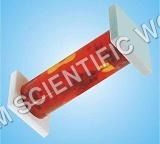
Tell us about your requirement

Price:
Quantity
Select Unit
- 50
- 100
- 200
- 250
- 500
- 1000+
Additional detail
Mobile number
Email

More Products in Human Anatomy Models Category
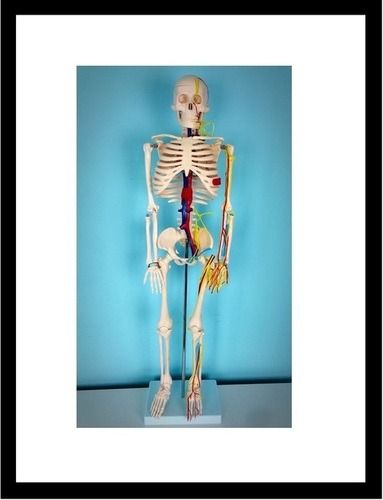
Human Skeleton with Nerves & Blood vessels
Price 140 INR / Piece
Minimum Order Quantity : 1 Piece
Usage : Educational Demonstration, Medical Training, Student Learning
Dimension (L*W*H) : Approx. 170 cm (Height) x 40 cm (Width) x 25 cm (Depth)
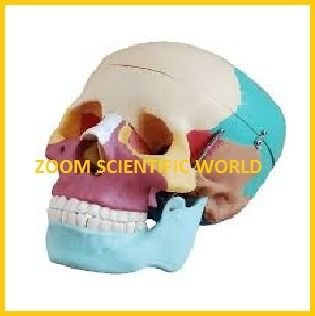
Adult Skull (Coloured)
Price 107 INR / Piece
Minimum Order Quantity : 1 Piece
Usage : Educational, Demonstration, Medical Training, Classroom Teaching
Dimension (L*W*H) : Approx. 20 x 15 x 15 cm
HUMAN EYE WITH LID
Price 110 INR / Piece
Minimum Order Quantity : 1 , , Piece
Material : PVC Plastic
Color : Natural
HUMAN TORSO MALE
Price 120 INR / Piece
Minimum Order Quantity : 1 , , Piece
Usage : Medical
Material : PVC, Fibelrglass
Color : Skin Color

ZOOM SCIENTIFIC WORLD
GST : 06ALAPA6623N1Z8
GST : 06ALAPA6623N1Z8
Contact Details

- 4537/1 A, Bldg. 13, Deepak Market, Ist Ambala - 133001, Haryana, India
- Phone : 08045478393
- Export Import Code (IEC code) - 3312001811
SSI No. - 060021100476

- Mr Sahil Aggarwal (GENERAL MANAGER)
- Mobile : 08045478393

|



ZOOM SCIENTIFIC WORLD
All Rights Reserved.(Terms of Use)
Developed and Managed by Infocom Network Private Limited.
Developed and Managed by Infocom Network Private Limited.
