




 Send Inquiry
Buchner Funnel
Price 18 INR/ Piece
Buchner Funnel Specification
- Usage
- Chemical Laboratory
- Product Type
- Buchner Funnel
- Color
- Transparent
- Material
- Glass
- Top Diameter
- Varies as per capacity
- Joint Size
- Standard ground joint sizes available
- Sterilizability
- Can be sterilized by standard laboratory methods
- Surface Finish
- Smooth, glossy
- O-Ring Compatibility
- May be used with rubber seal or stopper
- Autoclavable
- Yes
- Bottom Outlet
- Fitted for stem or direct collection in flask
Buchner Funnel Trade Information
- Minimum Order Quantity
- 1 Pack
- Payment Terms
- Cash in Advance (CID), Cash Advance (CA)
- Supply Ability
- 1000 Packs Per Week
- Delivery Time
- 1 Week
- Sample Available
- Yes
- Sample Policy
- Sample costs shipping and taxes has to be paid by the buyer
- Main Export Market(s)
- Western Europe, Asia, South America, Eastern Europe, Middle East, Central America, North America, Australia, Africa
- Main Domestic Market
- All India
Buchner Funnel About
Buchner Funnel:- with sintered disc plain stem.
Catalogue No. Capacity ml. Porosity Grade Disc Dia. mm.
801/01 35 G 1 30
801/02 35 G 2 30
801/03 35 G 3 30
801/04 35 G 4 30
801/05 80 G 1 40
801/06 80 G 2 40
801/07 80 G 3 40
801/08 80 G 4 40
801/09 100 G 1 50
801/10 100 G 2 50
801/11 100 G 3 50
801/12 100 G 4 50
801/13 200 G 1 65
801/14 200 G 2 65
801/15 200 G 3 65
801/16 200 G 4 65
801/17 500 G 1 90
801/18 500 G 2 90
801/19 500 G 3 90
801/20 500 G 4 90
801/21 1000 G 1 120
801/22 1000 G 2 120
801/23 1000 G 3 120
801/24 1000 G 4 120
Buchner Funnel:- with sintered disc & cone at stem.
Catalogue No. Capacity ml. Porosity Grade Disc Dia. mm. Cone Size
802/01 35 G 1 30 B 14 or B 19
802/02 35 G 2 30 B 14 or B 19
802/03 35 G 3 30 B 14 or B 19
802/04 35 G 4 30 B 14 or B 19
802/05 80 G 1 40 B 14 or B 19
802/06 80 G 2 40 B 14 or B 19
802/07 80 G 3 40 B 14 or B 19
802/08 80 G 4 40 B 14 or B 19
802/09 125 G 1 50 B 19 or B 24
802/10 125 G 2 50 B 19 or B 24
802/11 125 G 3 50 B 19 or B 24
802/12 125 G 4 50 B 19 or B 24
802/13 200 G 1 65 B 19 or B 24
802/14 200 G 2 65 B 19 or B 24
802/15 200 G 3 65 B 19 or B 24
802/16 200 G 4 65 B 19 or B 24
Reliable Laboratory Filtration
The Buchner Funnel is an essential tool for laboratory professionals, delivering dependable filtration for a range of chemical and analytical procedures. Its transparent glass body allows for easy observation of the filtration process, while the fitted bottom outlet offers seamless liquid collection. Laboratories value its adaptability due to the compatibility of joint sizes and the option to use various stoppers or vacuum setups as required.
Robust and Reusable Design
Crafted from high-quality glass, the Buchner Funnel stands out for its durability and ability to withstand chemical exposure. Its surface finish ensures quick, thorough cleaning and resists the residue build-up common with repeated use. Crucially, the funnel can be effectively sterilized using standard laboratory techniques, maintaining hygiene and integrity for multiple filtration cycles.
Applications Across Chemical Laboratories
From organic synthesis to analytical methodology, the Buchner Funnel finds applications across numerous laboratory settings. Its fitted outlets and compatibility with standard joint sizes support integration into diverse setups for solid-liquid separation and purification. A smooth and glossy surface finish further facilitates precise and contamination-free chemical handling, ensuring reliable results in various scientific investigations.
FAQs of Buchner Funnel:
Q: How is the Buchner Funnel typically used in laboratory filtration?
A: The Buchner Funnel is commonly set atop a filtering flask, with a rubber seal or stopper to ensure an airtight fit. Liquid-solid mixtures are poured into the funnel, and vacuum is applied to draw the liquid through the filter paper, leaving solids behind. This setup is ideal for efficient solid-liquid separation.Q: What are the benefits of using a glass Buchner Funnel over plastic alternatives?
A: Glass Buchner Funnels provide excellent chemical resistance, transparency for process monitoring, and easy sterilization by standard methods. Their robust construction is reusable, reducing waste and ensuring durability even with frequent laboratory use.Q: Where should the Buchner Funnel be connected during filtration processes?
A: The funnels bottom outlet is designed for connection to a flask, either using a fitted stem or for direct collection. Standard ground joints enable easy integration with most lab setups, ensuring a secure and leak-proof filtration environment.Q: How do you sterilize a Buchner Funnel after use?
A: The Buchner Funnel can be sterilized using standard laboratory techniques, such as autoclaving or chemical sterilization, due to its quality glass construction. Ensure all components are clean and dry before reuse to maintain sample integrity.Q: What process is involved in setting up a Buchner Funnel for vacuum filtration?
A: After placing filter paper in the funnel and moistening it, the funnel is set atop a compatible filtering flask, connected via a rubber seal or ground joint. Once assembled, a vacuum source draws liquid through the filter, trapping solids on the paper and collecting the filtrate below.Q: Which laboratory tasks are best suited for the Buchner Funnel?
A: The Buchner Funnel excels in chemical laboratories for tasks such as solid-liquid separation, purifications, recrystallizations, and sample clarifications, particularly where vacuum-assisted filtration is required for improved speed and efficiency.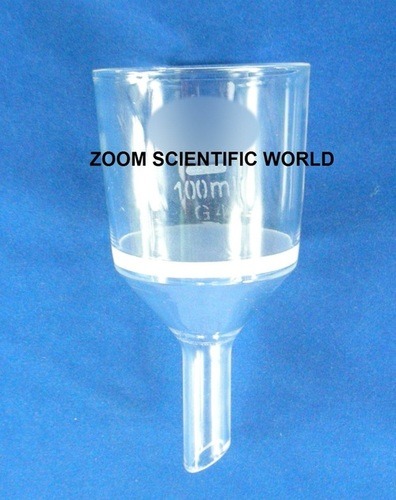

Price:
- 50
- 100
- 200
- 250
- 500
- 1000+

More Products in Lab Glassware Category
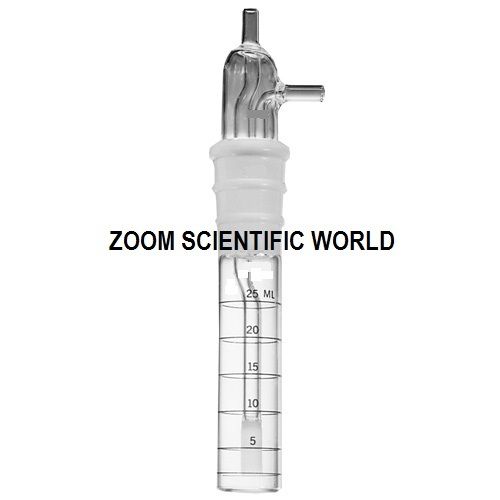
Impinger
Price 21 INR / Piece
Minimum Order Quantity : 1 Piece
Color : Transparent
Usage : Chemical Laboratory
Product Type : Impinger
Material : Glass
Glass Test Tube
Price 10 INR / Piece
Minimum Order Quantity : 1 Piece
Color : Transparent
Usage : Chemical Laboratory
Product Type : Test Tube
Material : Glass
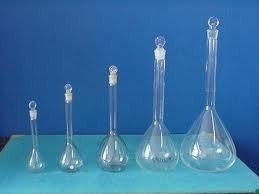
Volumetric Flask
Price 63 INR / Piece
Minimum Order Quantity : 1 Piece
Color : Transparent
Usage : Laboratory
Product Type : Flask
Material : Glass
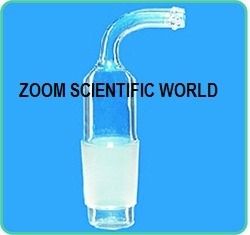
Adapters Cone To Rubber Tubing Right Angle Connection
Price 10 INR / Piece
Minimum Order Quantity : 1 Piece
Color : Transparent
Usage : Chemical Laboratory, Laboratory Glassware
Product Type : Adapters Cone To Rubber Tubing
Material : Glass

GST : 06ALAPA6623N1Z8

- 4537/1 A, Bldg. 13, Deepak Market, Ist Ambala - 133001, Haryana, India
- Phone : 08045478393
- Export Import Code (IEC code) - 3312001811
SSI No. - 060021100476

- Mr Sahil Aggarwal (GENERAL MANAGER)
- Mobile : 08045478393

|



Developed and Managed by Infocom Network Private Limited.
