




 Send Inquiry
Burettes With Screw Type Rotaflow Stopcock With PTFE Key
Price 20 INR/ Piece
Burettes With Screw Type Rotaflow Stopcock With PTFE Key Specification
- Usage
- Chemical Laboratory
- Product Type
- PTFE Key
- Color
- Transparent
- Material
- Glass
- Stopcock Type
- Rotaflow Screw Type
- Surface
- Smooth & Transparent for Easy Reading
- Autoclavable
- Yes (up to standard laboratory autoclave temperature)
- Graduation Accuracy
- ISO/ASTM Standards
- Stopcock Material
- PTFE (Polytetrafluoroethylene)
- Joint Type
- Standard Burette Tip
- Reusable
- Yes
- Chemical Resistance
- Excellent to Acids, Alkalis, and Solvents
Burettes With Screw Type Rotaflow Stopcock With PTFE Key Trade Information
- Minimum Order Quantity
- 1 Piece
- Payment Terms
- Cash in Advance (CID), Cash Advance (CA)
- Supply Ability
- 1000 Pieces Per Week
- Delivery Time
- 1 Week
- Sample Available
- Yes
- Sample Policy
- Sample costs shipping and taxes has to be paid by the buyer
- Main Export Market(s)
- Western Europe, Middle East, Central America, Eastern Europe, South America, Asia, North America, Australia, Africa
- Main Domestic Market
- All India
Burettes With Screw Type Rotaflow Stopcock With PTFE Key About
Burettes With Screw Type Rotaflow Stopcock With PTFE Key:-
Catalogue No. Capacity ml. Sub-Div ml.
602/01 1 0.01
602/02 2 0.02
602/03 5 0.02
602/04 10 0.05
602/05 25 0.10
602/06 50 0.10
602/07 100 0.20
(Burettes 1 to 10 ml. with cup top)
Durability Meets Precision
With their glass construction and PTFE (Polytetrafluoroethylene) key, these burettes offer superior chemical resistance, making them exceptionally durable during repeated laboratory usage. The surface remains smooth and transparent, ensuring that measurement graduations are always visible, while the screw-type Rotaflow stopcock delivers precise control over liquid flow, crucial for accurate titration work.
Safe and Versatile Laboratory Essential
Engineered to be fully autoclavable, these burettes can confidently withstand standard laboratory sterilization procedures. The use of a PTFE stopcock minimizes the risk of contamination and provides excellent sealing, preventing leaks and ensuring safety during experiments involving aggressive chemical reagents. Suitable for a wide range of analytical and educational laboratory environments.
FAQs of Burettes With Screw Type Rotaflow Stopcock With PTFE Key:
Q: How do I properly use a burette with screw type Rotaflow stopcock and PTFE key?
A: To use the burette, fill it with the desired solution, ensuring it is vertical and set to zero. Carefully operate the screw-type Rotaflow stopcock to control the flow of liquid during titration, achieving precise measurements for your experiment.Q: What benefits does the PTFE key provide in these burettes?
A: The PTFE key offers high resistance to acids, alkalis, and solvents. This ensures smooth operation, prevents leaks, and extends the burettes service life, even with aggressive chemicals.Q: Can these burettes be sterilized by autoclaving?
A: Yes, these burettes are autoclavable and can be safely sterilized at standard laboratory autoclave temperatures, ensuring they remain contaminant-free for repeated use.Q: Where are these burettes most commonly used?
A: They are widely used in chemical laboratories for titration, analytical chemistry, and educational experiments, where precise liquid measurement and dispensing are required.Q: What is the process for cleaning and maintaining these burettes?
A: After use, rinse the burette with distilled water and, if necessary, appropriate cleaning solutions. Ensure the stopcock is disassembled and thoroughly cleaned to maintain smooth, accurate operation and avoid residue build-up.Q: What ensures the accuracy of measurements in these burettes?
A: The burettes feature clear graduation markings that comply with ISO/ASTM standards and a smooth, transparent surface for easy reading, thus ensuring precise and reliable volume measurements.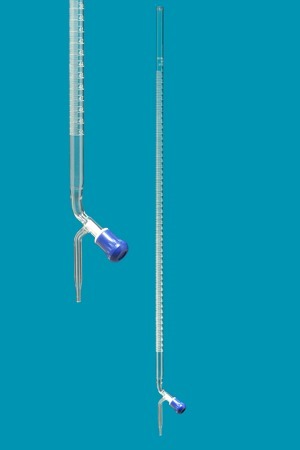

Price:
- 50
- 100
- 200
- 250
- 500
- 1000+

More Products in Lab Glassware Category
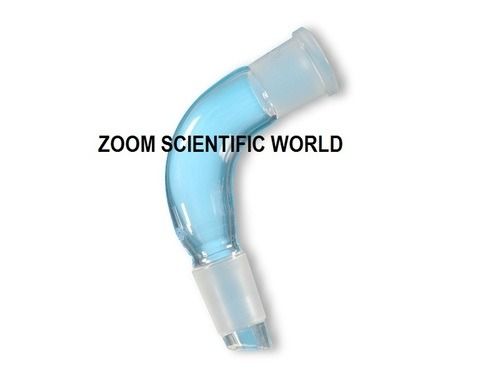
Plains Bends Receiver Adapters
Price 10 INR / Piece
Minimum Order Quantity : 1 Piece
Color : Transparent
Product Type : Bends Receiver
Material : Glass
Usage : Laboratory

Cell Condenser Reversible Type
Price 10 INR / Piece
Minimum Order Quantity : 1 Piece
Color : Transparent
Product Type : Cell Condenser
Material : Glass
Usage : Laboratory

Stopcocks Straight Bore
Price 15 INR / Piece
Minimum Order Quantity : 1 , , Piece
Color : Transparent
Product Type : Stopcocks
Material : Glass
Usage : Laboratory
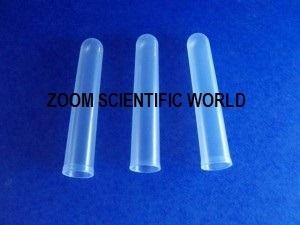
Test Tubes
Price 14 INR / Piece
Minimum Order Quantity : 1 Piece
Color : Transparent
Product Type : Test Tubes
Material : Glass
Usage : Chemical Laboratory

GST : 06ALAPA6623N1Z8

- 4537/1 A, Bldg. 13, Deepak Market, Ist Ambala - 133001, Haryana, India
- Phone : 08045478393
- Export Import Code (IEC code) - 3312001811
SSI No. - 060021100476

- Mr Sahil Aggarwal (GENERAL MANAGER)
- Mobile : 08045478393

|



Developed and Managed by Infocom Network Private Limited.
