




 Send Inquiry
CELL SCRAPER
Price 10 INR/ Piece
CELL SCRAPER Specification
- Material
- Plastic
- Product Type
- Cell Scraper
- Color
- White
- Usage
- Chemical Laboratory
- Edge Type
- Flexible or rigid (model specific)
- Handle Design
- Ergonomic, for secure grip
- Length
- Approx. 20 cm
- Application
- Cell culture harvesting, tissue scraping
- Sterility
- Yes, sterile
- Packaging
- Individually wrapped
CELL SCRAPER Trade Information
- Minimum Order Quantity
- 1 Piece
- Payment Terms
- Cash in Advance (CID), Cash Advance (CA)
- Supply Ability
- 1000 Pieces Per Week
- Delivery Time
- 1 Week
- Sample Available
- Yes
- Sample Policy
- Sample costs shipping and taxes has to be paid by the buyer
- Main Export Market(s)
- Western Europe, Asia, North America, South America, Middle East, Central America, Eastern Europe, Australia, Africa
- Main Domestic Market
- All India
About CELL SCRAPER
With an impressive growth record across the industry, we are able to manufacture and supply a broad assortment of Cell Scraper. These scrappers are known for their durability and quality standards. Made by utilizing high quality polypropylene material, these scrappers retain optimum service life at users end. Our Cell Scraper is used for providing excellent cell scrapping in microbiology applications. Further, these are available with the size specifications of 240mm and 300mm.
Features:
- Performance specific
- Durable standards
- Fine scrapping properties
Precision Cell Harvesting
Engineered for smooth and reliable scraping, the Cell Scraper is indispensable for extracting adherent cells from culture vessels. Its flexible or rigid blade, determined by model selection, easily adapts to culture dish contours, ensuring optimal recovery of cell monolayers without damaging underlying surfaces. This makes it suitable for both tissue culture flasks and Petri dishes, enhancing laboratory workflow and data consistency.
Sterile and Individually Wrapped
Each Cell Scraper comes individually wrapped in sterile packaging, safeguarding against contamination prior to use. This design greatly reduces cross-contamination risks and supports compliance with strict laboratory protocols, making it a preferred choice for sensitive applications such as cell culture, tissue scraping, and related research processes in chemical laboratories.
FAQs of CELL SCRAPER:
Q: How is the Cell Scraper used in laboratory procedures?
A: To use the Cell Scraper, gently hold the ergonomic handle and move the flexible or rigid blade across the vessel surface to detach and collect adherent cells or tissues. It is especially designed for effective retrieval from culture dishes and flasks.Q: What benefits does the Cell Scraper offer compared to other harvesting tools?
A: The Cell Scraper offers gentle, efficient removal of cell layers while minimizing cell damage. Its sterile, individually wrapped packaging ensures contamination-free handling, while the ergonomic grip allows for precise and comfortable operation.Q: When should I use a flexible versus a rigid Cell Scraper?
A: Use a flexible blade for curved or delicate surfaces where you need gentle contact, and a rigid blade when more pressure or control is needed, typically on flat surfaces. Select the model that best matches your vessel and application requirements.Q: Where is the Cell Scraper commonly employed?
A: Cell Scrapers are widely used in chemical and biological laboratories, particularly for cell culture harvesting, tissue scraping, and sample collection in both research and clinical settings.Q: What is the correct way to maintain sterility when using the Cell Scraper?
A: Always open the sterile individual packaging right before use, avoid touching the blade with non-sterile surfaces, and dispose of the scraper after a single use to maintain aseptic technique and prevent contamination in sensitive laboratory procedures.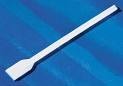

Price:
- 50
- 100
- 200
- 250
- 500
- 1000+

More Products in Lab Plasticware Category
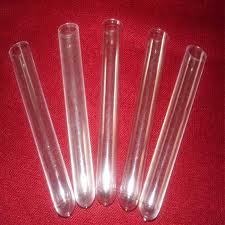
Ria Vial
Price 12 INR / Piece
Minimum Order Quantity : 1 Piece
Color : Transparent
Product Type : Ria Vial
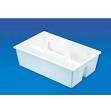
CARRIER TRAY
Price 10 INR / Piece
Minimum Order Quantity : 1 Piece
Color : White
Product Type : Tray
Material : Plastic
Usage : Chemical Laboratory

Aspirator Bottles
Price 105 INR / Piece
Minimum Order Quantity : 1 Piece
Color : White
Product Type : Bottles
Material : Polypropylene
Usage : Chemical Laboratory
Centrifuge Tubes with round bottom
Price 10 INR / Piece
Minimum Order Quantity : 1 Piece
Color : White
Product Type : Centrifuge Tubes
Material : Polypropylene
Usage : Centrifugation

GST : 06ALAPA6623N1Z8

- 4537/1 A, Bldg. 13, Deepak Market, Ist Ambala - 133001, Haryana, India
- Phone : 08045478393
- Export Import Code (IEC code) - 3312001811
SSI No. - 060021100476

- Mr Sahil Aggarwal (GENERAL MANAGER)
- Mobile : 08045478393

|



Developed and Managed by Infocom Network Private Limited.
