




 Send Inquiry
Colourimetric Tubes
Price 16 INR/ Piece
MOQ : 1 Piece
Colourimetric Tubes Specification
- Usage
- Chemical Laboratory
- Product Type
- Tubes
- Color
- Transparent
- Material
- Glass
- Detection Range
- Specific to tested substance (check reference chart)
- Operation
- Break tube tips, aspirate air, read colourimetric change
- Chemical Resistance
- High resistance to acids and chemicals
- Diameter
- Standard 6 mm (can vary)
- Packing
- Typically box of 10 or 20 tubes
Colourimetric Tubes Trade Information
- Minimum Order Quantity
- 1 Piece
- Payment Terms
- Cash in Advance (CID), Cash Advance (CA)
- Supply Ability
- 1000 Pieces Per Week
- Delivery Time
- 1 Week
- Sample Available
- Yes
- Sample Policy
- Sample costs shipping and taxes has to be paid by the buyer
- Main Export Market(s)
- North America, South America, Eastern Europe, Western Europe, Middle East, Central America, Asia, Australia, Africa
- Main Domestic Market
- All India
Colourimetric Tubes About
Colourimetric Tubes:-
Catalogue No.831:- Flat bottom with B-24 standard socket,total length 280 mm., O.D. 28 mm., with stopper
Colourimetric Tubes:-
Catalogue No.832:- Flat bottom with B-24 standard socket,total length 280 mm., O.D. 28 mm., without stopper
Reliable Onsite Gas Detection
Colourimetric tubes provide a robust solution for quick gas and vapor detection directly at the point of need. Their simple break-and-read process eliminates the requirement for complex instrumentation, making them highly practical and accessible for laboratory and field environments alike. This tool is especially beneficial for routine monitoring where timely results are critical.
Clear and Immediate Results
Designed for ease of use, these transparent glass tubes deliver visual, color-based results that can be read and interpreted within minutes. Lab personnel benefit from fast screenings or verifications, streamlining workflows and boosting productivity. Reference charts included with the tubes ensure accurate substance identification and concentration estimations.
FAQs of Colourimetric Tubes:
Q: How do colourimetric tubes work for gas detection?
A: Colourimetric tubes operate by aspirating air through the tube after both tips are broken. If the target gas or vapor is present, the reagents inside react to produce a color change. This change is then compared against a reference chart to determine concentration.Q: What substances can be detected with colourimetric tubes?
A: Each tube is designed to detect a specific gas or vapor, such as ammonia, chlorine, or carbon monoxide. The detection range varies by substance, and details can be found in the corresponding reference chart for each tube type.Q: When should I use colourimetric tubes in the laboratory?
A: These tubes are ideal for periodic safety checks, emergency leak detection, routine monitoring, or whenever a quick, onsite qualitative or semi-quantitative gas analysis is required.Q: Where are colourimetric tubes commonly used?
A: They are widely used in chemical laboratories, industrial sites, and locations where environmental or occupational gas monitoring is necessary. Their portability makes them suitable for both on-site and laboratory applications.Q: What is the process for using a colourimetric tube?
A: To use, simply break off the tubes ends, connect it to an air aspirator or pump, and draw the sample air through the tube. Read the color change and consult the reference chart for identification and concentration.Q: What are the benefits of using colourimetric tubes over electronic detectors?
A: Colourimetric tubes offer immediate results without calibration, do not require batteries or electronics, and are affordable for routine or widespread screening.
Tell us about your requirement

Price:
Quantity
Select Unit
- 50
- 100
- 200
- 250
- 500
- 1000+
Additional detail
Mobile number
Email

More Products in Lab Glassware Category

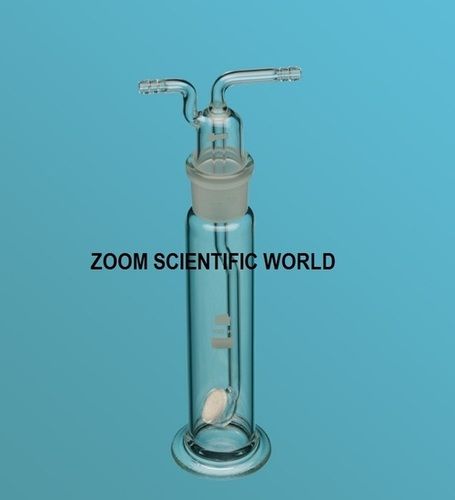
Gas Washing Bottles
Price 17 INR / Piece
Minimum Order Quantity : 1 Piece
Material : Glass
Product Type : Bottles
Color : Transparent
Usage : Chemical Laboratory
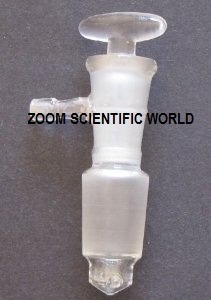
Vacuum Control Stopcock
Price 10 INR / Piece
Minimum Order Quantity : 1 Piece
Material : Glass
Product Type : Control Stopcock
Color : Transparent
Usage : Laboratory

Stirring Rod
Price 12 INR / Piece
Minimum Order Quantity : 1 Piece
Material : Glass
Product Type : Rod
Color : Transparent
Usage : Chemical Laboratory

ZOOM SCIENTIFIC WORLD
GST : 06ALAPA6623N1Z8
GST : 06ALAPA6623N1Z8
Contact Details

- 4537/1 A, Bldg. 13, Deepak Market, Ist Ambala - 133001, Haryana, India
- Phone : 08045478393
- Export Import Code (IEC code) - 3312001811
SSI No. - 060021100476

- Mr Sahil Aggarwal (GENERAL MANAGER)
- Mobile : 08045478393

|



ZOOM SCIENTIFIC WORLD
All Rights Reserved.(Terms of Use)
Developed and Managed by Infocom Network Private Limited.
Developed and Managed by Infocom Network Private Limited.
