




 Send Inquiry
Distillation Assembly
Price 14 INR/ Piece
Distillation Assembly Specification
- Usage
- Chemical Laboratory
- Product Type
- Distillation Assembly
- Color
- Transparent
- Material
- Glass
- Operating Pressure
- Atmospheric
- Cleaning Requirements
- Autoclavable and Easy to Clean
- Connection Type
- Standard Tapered Joint
- Heat Source Compatibility
- Compatible with Bunsen Burner, Electric Heating Mantle or Oil Bath
- Chemical Compatibility
- Compatible with Acids, Alkalis, Solvents
- Mounting
- Frame/Retort Stand with Clamps
- Number of Components
- Typically includes Liebig Condenser, Round Bottom Flask, Adapter, Receiving Flask, Stand, and Clamps
Distillation Assembly Trade Information
- Minimum Order Quantity
- 1 , Piece
- Payment Terms
- Cash in Advance (CID), Cash Advance (CA)
- Supply Ability
- 1000 Pieces Per Week
- Delivery Time
- 1 Week
- Sample Available
- Yes
- Sample Policy
- Sample costs shipping and taxes has to be paid by the buyer
- Main Export Market(s)
- Australia, South America, Eastern Europe, Western Europe, Middle East, Central America, Asia, North America, Africa
- Main Domestic Market
- All India
Distillation Assembly About
Distillation Assembly:-
1) Distillation Assembly Simple Type of R.B. flask,recovery bend,leibig condenser receiver adapter.
2) Distillation Assembly consisting of R.B. flask splash head,leibig condenser & receiver adapter.
Catalogue No. Flask Capacity ml. Condenser Effective Length
386/01 250 200
386/02 500 300
386/03 1000 350
386/04 2000 400
Versatile Laboratory Separation
The Distillation Assembly provides an efficient method to separate components in liquid mixtures through controlled heating and condensation. Its all-glass construction ensures chemical compatibility and allows clear observation of the distillation process, making it ideal for educational, research, and general laboratory use.
Durable and Chemically Resistant
Manufactured from premium glass, the assembly stands up to frequent heating and exposure to strong chemicals, including acids and alkalis. Its robust joints and clamps guarantee secure connections during use. Daily cleaning and periodic sterilization are straightforward, supporting long-term laboratory hygiene and safety.
Flexible Mounting and Heating Options
Designed for easy setup, the assembly mounts onto retort stands using provided clamps. It operates effectively with standard laboratory heat sources, offering flexibility according to experimental requirements. This adaptability makes it a valuable tool in both academic and industrial laboratory environments.
FAQs of Distillation Assembly:
Q: How is the Distillation Assembly typically set up in the laboratory?
A: The assembly is mounted securely on a frame or retort stand using supplied clamps. Standard tapered glass joints allow easy and leak-free connections between components. Users position the round bottom flask over their chosen heat source and connect the condenser and receiving flask as required.Q: What chemicals and heat sources are compatible with this assembly?
A: The glass used in this distillation assembly is fully compatible with acids, alkalis, and common solvents. It can be safely heated using a Bunsen burner, electric heating mantle, or oil bath, providing broad flexibility for various distillation applications.Q: When should the assembly be cleaned and sterilized?
A: The assembly should be cleaned after each use to maintain performance and laboratory hygiene. Its autoclavable nature permits high-temperature sterilization when needed, especially after distilling hazardous or biological samples.Q: Where should this distillation setup be installed for safe operation?
A: Install the assembly on a stable, heat-resistant bench with ample ventilation. Ensure that the assembly is securely clamped and placed away from flammable materials or direct drafts to guarantee both safety and efficiency.Q: What are the main benefits of using a glass distillation assembly?
A: Glass provides excellent chemical resistance, clarity for monitoring the process, and is easy to sterilize. This ensures accurate, reproducible results and makes the equipment suitable for a wide range of laboratory distillation processes.Q: How does the process of distillation work with this assembly?
A: Liquid mixture is heated in the round bottom flask; the vapor travels into the condenser, where it cools and returns to liquid form. This distillate is collected in the receiving flask, effectively separating substances based on their boiling points.

Price:
- 50
- 100
- 200
- 250
- 500
- 1000+

More Products in Lab Glassware Category
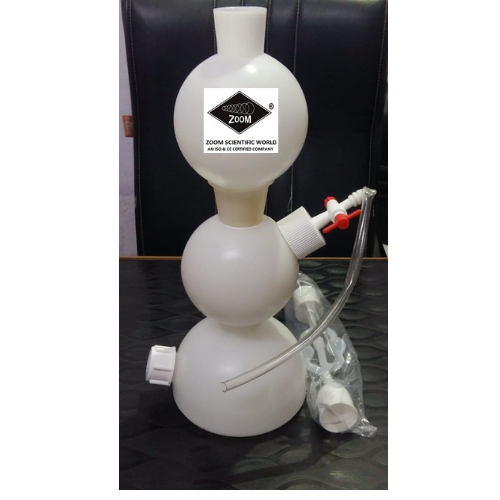
Kipps Apparatus
Price 975 INR / Piece
Minimum Order Quantity : 1 Piece
Usage : Chemical Laboratory
Material : Glass
Color : White
Product Type : Apparatus
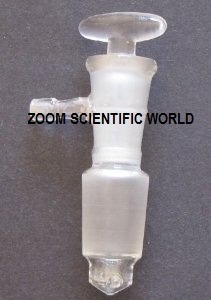
Vacuum Control Stopcock
Price 10 INR / Piece
Minimum Order Quantity : 1 Piece
Usage : Laboratory
Material : Glass
Color : Transparent
Product Type : Control Stopcock

Stopcock For Aspirators 4mm. Bore
Price 10 INR / Piece
Minimum Order Quantity : 1 , , Piece
Usage : Laboratory
Material : Glass
Color : Transparent
Product Type : Stopcock
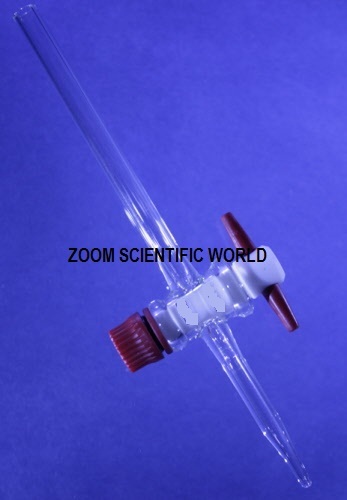
Gas Measuring Burettes
Price 16 INR / Piece
Minimum Order Quantity : 1 Piece
Usage : Chemical Laboratory
Material : Glass And Plastic
Color : Transparent
Product Type : Gas Measuring

GST : 06ALAPA6623N1Z8

- 4537/1 A, Bldg. 13, Deepak Market, Ist Ambala - 133001, Haryana, India
- Phone : 08045478393
- Export Import Code (IEC code) - 3312001811
SSI No. - 060021100476

- Mr Sahil Aggarwal (GENERAL MANAGER)
- Mobile : 08045478393

|



Developed and Managed by Infocom Network Private Limited.
