




 Send Inquiry
DOUBLE BEAM SPECTROPHOMETER
Price 140 INR/ Unit
DOUBLE BEAM SPECTROPHOMETER Specification
- Product Type
- Spectrophotometer
- Material
- Mild Steel
- Usage
- Laboratory Use
- Color
- White
- Voltage
- 110-240 Volt (v)
- Spectral Bandwidth
- 2 nm
- Software Compatibility
- Windows OS
- Stray Light
- 0.05% T
- Detector Type
- Silicon Photodiode
- Data Interface
- USB Port, RS232
- Wavelength Accuracy
- 0.5 nm
- Light Source
- Halogen and Deuterium Lamp
- Baseline Flatness
- 0.002 Abs
- Power Consumption
- 70 W
DOUBLE BEAM SPECTROPHOMETER Trade Information
- Minimum Order Quantity
- 1 , Unit
- Payment Terms
- Cash Advance (CA), Cash in Advance (CID)
- Supply Ability
- 100 Units Per Week
- Delivery Time
- 1 Week
- Sample Available
- Yes
- Sample Policy
- Sample costs shipping and taxes has to be paid by the buyer
- Main Export Market(s)
- Australia, South America, Eastern Europe, Western Europe, Middle East, Asia, Central America, North America, Africa
- Main Domestic Market
- All India
DOUBLE BEAM SPECTROPHOMETER About
DOUBLE BEAM SPECTROPHOMETER
Range 190-1100 nm, basic/quantiative wavelength scan/DNA Protein Test/Kinetic, automatic peak picking & spectrum display. Large screen with graphic display. Spectrum and data can be printed out by printer and sent to computer via USB PORT. Set of 4 quartz and 4 glass cuvettes is provided. Software Included (Imported with German Lamps).
High Precision and Stability
This Double Beam Spectrophotometer offers exceptional measurement precision with a baseline flatness of 0.002 Abs and low stray light interference, ensuring stable and accurate analytical results. Its silicon photodiode detector further contributes to reliability, making it ideal for rigorous laboratory testing and research.
Versatile Light Sources for Broad Applications
Equipped with both halogen and deuterium lamps, the spectrophotometer covers a wide spectrum for UV and visible light measurements. This makes it compatible with a diverse range of samples, supporting researchers and analysts conducting chemical, biological, and material sciences testing.
User-Friendly Data Connectivity
With support for USB and RS232 data interfaces, this spectrophotometer allows seamless data transfer and integration with Windows-based laboratory software. Users can efficiently store and analyze measurement data, facilitating streamlined workflow and record-keeping in busy laboratory environments.
FAQs of DOUBLE BEAM SPECTROPHOMETER:
Q: How does a double beam spectrophotometer function in laboratory analysis?
A: A double beam spectrophotometer measures the intensity of light before and after it passes through a sampleusing two separate beams, one for the sample and one for reference. This setup compensates for fluctuations in light source and detector, providing more accurate and stable readings during chemical and biological analyses.Q: What are the key advantages of using both halogen and deuterium lamps in this spectrophotometer?
A: The use of both halogen and deuterium lamps enables measurement across a wide wavelength range including UV and visible light. This dual-lamp configuration supports diverse applications, from nucleic acid and protein quantification to color analysis, broadening the instruments usability in different research fields.Q: When should a laboratory choose a double beam spectrophotometer over a single beam model?
A: A laboratory should select a double beam spectrophotometer when consistent, high-precision measurements are crucial, particularly for long-duration or repetitive analyses. The double beam design minimizes signal drift caused by lamp or detector instability, delivering more reliable results over time compared to single beam models.Q: Where is data from the double beam spectrophotometer stored and how is it transferred?
A: Data from the double beam spectrophotometer can be stored locally within the instrument or transferred via USB or RS232 interfaces to computers running compatible Windows-based software, making analysis, record-keeping, and reporting efficient and secure.Q: What is the significance of the instruments 2 nm spectral bandwidth and low stray light specification?
A: The 2 nm spectral bandwidth enables precise wavelength selection, improving measurement resolution and sensitivity. With stray light limited to 0.05% T, the spectrophotometer provides accurate readings even at low absorption levels, which is critical for reliable research conclusions.Q: How energy efficient is this spectrophotometer for daily laboratory use?
A: Consuming just 70 W of power and operating on a voltage range of 110240 V, this instrument is energy efficient and suitable for continuous laboratory use with minimal electricity costs.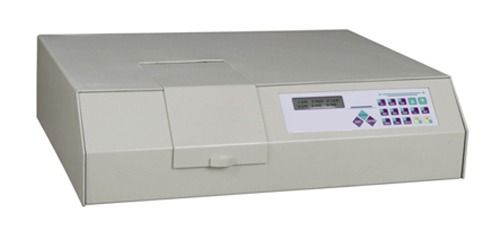

Price:
- 50
- 100
- 200
- 250
- 500
- 1000+

More Products in Scientific Product Category
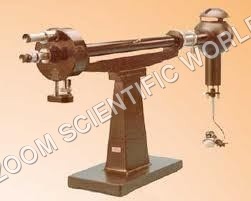
Double Wedge Polarimeter
Price 143 INR / Unit
Minimum Order Quantity : 1 Unit
Product Type : Wedge Polarimeter
Color : Black
Material : Stainless Steel
Usage : Industrial
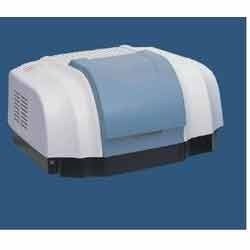
FTIR SPECTROMETER
Price 128 INR / Unit
Minimum Order Quantity : 1 Unit
Product Type : spectrometer
Color : Sky Blue And White
Usage : Laboratory
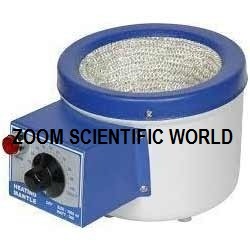
Heating Mantles
Price 125 INR / Unit
Minimum Order Quantity : 1 Unit
Product Type : Mantles
Color : White And Blue
Material : Mild Steel
Usage : Heating
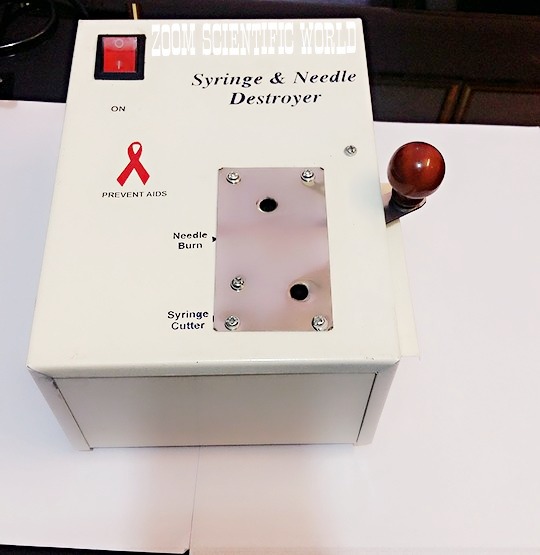
Needle Destroyer
Price 150 INR / Unit
Minimum Order Quantity : 1 Unit
Product Type : Destroyer
Color : White
Material : Steel
Usage : Hospital, Clinic

GST : 06ALAPA6623N1Z8

- 4537/1 A, Bldg. 13, Deepak Market, Ist Ambala - 133001, Haryana, India
- Phone : 08045478393
- Export Import Code (IEC code) - 3312001811
SSI No. - 060021100476

- Mr Sahil Aggarwal (GENERAL MANAGER)
- Mobile : 08045478393

|



Developed and Managed by Infocom Network Private Limited.
