




 Send Inquiry
Fillter (Buchner) Flask
Price 10 INR/ Piece
Fillter (Buchner) Flask Specification
- Usage
- Laboratory
- Height
- 52 x 86 Millimeter (mm)
- Product Type
- Buchner Flask
- Color
- Transparent
- Material
- Glass
- Neck Type
- Tapered neck with ground glass joint
- Autoclavable
- Yes
- Surface Finish
- Smooth, easy to clean
- Chemical Compatibility
- Compatible with acids, bases, and organic solvents
- Graduation Marks
- Provided on select models
- Vacuum Compatibility
- Designed for vacuum filtration
Fillter (Buchner) Flask Trade Information
- Minimum Order Quantity
- 1 Piece
- Payment Terms
- Cash in Advance (CID), Cash Advance (CA)
- Supply Ability
- 1000 Pieces Per Week
- Delivery Time
- 1 Week
- Sample Available
- Yes
- Sample Policy
- Sample costs shipping and taxes has to be paid by the buyer
- Main Export Market(s)
- Western Europe, Asia, Middle East, Central America, Eastern Europe, South America, North America, Australia, Africa
- Main Domestic Market
- All India
Fillter (Buchner) Flask About
Fillter (Buchner) Flask:-
Catalogue No. Socket Size Capacity Of Flask ml.
255/01 B 19 100
255/02 B 24 250
255/03 B 24 500
255/04 B 24 1000
255/05 B 34 1000
255/06 B 24 2000
255/07 B 34 2000
Purpose & Design of the Buchner Flask
The Filter (Buchner) Flask is meticulously engineered for laboratory filtration processes, particularly vacuum filtration. Manufactured from durable, chemically-resistant glass, it accommodates vigorous suction without risk of breakage. The tapered neck with a ground glass joint ensures a secure connection to funnels and other lab components. Its transparent body allows clear observation of filtration progress, while the smooth surface aids in thorough cleaning and maintenance.
Application & Compatibility
This flask is compatible with a wide range of chemicals, including acids, bases, and organic solvents, making it a versatile addition to any laboratory. Designed to work seamlessly with vacuum filtration setups, it provides reliable and efficient separation of solids from liquids. Autoclavability means it can be safely sterilized between uses, supporting applications in research, education, and quality control environments across India.
Key Benefits & Usage
Using the Buchner Flask enhances laboratory safety and process efficiency. Its glass construction ensures non-reactivity, critical for chemical analysis and purification. The standard ground glass joint supports a tight, leak-proof fit during vacuum filtrationreducing risk of contamination. Ideal for researchers, teachers, and students, it offers robust performance, long life, and ease of cleaning, contributing to streamlined workflow and dependable experimental results.
FAQs of Fillter (Buchner) Flask:
Q: How do I use the Filter (Buchner) Flask for vacuum filtration?
A: To use the Filter (Buchner) Flask for vacuum filtration, connect the flasks ground glass neck to a compatible Buchner funnel, ensuring a tight fit. Attach a hose to the flasks sidearm and link it to a vacuum source. The solution to be filtered is poured into the funnel, and suction initiates filtration, drawing liquid through the filter paper, leaving the solid residue behind.Q: What chemicals can the Filter (Buchner) Flask handle safely?
A: This flask is constructed from high-quality glass and is chemically compatible with acids, bases, and organic solvents. Its non-reactive material allows for safe usage with a broad spectrum of laboratory reagents, making it suitable for most standard and specialized filtration tasks.Q: When should I sterilize or autoclave the flask?
A: The flask should be sterilized or autoclaved before and after procedures that involve microbial or cell culture work, or when changing between different chemical applications to prevent cross-contamination. Autoclaving is suitable, as the flask is designed to withstand the high temperatures and pressures used in laboratory sterilization routines.Q: Where is the Filter (Buchner) Flask commonly used?
A: This product is widely employed in research and industrial laboratories, as well as in universities and educational institutions across India and globally. Common applications include chemical analysis, filtration for sample preparation, and purification processes.Q: What size is the Filter (Buchner) Flask, and is it easy to clean?
A: Standard dimensions are 52 x 86 millimeters, making it compact and easy to handle. The glass surface is smooth and transparent, which simplifies thorough cleaning with standard laboratory detergents and rinse protocols.Q: What are the key benefits of using a glass Buchner Flask?
A: The primary benefits include chemical resistance, non-reactivity, clear visibility for monitoring filtration, ease of cleaning, and the ability to be sterilized by autoclaving. Additionally, the secure ground glass joint reduces the risk of leaks during vacuum filtration.

Price:
- 50
- 100
- 200
- 250
- 500
- 1000+

More Products in Lab Glassware Category
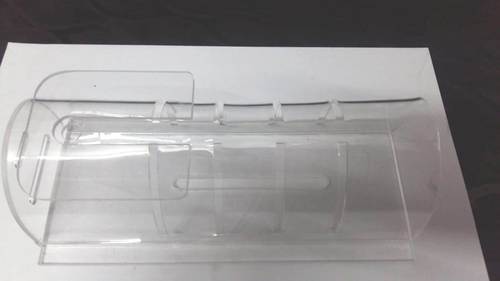
Rat Restrainer
Price 480 INR / Piece
Minimum Order Quantity : 2 Pieces
Material : Acrylic
Color : Transparent
Usage : For homes and Educational purpose
Product Type : Cage
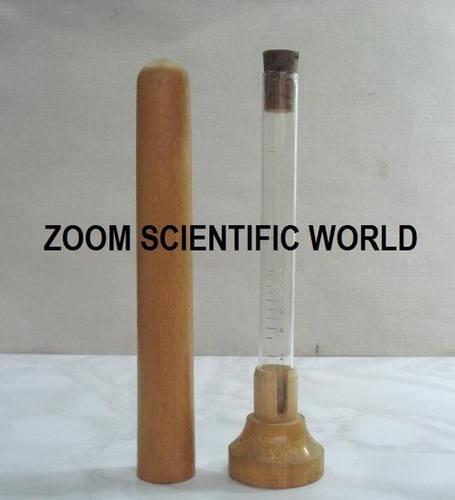
Albuinometer
Price 19 INR / Piece
Minimum Order Quantity : 1 Piece
Material : Glass And Wooden
Color : Brown And Transparent
Usage : Chemical Laboratory
Product Type : Albuinometer
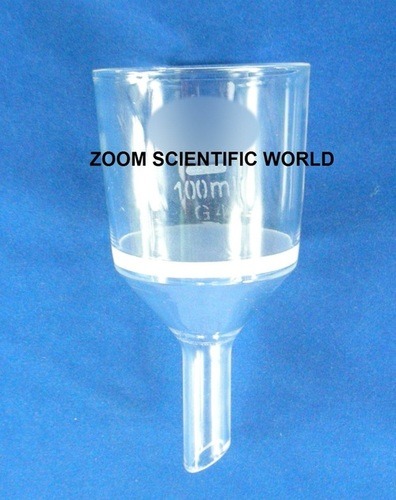
Buchner Funnel
Price 18 INR / Piece
Minimum Order Quantity : 1 Pack
Material : Glass
Color : Transparent
Usage : Chemical Laboratory
Product Type : Buchner Funnel

Plain Microscope Slide
Price 11 INR / Piece
Minimum Order Quantity : 1 Piece
Material : Glass
Color : Transparent
Usage : Chemical Laboratory

GST : 06ALAPA6623N1Z8

- 4537/1 A, Bldg. 13, Deepak Market, Ist Ambala - 133001, Haryana, India
- Phone : 08045478393
- Export Import Code (IEC code) - 3312001811
SSI No. - 060021100476

- Mr Sahil Aggarwal (GENERAL MANAGER)
- Mobile : 08045478393

|



Developed and Managed by Infocom Network Private Limited.
