




 Send Inquiry
Flasks Pear Shape Three Necks, One Side Angle And One Side Parallel
Price 10 INR/ Piece
Flasks Pear Shape Three Necks, One Side Angle And One Side Parallel Specification
- Usage
- Laboratory
- Product Type
- Flasks Pear Shape
- Color
- Transparent
- Material
- Glass
- Neck Arrangement
- Three necks: central vertical, one side angled, one side parallel
- Neck Diameter
- Varies as per capacity and standard joint size
- Autoclavability
- Yes, autoclavable under standard conditions
- Chemical Compatibility
- Suitable for acids, alkalis, solvents
- Nozzle Joints
- Standard socket joints, ground glass (NS 14/23, 19/26, 24/29, etc.)
- Packing Type
- Individual bubble wrap or boxed
- Surface Finish
- Smooth, calibrated
- Reusability
- Reusable, easy to clean
Flasks Pear Shape Three Necks, One Side Angle And One Side Parallel Trade Information
- Minimum Order Quantity
- 1 Piece
- Payment Terms
- Cash in Advance (CID), Cash Advance (CA)
- Supply Ability
- 1000 Pieces Per Week
- Delivery Time
- 1 Week
- Sample Available
- Yes
- Sample Policy
- Sample costs shipping and taxes has to be paid by the buyer
- Main Export Market(s)
- Australia, Eastern Europe, Western Europe, Central America, Middle East, South America, Asia, North America, Africa
- Main Domestic Market
- All India
Flasks Pear Shape Three Necks, One Side Angle And One Side Parallel About
Flasks Pear Shape Three Necks, One Side Angle And One Side Parallel:-
Catalogue No. Centre Neck Socket Size Side Neck Socket Size Cap. Of Flasks ml.
268/01 B 14 B 14 25
268/02 B 14 B 14 50
268/03 B 14 B 14 100
Versatility in Laboratory Applications
The distinct three-neck configurationcentral vertical with one side at an angle and the other parallelmakes this flask an essential tool in multi-step laboratory procedures. It enables simultaneous addition of reagents, sampling, and use of thermometers or condensers, streamlining your workflow and increasing experimental flexibility.
Premium Glass Construction
Crafted from high-quality transparent glass, the flask ensures chemical compatibility and resilience during demanding laboratory operations. Its smooth, calibrated surface guarantees precise measurements and facilitates thorough cleaning. The flasks glass material maintains clarity and integrity even after repeated autoclaving and exposure to various solvents.
Standard Joints and Easy Integration
Each neck is fitted with a ground glass socket joint (NS standard sizes), ensuring compatibility with a wide range of laboratory glassware and accessories. This design simplifies assembly and disassembly, supporting efficient laboratory setups while minimizing the risk of leaks or contamination.
FAQs of Flasks Pear Shape Three Necks, One Side Angle And One Side Parallel:
Q: How should I use each neck on the Pear Shape Three Neck Flask during an experiment?
A: Typically, the central vertical neck is used for main mixing or reactions, while the side necks provide access for introducing reagents, inserting thermometers, or attaching condensers and vacuum adapters. The angled and parallel side necks enable flexible configurations for simultaneous operations.Q: What are the benefits of having both angled and parallel side necks on the flask?
A: The combination of angled and parallel necks increases versatility, allowing different types of glassware or instruments to be connected at optimal orientations, which helps reduce spillage, improves safety, and supports more complex experimental setups.Q: Can these flasks withstand high temperatures and sterilization processes?
A: Yes, the flasks are made from premium laboratory glass and are autoclavable under standard conditions. This ensures they can be sterilized using autoclaves and used for high-temperature applications without compromising their integrity.Q: What is the proper cleaning process for these flasks?
A: Rinse the flask with water immediately after use. For stubborn residues, use appropriate laboratory detergents and brushes. The glass construction allows repeated cleaning and autoclaving, making the flask reusable for future experiments.Q: What standard joint sizes are available, and how do I connect compatible glassware?
A: The flasks feature ground glass socket joints in standard NS sizes (such as 14/23, 19/26, or 24/29). Simply match the joint size with your existing glassware components for a precise, leak-free fit.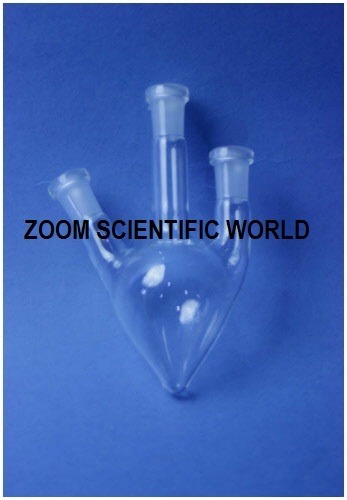

Price:
- 50
- 100
- 200
- 250
- 500
- 1000+

More Products in Lab Glassware Category
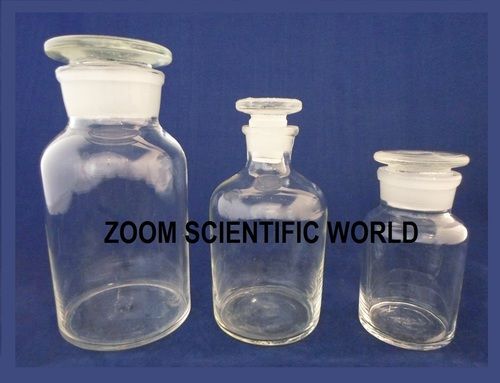
Reagent Bottles
Price 52.0 INR / Bottle
Minimum Order Quantity : 1 Bottle
Product Type : Bottles
Usage : Chemical Laboratory
Material : Borosilicate Glass
Color : Transparent
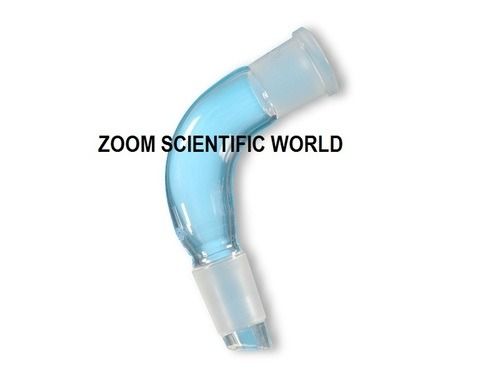
Plains Bends Receiver Adapters
Price 10 INR / Piece
Minimum Order Quantity : 1 Piece
Product Type : Bends Receiver
Usage : Laboratory
Material : Glass
Color : Transparent
Expansion Adapters
Price 10 INR / Piece
Minimum Order Quantity : 1 Piece
Product Type : Expansion Adapters
Usage : Laboratory
Material : Glass
Color : Transparent
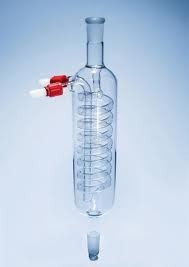
Inland Revenue Condenser
Price 10 INR / Piece
Minimum Order Quantity : 1 Piece
Product Type : Revenue Condenser
Usage : Laboratory
Material : Glass
Color : Transparent

GST : 06ALAPA6623N1Z8

- 4537/1 A, Bldg. 13, Deepak Market, Ist Ambala - 133001, Haryana, India
- Phone : 08045478393
- Export Import Code (IEC code) - 3312001811
SSI No. - 060021100476

- Mr Sahil Aggarwal (GENERAL MANAGER)
- Mobile : 08045478393

|



Developed and Managed by Infocom Network Private Limited.
