




 Send Inquiry
Fume Hood
Price 58500.0 INR/ Piece
Fume Hood Specification
- Shape
- Rectangular
- Power Supply
- Single Phase AC
- Control Type
- Manual/Toggle Switches
- Features
- Chemical resistant, Efficient airflow, Internal lighting, Gas & water taps
- Speed Range
- Adjustable Fan Speed
- Temperature Resistance
- Up to 150C
- Glass Type
- Toughened Glass (Front Sash)
- Type
- Laboratory Fume Hood
- Dimension (L*W*H)
- 1200 x 800 x 2250 mm Millimeter (mm)
- Equipment Type
- Fume Extraction System
- Equipment Materials
- Galvanized Iron with Epoxy Coating
- Power
- 0.75 kW Watt (w)
- Voltage
- 220-240 V Volt (v)
- Material
- Mild steel structure, FRP coated
- Application
- Used for Venting Hazardous Fumes and Chemical Vapors in Laboratories
- Lighting Type
- Fluorescent / LED Tube Light
- Exhaust Duct Diameter
- 200 mm
- Safety Devices
- Circuit Breaker, Overload Protection, Gas Valve, Water Tap
- Sash Type
- Vertical Sliding Sash
- Socket Provision
- 2 x Electrical Sockets (5/15A)
- Internal Work Area
- 1100 x 650 x 800 mm
- Weight
- Approx. 115 kg
- Surface Finish
- Epoxy Polyester Powder Coated
- Noise Level
- AAA 60 dBA
- Air Velocity
- 0.5 m/s (face velocity)
- Installation Type
- Floor Mounted
- Compliance
- ISO & CE Certified
Fume Hood Trade Information
- Minimum Order Quantity
- 1 Piece
- Supply Ability
- 100 Pieces Per Month
- Delivery Time
- 7 Days
Fume Hood About
FUME HOOD
A fume hood or fume cupboard is a type of local[1] ventilation device that is designed to limit exposure to hazardous or noxious fumes, vapors or dusts. A fume hood is typically a large piece of equipment enclosing five sides of a work area, the bottom of which is most commonly located at a standing work height.
Two main types exist, ducted and recirculating. The principle is the same for both types: air is drawn in from the front (open) side of the cabinet, and either expelled outside the building or made safe through filtration and fed back into the room.
Other related types of local ventilation devices include: clean benches, biosafety cabinets, glove boxes and snorkel exhausts. All these devices address the need to control airborne hazards or irritants that are typically generated or released within the local ventilation device. All local ventilation devices are designed to address one or more of three primary goals:
- protect the user (fume hoods, biosafety cabinets, glove boxes);
- protect the product or experiment (biosafety cabinets, glove boxes);
- protect the environment (recirculating fume hoods, certain biosafety cabinets, and any other type when fitted with appropriate filters in the exhaust airstream).
Secondary functions of these devices may include explosion protection, spill containment, and other functions necessary to the work being done within the device.
Advanced Laboratory Safety
The fume hood provides reliable extraction of hazardous fumes using vertical sliding toughened glass sashes and chemical-resistant surfaces. All safety features, including circuit breaker and overload protection, meet ISO and CE standards, ensuring optimal protection for users in laboratory environments during volatile handling sessions.
User-Friendly and Versatile Design
With a spacious 1100 x 650 x 800 mm work area and ergonomic manual/toggle switch controls, the hood allows comfortable and safe procedures. Gas and water taps, adjustable fan speed, and provision for dual electrical sockets increase versatility, making processes like chemical synthesis or vapor containment straightforward and efficient.
Durability and Compliance
Manufactured from mild steel with an FRP coating and an epoxy polyester powder finish, the fume hood withstands corrosive chemicals and high temperatures (up to 150C). Its robust structure ensures longevity and low maintenance for laboratories seeking ISO and CE certified safety and operational standards.
FAQs of Fume Hood:
Q: How does the vertical sliding sash on the fume hood enhance safety during laboratory operations?
A: The vertical sliding sash made from toughened glass allows users to precisely control airflow and access to the internal work area. It acts as a protective barrier against chemical splashes or fumes, reducing potential exposure during experiments and maintenance.Q: What steps are involved in using the fume hood for venting chemical vapors?
A: To use the fume hood: ensure the fan is on and set to the desired speed; check that water and gas taps are ready if needed; place materials within the internal work area; keep the vertical sash partially closed for optimal containment, and proceed with the experiment. Always monitor the circuit breaker and overload protection systems for added safety.Q: When should the dual electrical sockets be used within the fume hood?
A: The 5/15A electrical sockets are intended for powering laboratory equipment, such as hot plates or stirrers, required during experiments. They should only be used after confirming that the fume hoods exhaust and extraction system is operational to maintain a safe, ventilated environment.Q: Where is the fume hood best installed within a laboratory setting?
A: This floor-mounted fume hood is suitable for installation in areas where hazardous experiments or handling of volatile chemicals is performed. Position it at a well-ventilated space with adequate clearance for ductwork and easy access to power and water connections.Q: What makes this fume hood chemically resistant and suited for tough laboratory environments?
A: Constructed from galvanized iron and mild steel structure with FRP coating and finished with epoxy polyester powder, the unit exhibits excellent resistance to corrosive chemicals. It also withstands high temperatures (up to 150C), making it suitable for rigorous laboratory applications.Q: How can the adjustable fan speed and manual controls benefit laboratory users?
A: The adjustable fan speed allows users to tailor the airflow based on experiment requirements, ensuring proper containment of fumes without creating excessive noise. Manual/toggle switches make operation straightforward, giving users full control over ventilation and safety features.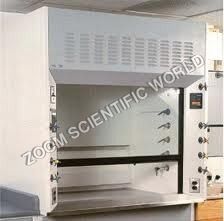

Price:
- 50
- 100
- 200
- 250
- 500
- 1000+

More Products in Pharmaceutical Lab Equipment Category
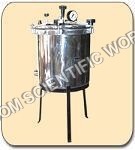
Autoclave .
Minimum Order Quantity : 1 Piece
Features : Pressure Gauge, Safety Valve, Water Level Indicator, Fused Safety Mechanism
Control Type : Manual & SemiAutomatic
Application : Laboratory, Medical, Pharmaceutical Sterilization
Material : Stainless Steel, Mild Steel
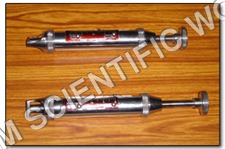
Tablet Tester Monsanta Type
Price 1250.0 INR / Piece
Minimum Order Quantity : 1 Piece
Control Type : Manual Knob
Application : Tablet hardness testing in pharmaceutical laboratories
Material : Stainless Steel / Acrylic
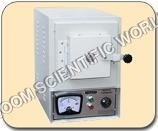
Muffle Furnance
Minimum Order Quantity : 1 Piece
Features : Fast Heating, Low Power Consumption, Compact Design, Uniform Temperature Distribution
Control Type : Digital Temperature Controller

GST : 06ALAPA6623N1Z8

- 4537/1 A, Bldg. 13, Deepak Market, Ist Ambala - 133001, Haryana, India
- Phone : 08045478393
- Export Import Code (IEC code) - 3312001811
SSI No. - 060021100476

- Mr Sahil Aggarwal (GENERAL MANAGER)
- Mobile : 08045478393

|



Developed and Managed by Infocom Network Private Limited.
