




 Send Inquiry
FUME HOOD
Price 100 INR/ Unit
MOQ : 1 Unit
FUME HOOD Specification
- Color
- White
- Product Type
- Fume Hood
- Usage
- Chemisty Lab
- Voltage
- 220 Volt (v)
- Dimension (L*W*H)
- 1800x800x2350 Millimeter (mm)
- Air Flow
- 0.5 m/s to 1.0 m/s
- Sash Type
- Vertical Sliding Sash
- Exhaust System
- PVC Duct and Fan
- Material of Construction
- Epoxy Coated Galvanized Iron
- Worktop Material
- Chemically Resistant Phenolic Resin
- Noise Level
- Less than 60 dB
- Safety Features
- Emergency Power Off Switch, Alarm
FUME HOOD Trade Information
- Minimum Order Quantity
- 1 Unit
- Payment Terms
- Cash Advance (CA), Cash in Advance (CID)
- Supply Ability
- 100 Units Per Week
- Delivery Time
- 1 Week
- Sample Available
- Yes
- Sample Policy
- Sample costs shipping and taxes has to be paid by the buyer
- Main Export Market(s)
- Eastern Europe, Middle East, Central America, South America, Western Europe, Asia, North America, Australia, Africa
- Main Domestic Market
- All India
FUME HOOD About
FUME HOOD A fume hood or fume cupboard is a type of local[1] ventilation device that is designed to limit exposure to hazardous or noxious fumes, vapors or dusts. A fume hood is typically a large piece of equipment enclosing five sides of a work area, the bottom of which is most commonly located at a standing work height. Two main types exist, ducted and recirculating. The principle is the same for both types: air is drawn in from the front (open) side of the cabinet, and either expelled outside the building or made safe through filtration and fed back into the room. Other related types of local ventilation devices include: clean benches, biosafety cabinets, glove boxes and snorkel exhausts. All these devices address the need to control airborne hazards or irritants that are typically generated or released within the local ventilation device. All local ventilation devices are designed to address one or more of three primary goals: protect the user (fume hoods, biosafety cabinets, glove boxes); protect the product or experiment (biosafety cabinets, glove boxes); protect the environment (recirculating fume hoods, certain biosafety cabinets, and any other type when fitted with appropriate filters in the exhaust airstream). Secondary functions of these devices may include explosion protection, spill containment, and other functions necessary to the work being done within the device.Comprehensive Laboratory Safety
Designed with high-grade materials, our Fume Hood offers reliable protection during chemical experiments. The combination of epoxy-coated galvanized iron and a chemically resistant phenolic resin worktop provides robust shielding against corrosive agents. Built-in safety features like the emergency power-off switch and alarm elevate overall operator safety, making it indispensable for educational, research, and industrial labs.
Efficient Ventilation and Airflow
Equipped with a PVC duct and fan system, the Fume Hood efficiently expels hazardous fumes and vapors. Adjustable airflow in the range of 0.5 to 1.0 m/s ensures optimal containment while maintaining a comfortable working environment. The vertical sliding sash further enhances control over air movement during sensitive procedures.
FAQs of FUME HOOD:
Q: How does the Fume Hood ensure safety in the laboratory?
A: The Fume Hood features an emergency power-off switch and an alarm system for immediate hazard response. Its epoxy-coated galvanized iron body and chemically resistant worktop protect against accidental spills and corrosion, while the PVC duct and fan safely remove toxic fumes from the workspace.Q: What is the recommended usage of this Fume Hood?
A: This Fume Hood is tailored for chemistry labs where experiments involve hazardous or volatile substances. It provides a controlled space for safely conducting chemical reactions, minimizing users exposure to fumes and splashes.Q: Where should the Fume Hood be installed for optimal operation?
A: Install the Fume Hood in a well-ventilated area away from high-traffic zones to prevent airflow disturbance. Ensure proximity to an electrical outlet (220V) and that the exhaust duct leads outside or to a suitable extraction point.Q: What materials are used in the construction of the worktop and body?
A: The worktop is made of chemically resistant phenolic resin, ensuring durability against caustic and acidic spills, while the main structure is constructed from epoxy-coated galvanized iron for added strength and corrosion protection.Q: How is the airflow adjusted and what range does it support?
A: The Fume Hood operates with adjustable airflow between 0.5 m/s and 1.0 m/s, optimizing containment based on the procedure. The vertical sliding sash allows users to fine-tune the air intake, enhancing safety during experiments.Q: What dimensions does the Fume Hood offer, and is it suitable for most labs?
A: With external dimensions of 1800x800x2350 mm, this Fume Hood is designed to fit in standard laboratory spaces while offering ample workspace for experimental setups.Q: What are the key benefits of choosing this Fume Hood for laboratory work?
A: Key benefits include effective hazardous fume extraction, robust chemical resistance, low noise operation (less than 60 dB), and built-in safety features, all of which contribute to a safer, more controlled laboratory environment.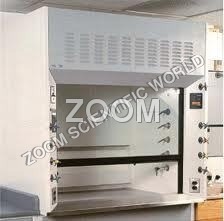
Tell us about your requirement

Price:
Quantity
Select Unit
- 50
- 100
- 200
- 250
- 500
- 1000+
Additional detail
Mobile number
Email

More Products in Medical College Instruments & Apparatus Category
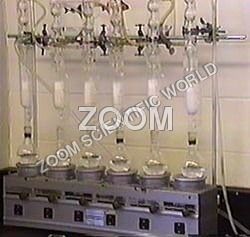
SOXHLET APPARATUS
Price 750.0 INR / Unit
Minimum Order Quantity : 1 Unit
Product Type : Extraction Apparatus
Color : Transparent And White
Material : Glass And Mild Steel
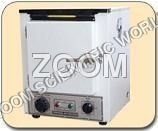
HOT AIR OVEN
Price 5499.0 INR / Unit
Minimum Order Quantity : 1 Unit
Product Type : Air Oven
Color : Black And White
Material : Stainless Steel
Voltage : 110240 Volt (v)
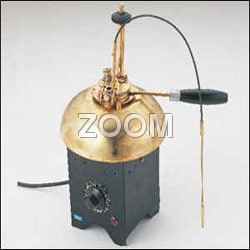
PENSKY MARTIN FLASH POINT APPARATUS
Price 105 INR / Unit
Minimum Order Quantity : 1 Unit
Product Type : Pensky Martin Flash
Color : Golden And Black
Voltage : 110240 Volt (v)
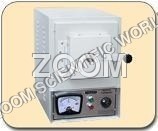
MUFFLE FURNANCE
Price 110 INR / Unit
Minimum Order Quantity : 1 Unit
Product Type : Muffle furnance
Color : White
Material : Aluminium
Voltage : 110240 Volt (v)

ZOOM SCIENTIFIC WORLD
GST : 06ALAPA6623N1Z8
GST : 06ALAPA6623N1Z8
Contact Details

- 4537/1 A, Bldg. 13, Deepak Market, Ist Ambala - 133001, Haryana, India
- Phone : 08045478393
- Export Import Code (IEC code) - 3312001811
SSI No. - 060021100476

- Mr Sahil Aggarwal (GENERAL MANAGER)
- Mobile : 08045478393

|



ZOOM SCIENTIFIC WORLD
All Rights Reserved.(Terms of Use)
Developed and Managed by Infocom Network Private Limited.
Developed and Managed by Infocom Network Private Limited.
