




 Send Inquiry
Haematocrite Centrifuge
Price 142 INR/ Unit
Haematocrite Centrifuge Specification
- Product Type
- Centrifuge
- Voltage
- 220-240 Volt (v)
- Color
- White And Black
- Weight
- 11 Kilograms (kg)
- Dimension (L*W*H)
- 290x270x240
- Max RCF
- 15000 x g
- Noise Level
- < 60 dB
- Rotor Speed
- 12000 RPM
Haematocrite Centrifuge Trade Information
- Minimum Order Quantity
- 1 Unit
- Payment Terms
- Cash in Advance (CID), Cash Advance (CA)
- Supply Ability
- 100 Units, Per Week
- Delivery Time
- 1 Week
- Sample Available
- Yes
- Sample Policy
- Sample costs shipping and taxes has to be paid by the buyer
- Main Export Market(s)
- Western Europe, Australia, North America, South America, Eastern Europe, Middle East, Central America, Asia, Africa
- Main Domestic Market
- All India
Haematocrite Centrifuge About
Haematocrite Centrifuge 13000 r.p.m. (Microprocessor Based)
Haematocrite Centrifuge Machine, Max. speed 13000 r.p.m
Compact body which is made of plastic injection moulded.
Inner safety bowl made of stainless steel
Fitted with well balance universal motor having long life with imported carbons
Digital display shows Set time/ Run time /R.P.M.
Microprocessor based Digital timer of range 0-15 min with LCD display.
Preset speed controls thru microprocessor from 2000 to 13000 r.p.m.
Supply completed with following accessories:
Micro Hematocrite rotor to accommodate 24 capillaries of 75mm x 1mm or 12 capillaries.
Heparinised capillary tubes 75mm long x 1mm bore (Pack of 100 Nos.)
Non-Heparinised capillary tubes 75mm long x 1mm bore (Pack of 100 Nos.)
Reading device
Sealing wax- 1tray
Haematocrite Centrifuge (Brushless) Model: T-15BL
All specification are same as above but in this model the motor is Brushless (without carbon)
Note: Speed can also increased upto16000 r.p.m. on the demand of customer
| Dimension of Machine: | L=290mm, W-270mm, H-240mm |
| Weight of Machine: | 9.5kg. approx. |
| Dimension of box: | L-355mm x W355 x H-340mm |
| Weight of Box: | 11kg. approx. |
Efficient Blood Component Separation
The Haematocrite Centrifuge delivers fast and accurate separation of blood plasma and cells, essential for precise haematocrit determination. With a high-speed rotor reaching up to 12000 RPM and a maximum centrifugal force of 15000 x g, even small blood samples are processed thoroughly, saving valuable laboratory time without compromising on result accuracy.
User-Friendly and Robust Design
Built with usability in mind, the centrifuge features a straightforward operational interface suitable for laboratory staff at all experience levels. Its compact dimensions (290x270x240 mm) and manageable weight (11 kg) make it easy to install and relocate within medical and research settings, while low-noise performance ensures a comfortable work environment.
FAQs of Haematocrite Centrifuge:
Q: How does the Haematocrite Centrifuge operate?
A: The centrifuge works by spinning blood-filled capillary tubes at high speeds (up to 12000 RPM), causing components to separate by density. This process enables clear measurement of the packed cell volume (haematocrit) within each sample.Q: What are the main benefits of using this Haematocrite Centrifuge?
A: Key benefits include precise haematocrit determination, efficient processing with high rotor speed and RCF, quiet performance at less than 60 dB, and a compact, relocatable design suitable for various laboratory environments.Q: When is this centrifuge typically used in laboratories?
A: It is commonly used during routine blood analysis in clinical, diagnostic, and research labs to determine the ratio of red blood cells to total blood volume (haematocrit) as part of patient health assessments.Q: Where can the Haematocrite Centrifuge be installed?
A: Its portable and compact build allows installation on laboratory benches in hospitals, clinics, or research institutes, with standard 220240 Volt electrical outlets supporting its operation.Q: What is the process for separating blood samples with this centrifuge?
A: Blood is collected into capillary tubes, which are then loaded into the centrifuge. When the centrifuge runs at 12000 RPM, centrifugal force separates plasma, buffy coat, and red blood cells, enabling precise measurement.Q: Is the Haematocrite Centrifuge easy to maintain?
A: With a straightforward design and minimal moving parts, general maintenance is simpleperiodic cleaning and standard operational checks will keep the centrifuge functioning optimally.Q: How does the noise level of the centrifuge affect its usage?
A: Operating at less than 60 dB, the centrifuge ensures minimal disturbance, making it suitable for use in noise-sensitive laboratory and clinical environments.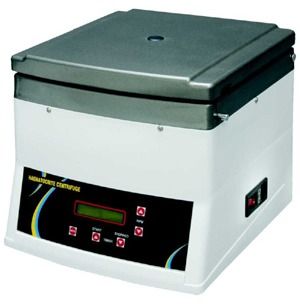

Price:
- 50
- 100
- 200
- 250
- 500
- 1000+

More Products in Scientific Product Category
Mass Mixer
Price 190 INR / Unit
Minimum Order Quantity : 1 Unit
Color : White And Blue
Product Type : Mixer
Material : Mild Steel
Usage : Hospital
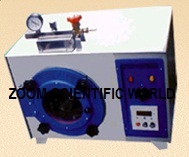
Oven Vacuum
Price 123 INR / Unit
Minimum Order Quantity : 1 Unit
Color : White And Blue
Product Type : Oven Vacuum
Material : Stainless Steel
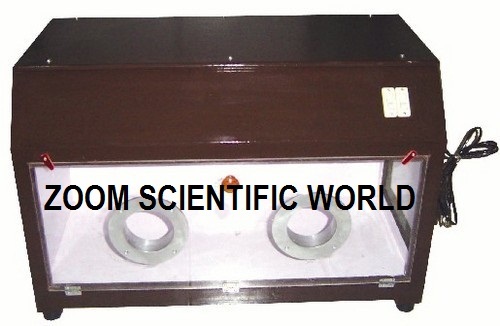
Aseptic Cabinet
Price 110 INR / Unit
Minimum Order Quantity : 1 Unit
Color : Maroon And White
Product Type : Cabinet
Material : Mild Steel
Usage : Laboratory
Polarimeter
Price 104 INR / Unit
Minimum Order Quantity : 1 Unit
Color : Black
Product Type : Polarimeter
Material : Stainless Steel

GST : 06ALAPA6623N1Z8

- 4537/1 A, Bldg. 13, Deepak Market, Ist Ambala - 133001, Haryana, India
- Phone : 08045478393
- Export Import Code (IEC code) - 3312001811
SSI No. - 060021100476

- Mr Sahil Aggarwal (GENERAL MANAGER)
- Mobile : 08045478393

|



Developed and Managed by Infocom Network Private Limited.
