




 Send Inquiry
Homogenizer
Price 160 INR/ Unit
Homogenizer Specification
- Color
- White And Blue
- Usage
- Hospital
- Product Type
- Homogenizer
- Material
- Mild Steel
- Application
- Laboratory, Medical, Pharmaceutical
- Mount Type
- Bench Top
- RPM
- Up to 20,000 rpm
- Speed Control
- Variable Speed
- Safety Feature
- Overload Protection
- Noise Level
- Less than 65 dB
Homogenizer Trade Information
- Minimum Order Quantity
- 1 Unit
- Payment Terms
- Cash in Advance (CID), Cash Advance (CA)
- Supply Ability
- 100 Units Per Week
- Delivery Time
- 1 Week
- Sample Available
- Yes
- Sample Policy
- Sample costs shipping and taxes has to be paid by the buyer
- Main Export Market(s)
- Western Europe, Middle East, Central America, Eastern Europe, South America, Asia, North America, Australia, Africa
- Main Domestic Market
- All India
Homogenizer About
ZOOM IS A ESTEEMED MANUFACTURER OF ELECTRONIC GOODS .
A homogenizer/Tissue Grinder is a piece of laboratory equipment used for the homogenization of various types of material, such as tissue, plant, food, soil, and many others. Many different models have been developed using various physical technologies for disruption.The 'mortar and pestle', already used for thousands of years, is a standard tool even in modern laboratories. More modern solutions are based on blender type of instruments (also known in the kitchen), bead mills, ultra sonic treatment (also sonication), high pressure, and many other physical forces.
Whereas older technologies just focused on the disruption of the material, newer technologies also address quality or environmental aspects, such as cross-contamination, aerosols, risk of infection, or noise.
Homogenization is a very common sample preparation step prior to the analysis of nucleic acids, proteins, cells, metabolism, pathogens, and many other targets.
Powerful and Precise Sample Processing
Experience exceptional homogenization capabilities with a device that offers variable speed control up to 20,000 rpm. Designed for demanding environments, the homogenizer ensures reproducible results in hospital, laboratory, or pharmaceutical settings. The robust mild steel construction and carefully selected color scheme combine durability with ease of maintenance, making it a preferred choice for modern labs.
Safety and Comfort in Operation
Prioritizing operator and sample safety, this homogenizer features advanced overload protection and a noise level below 65 dB, establishing a safer and quieter working environment. Its bench top mount allows for secure and accessible placement, facilitating daily use and minimizing disruption to laboratory workflow.
FAQs of Homogenizer:
Q: How does the homogenizer ensure sample uniformity in laboratory applications?
A: The homogenizer operates at adjustable speeds up to 20,000 rpm, allowing for efficient mixing and breakdown of samples to achieve consistent particle size and uniformity, which is essential in laboratory, medical, and pharmaceutical research.Q: What are the key benefits of using this homogenizer in hospitals and pharmaceutical settings?
A: This homogenizer offers rapid and consistent sample processing, reliable overload protection for enhanced safety, and low noise operation, making it an ideal choice for sensitive environments that require both efficiency and operator comfort.Q: When is it appropriate to use this homogenizer during sample preparation?
A: The homogenizer is best used during the initial stages of sample processing when uniform dispersion or a fine emulsion is required. It is suitable for tissue, cell, or other sample types that need homogenization before further testing or analysis.Q: Where should the homogenizer be installed for optimal performance?
A: Designed as a bench top model, the homogenizer should be placed on a stable, flat laboratory surface near required power sources. This ensures safety, accessibility, and smooth integration into existing laboratory workflows.Q: What is the process for operating the homogenizer safely?
A: To operate safely, place the sample securely, select the desired speed setting (up to 20,000 rpm), and start the device. The built-in overload protection will alert you in case of abnormal loads, and variable speed allows process control for different sample types.Q: Is any maintenance required for this homogenizer?
A: Routine maintenance involves cleaning the units exterior with a damp cloth and ensuring no debris enters the moving parts. Regular inspection of moving components is recommended to maintain performance and longevity.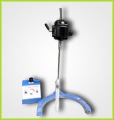

Price:
- 50
- 100
- 200
- 250
- 500
- 1000+

More Products in Scientific Product Category
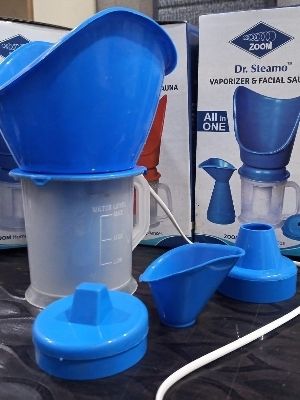
DR. STEAMO VAPORIZER AND FACIAL SAUNA
Price 85.0 INR / Piece
Minimum Order Quantity : 50 Pieces
Color : BLUE & RED
Material : Plastic
Usage : USED IN COLD , CONGESTION AND COUGH , BEAUTY.
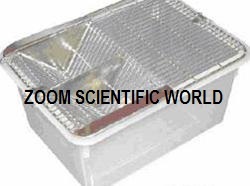
Plastic Animal Cage
Price 100 INR / Piece
Minimum Order Quantity : 1 Piece
Color : White
Material : Plastic
Product Type : Animal Cage
Usage : Clinic Purpose
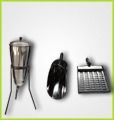
Perculator Scoop And Counter
Price 120 INR / Unit
Minimum Order Quantity : 1 Unit
Color : Silver And Black
Material : Mild Steel
Product Type : Perculator Scoop
Usage : Industrial
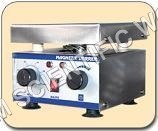
Magnetic Stirrer
Price 104 INR / Unit
Minimum Order Quantity : 1 Unit
Color : Silver And White
Material : Stainless steel
Product Type : Magnetic Stirrer

GST : 06ALAPA6623N1Z8

- 4537/1 A, Bldg. 13, Deepak Market, Ist Ambala - 133001, Haryana, India
- Phone : 08045478393
- Export Import Code (IEC code) - 3312001811
SSI No. - 060021100476

- Mr Sahil Aggarwal (GENERAL MANAGER)
- Mobile : 08045478393

|



Developed and Managed by Infocom Network Private Limited.
