




 Send Inquiry
Ore Microscope
Price 34500 INR/ Unit
Ore Microscope Specification
- Spare Parts
- Replacement lamps, eyepieces, objective sets, power cord.
- Focus System
- Coarse and fine coaxial controls.
- Features
- Polarizer and analyzer slots, ergonomic design, anti-vibration base, USB and HDMI connectivity, mechanical XY stage, digital imaging.
- View Head
- Trinocular head with digital camera port.
- Theory
- Reflected light microscopy for metallic specimens analysis.
- Drawtube
- Trinocular, inclined at 30°.
- Sensor
- High-sensitivity digital CMOS sensor.
- Resolution
- 1920 x 1080 pixels (Full HD).
- Interface
- USB 3.0, HDMI output.
- Frame Rate
- Up to 30 fps (video capture).
- Focal Distance
- Variable, suitable for geological thin sections and polished mounts.
- Magnification
- 40x to 400x (objective range 4x, 10x, 40x; can use 8x, 20x, 80x depending on configuration).
- Dimensions
- Approx. 340mm x 250mm x 480mm.
- Focus Range
- Fine and coarse focus, total travel up to 25mm.
- Eyepieces
- 10x wide-field (field number 22mm), optional 15x.
- Eyepiece Tube
- Adjustable inter-pupillary with diopter adjustment.
- Illumination
- Incident halogen LED with variable intensity, 6V/20W standard.
- Coarse Adjustment Range
- 25mm total travel.
- Fine Adjustment Range
- 0.002mm per graduation.
- Working Stage
- Mechanical XY stage, 140x140mm, with vernier controls and slide clips.
- Still Image Capture Resolution
- 1920 x 1080 pixels.
- Video Capture Resolution
- 1920 x 1080 pixels, real-time recording.
- Image Format
- JPEG, BMP, PNG, TIFF.
- Interpupillary Distance
- 48mm to 75mm adjustable.
- Objective Achromatic
- 4x, 10x, 20x, 40x, 80x; long working distance options.
- Condenser
- None (for reflected objectives), removable polarizer analyzer slots.
- Light Source
- Halogen lamp 6V/20W, optional LED ring illumination 3W.
- Objective Mounting
- Revolver nosepiece, quadruple or quintuple.
- Application Areas
- Ore microscopy, mineral analysis, petrology, mining research, metallurgy.
- Stage Rotation
- Rotatable stage with 360 graduation for orientation of samples.
- Polarizer/Analyzer
- Built-in polarizer and rotatable analyzer for mineral identification.
- Body Material
- Sturdy die-cast metal for stability and vibration reduction.
- Reflector Prism
- Equipped with incident light reflector with field and aperture diaphragms.
- Adjustment Controls
- Tension adjustable focus knob and stage locking mechanism.
- Power Supply
- AC 220V/110V, 50/60Hz transformer integrated.
Ore Microscope About
ZOOM is a reliable name in the field of microscopy .
Ore microscope is used in various fields like study of Ores and ceramic materials , metrology , to check the construction material , petrology ,biology , geology and other fields where you can check the layer by the polarized light with less effect from the false reflection on the layer both in Transmitted Polarized and Reflected (Epi-Illumination) Polarized Light. Provided with two polarizers and one analyzer, Strain free objectives 5x, 10x & 40x corrected for incident light and Two paired Eyepieces WF10x (One Cross hair) and H15x, Circular centering type rotatable stage graduated in 360 degree, vernier reading to 1/10 degrees. Built-in 6V 20W halogen lamp Illuminator with variable transformer built in the base. Epi Illuminator provided with 6V 20W halogen lamp & iris diaphragm. Optional attachable mechanical stage and Accessory plates Mica quarter wave and Red Ist order, Quartz Wedge. It is available in four models that are Student Ore Microscope, Binocular Ore Microscope, Trinocular Ore Microscope and Trinocular Ore With Digital Camera. We are amongst the leading manufacturers and exporters of ore microscopes.
Precision and Versatility for Mineral Analysis
This ore microscope is engineered for versatility, capable of handling reflected light microscopy on metallic and mineral specimens. Its built-in polarizer and rotatable analyzer allow users to examine mineral properties and textural relationships, enhancing mineral identification and research accuracy. Whether used for geological thin sections or polished ore mounts, the variable focal distance ensures exceptional clarity and adaptability to diverse sample types.
Digital Imaging and Easy Data Capture
Equipped with a high-sensitivity digital CMOS sensor and trinocular head, this microscope offers Full HD (1920 x 1080 pixels) still image and real-time video capture. Its USB 3.0 and HDMI outputs provide seamless connectivity for immediate image transfer and live display. This capability streamlines documentation, collaboration, and data analysis, making it highly beneficial in research, teaching, and industrial applications.
Robust Design with Enhanced User Control
Constructed from sturdy die-cast metal, the microscopes anti-vibration base assures stable observations. The ergonomic frame, tension-adjustable focus knob, and stage locking mechanism facilitate comfortable, precise sample adjustment. Mechanical XY stage and fine/coarse focusing controls enable meticulous examination, while interchangeable objectives and adjustable eyepieces cater to individual viewing preferences for optimal user experience.
FAQs of Ore Microscope:
Q: How does the built-in polarizer and rotatable analyzer help in mineral identification?
A: The integrated polarizer and rotatable analyzer allow you to distinguish minerals based on their optical properties by controlling the direction and polarization of incident light. This enables you to analyze birefringence, aiding in the identification and characterization of various mineral grains.Q: What applications is this ore microscope suitable for?
A: This microscope is ideal for ore microscopy, mineral analysis, petrology studies, mining research, and metallurgical investigations. Its specialized features support both educational and professional use in laboratories, research institutions, and mining facilities.Q: When should I use the reflected light mode on this microscope?
A: Reflected light mode is used primarily when examining opaque or metallic specimens that do not transmit light, such as polished ore samples or metallurgical mounts. It illuminates the sample from above, giving clear and detailed surface images for mineralogical and metallurgical analysis.Q: Where should the microscope be installed for optimal performance?
A: For the best results, place the microscope on a stable, vibration-free laboratory bench, away from direct sunlight and sources of dust or moisture. Its anti-vibration base and robust metal body help ensure consistent image clarity in varied environments.Q: What is the process for capturing and transferring images with this microscope?
A: After setting up your specimen and focus, you can capture high-resolution still images or real-time video using the integrated CMOS sensor and trinocular head. Images and videos are saved in multiple formats (JPEG, BMP, PNG, TIFF) and can be transferred via USB 3.0 or displayed live through the HDMI output on a monitor or projector.Q: How do the mechanical XY stage and graduated rotation benefit sample orientation?
A: The mechanical XY stage with vernier controls and 360 graduated rotation lets you move and orient your specimen precisely. This makes it easier to scan large sample areas and observe minerals from different angles, leading to more thorough and efficient examinations.Q: What maintenance or spare parts might be required for continued use?
A: Regular maintenance includes keeping optics clean and the stage mechanisms dust-free. Spare parts such as replacement lamps, eyepieces, objective sets, and power cords are available to ensure long-term, reliable operation and adaptability to specific research needs.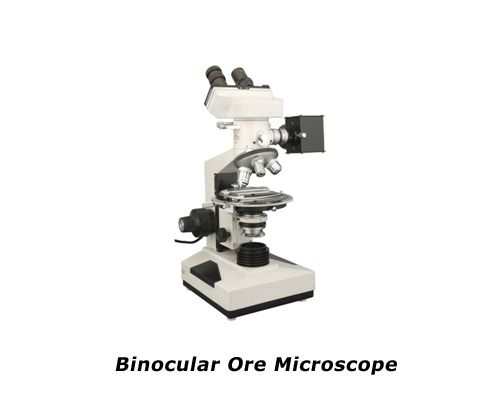

Price:
- 50
- 100
- 200
- 250
- 500
- 1000+

More Products in Microscope Category
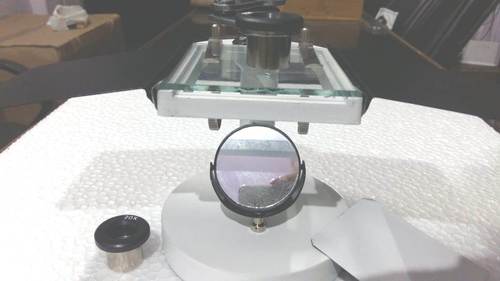
Dissecting Microscope Brass
Minimum Order Quantity : 1 Unit
Material : Brass
Product Type : Microscope

Ward Bed
Price 792 INR / Unit
Minimum Order Quantity : 1 Unit
Material : Mild Steel
Usage : Hospital
Product Type : Bed
Color : White
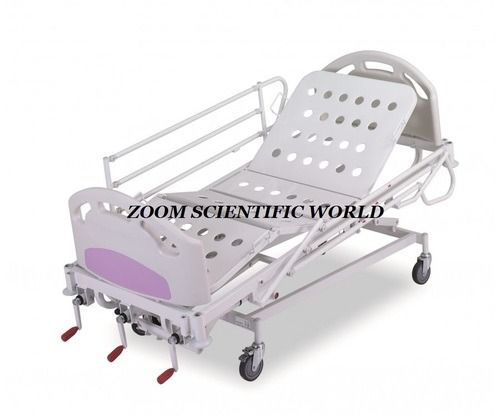
Electrical intensive care bed
Price 755 INR / Unit
Minimum Order Quantity : 1 Unit
Material : Mild Steel
Usage : Hospitals
Product Type : Bed
Color : White
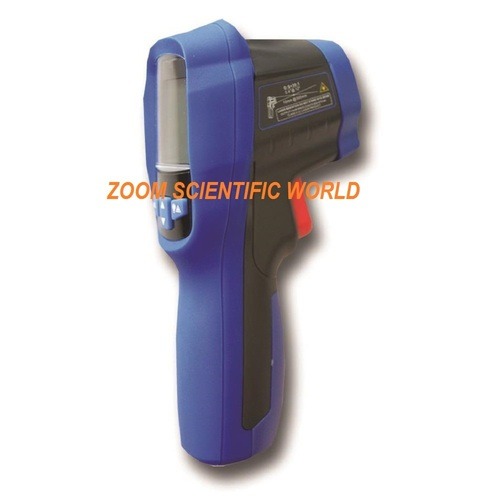
Infrared Thermometer
Price 14 INR / Piece
Minimum Order Quantity : 1 Piece
Material : Plastic
Usage : High Temperature
Product Type : Thermometer
Color : Purpal And Black

GST : 06ALAPA6623N1Z8

- 4537/1 A, Bldg. 13, Deepak Market, Ist Ambala - 133001, Haryana, India
- Phone : 08045478393
- Export Import Code (IEC code) - 3312001811
SSI No. - 060021100476

- Mr Sahil Aggarwal (GENERAL MANAGER)
- Mobile : 08045478393

|



Developed and Managed by Infocom Network Private Limited.
