




 Send Inquiry
Reichert Wollney's Apparatus
Price 1950.0 INR/ Piece
Reichert Wollney's Apparatus Specification
- Usage
- Chemical Laboratory
- Product Type
- Apparatus
- Color
- White
- Material
- Borosilicate Glass
- Reusable
- Yes
- Finish
- Smooth, Transparent Glass
- Autoclavable
- Yes
Reichert Wollney's Apparatus Trade Information
- Minimum Order Quantity
- 1 Piece
- Payment Terms
- Cash in Advance (CID), Cash Advance (CA)
- Supply Ability
- 1000 Pieces, Piece Per Week
- Delivery Time
- 1 Week
- Sample Available
- Yes
- Sample Policy
- Sample costs shipping and taxes has to be paid by the buyer
- Main Export Market(s)
- Asia, Australia, Western Europe, Middle East, Central America, South America, Eastern Europe, North America, Africa
- Main Domestic Market
- All India
Reichert Wollney's Apparatus About
Reichert Wollney's Apparatus:- Catalogue No.934:- For the determination of volatile fatty acids in margarine and butter with rubber cork fitting with clamp,stand and burner.
Reichert Wollney's Apparatus:- Catalogue No.935:- For the determination of volatile fatty acids in margarine and butter with standard joint fitting with clamp,stand and burner.
Versatile Laboratory Utility
The Reichert Wollneys Apparatus is commonly used in chemical laboratories for the assessment and analysis of fats and oils. Its transparent glass construction enables clear observation during experiments, facilitating accurate chemical results. This apparatus is suitable for both educational and professional lab settings.
Premium Borosilicate Glass Construction
Manufactured using high-grade borosilicate glass, the apparatus offers excellent chemical resistance and thermal durability. Its smooth, transparent finish aids in easy cleaning and maintenance, adding to its longevity and usability in repetitive laboratory procedures.
Reusable and Autoclavable for Safety
Designed for rigorous laboratory use, the Reichert Wollneys Apparatus can be safely autoclaved and reused. Its robust construction ensures it withstands repeated sterilization cycles, supporting laboratory hygiene and minimizing waste.
FAQs of Reichert Wollneys Apparatus:
Q: How is the Reichert Wollneys Apparatus typically used in laboratories?
A: The apparatus is primarily used in chemical laboratories for determining fat content or assessing the purity of substances. It facilitates the accurate analysis of oils and fats, which is crucial in food, chemical, and research industries.Q: What material is the Reichert Wollneys Apparatus made from?
A: It is made from high-quality borosilicate glass, known for its chemical resistance, smooth finish, and ability to withstand high temperatures. This makes it ideal for laboratory applications.Q: When should I autoclave the apparatus?
A: It is advisable to autoclave the apparatus before and after use in processes where sterilization is necessary to prevent cross-contamination or when switching between different substances.Q: Where is the Reichert Wollneys Apparatus manufactured and supplied from?
A: The apparatus is manufactured, exported, and supplied from India, serving laboratory and research institutions both domestically and internationally.Q: What is the cleaning process for this apparatus?
A: After use, the apparatus should be rinsed with appropriate laboratory cleaning solutions, followed by thorough washing with distilled water. Its smooth, transparent surface makes cleaning efficient and ensures no residue remains.Q: What are the key benefits of using this apparatus in a laboratory?
A: The key benefits include high durability due to borosilicate glass construction, reusability after autoclaving, excellent chemical resistance, and ease of cleaning. These features make it a practical and cost-effective choice for various chemical analyses.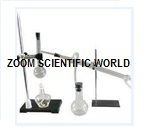

Price:
- 50
- 100
- 200
- 250
- 500
- 1000+

More Products in Lab Glassware Category
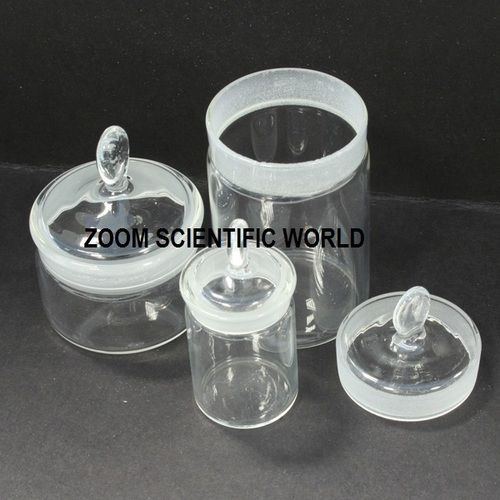
Weighing Bottles
Price 33.0 INR / Piece
Minimum Order Quantity : 1 Piece
Usage : Chemical Laboratory
Product Type : Bottles
Color : Transparent
Material : Glass

Dropping Funnels Cylindrical,With Stopcock,Screw Type PTFE Key
Price 17 INR / Piece
Minimum Order Quantity : 1 , , Piece
Usage : Chemical Laboratory
Product Type : Dropping Funnels
Color : Transparent
Material : Glass

Spare Receiver
Price 19 INR / Piece
Minimum Order Quantity : 1 , Piece
Usage : Chemical Laboratory
Product Type : Spare Receiver
Color : Transparent
Material : Glass

Chromatography Apparatus Semi Micro
Price 18 INR / Piece
Minimum Order Quantity : 1 Piece
Usage : Chemical Laboratory
Product Type : Apparatus
Color : Transparent
Material : Glass

GST : 06ALAPA6623N1Z8

- 4537/1 A, Bldg. 13, Deepak Market, Ist Ambala - 133001, Haryana, India
- Phone : 08045478393
- Export Import Code (IEC code) - 3312001811
SSI No. - 060021100476

- Mr Sahil Aggarwal (GENERAL MANAGER)
- Mobile : 08045478393

|



Developed and Managed by Infocom Network Private Limited.
