




 Send Inquiry
Research Polarimeter
Price 160 INR/ Unit
Research Polarimeter Specification
- Material
- Stainless Steel
- Color
- Black
- Product Type
- Polarimeter
- Voltage
- 100-240 Volt (v)
- Usage
- Industrial
- Sample Tube Length
- 200 mm
- Operating Humidity
- 85% relative humidity
- Power Consumption
- Less than 20 W
- Resolution
- 0.01
- User Interface
- Touch Button Controls
- Light Source Type
- LED or Halogen Lamp
Research Polarimeter Trade Information
- Minimum Order Quantity
- 1 Unit
- Payment Terms
- Cash Advance (CA), Cash in Advance (CID)
- Supply Ability
- 100 Units Per Week
- Delivery Time
- 1 Week
- Sample Available
- Yes
- Sample Policy
- Sample costs shipping and taxes has to be paid by the buyer
- Main Export Market(s)
- Western Europe, Middle East, Central America, Eastern Europe, South America, Asia, North America, Australia, Africa
- Main Domestic Market
- All India
Research Polarimeter About
Used in medical, pharmaceutical and chemical research laboratories. Consist of a imported half shade nicol polariser, analyser, 100mm. Diameter circular scale divided in degrees 0-360 Deg. x 1 Deg. And a sugar scale divided -30 Deg. To + 130 Deg. X 1 Deg. ISS, a divided micrometer drum is given to read 0.05 Deg. (3 minutes) and 0.1 Deg. ISS, the scale is properly illuminated for taking readings, the body is very sturdy and separate sodium lamp is stand is provided. Complete with polarimeter tube, bubble traps at the center, 200mm. Sodium lamp with stand and transformer.
Advanced Measurement Precision
Equipped with a remarkable resolution of 0.01, this research polarimeter enables highly accurate determination of optical rotation. Its stainless steel construction ensures longevity, even in industrial or laboratory environments where robust handling is required. The instruments capability to deliver fine distinction in rotational angles supports advanced research and stringent quality control applications.
Flexible Power Compatibility
The polarimeter runs efficiently on a wide voltage range from 100 to 240 volts, accommodating diverse laboratory and industrial power setups. With less than 20 watts of power consumption, it proves energy-efficient and cost-effective for continuous operations. This flexibility ensures seamless integration into both new and existing laboratory infrastructure.
User-Friendly Operation
Utilizing a modern touch button control interface, the polarimeter is intuitive to operate, reducing training time and facilitating ease-of-use. Its compatibility with both LED and halogen light sources allows users to adapt the device to their preferred measurement method. This versatile approach improves workflow efficiency and enhances the user experience in research and industrial environments.
FAQs of Research Polarimeter:
Q: How does the research polarimeter work?
A: The research polarimeter measures the angle of rotation experienced by polarized light as it passes through optically active substances. By analyzing this rotation, users can determine properties like concentration and purity of the tested material.Q: What makes the polarimeter suitable for industrial and laboratory use?
A: With its stainless steel construction and compatibility with relative humidity up to 85%, the polarimeter is designed for durability and reliability in both industrial and laboratory settings. It delivers consistent and high-resolution readings, which are essential for precise scientific research and quality assurance.Q: What voltage and power supply does this polarimeter require?
A: The instrument operates on a wide input voltage range of 100-240 volts, ensuring usability in various global settings. Its power consumption is less than 20 watts, making it highly energy efficient.Q: Where is a research polarimeter typically used?
A: Research polarimeters are commonly found in industrial laboratories, research institutes, pharmaceutical quality control, and educational settings where analysis of optically active substances is needed.Q: What light sources are compatible with this polarimeter?
A: This device is compatible with both LED and halogen lamps, allowing users to select the light source that best fits their application and measurement requirements.Q: How do I operate the instrument?
A: Operation is made simple through the touch button control interface. Users can easily initiate measurements and adjust settings, minimizing the learning curve for new users.Q: What are the main benefits of using a research polarimeter?
A: Key benefits include precise measurement of optical rotation, robust stainless steel build, flexible power compatibility, ease of use, and low energy consumptionmaking it an ideal choice for consistent analytical performance in demanding environments.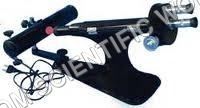

Price:
- 50
- 100
- 200
- 250
- 500
- 1000+

More Products in Scientific Product Category
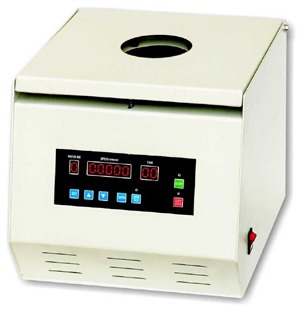
Micro Centrifuge
Price 124 INR / Unit
Minimum Order Quantity : 1 Unit
Product Type : Micro Centrifuge
Color : White
Usage : Industrial
Material : Mild Steel
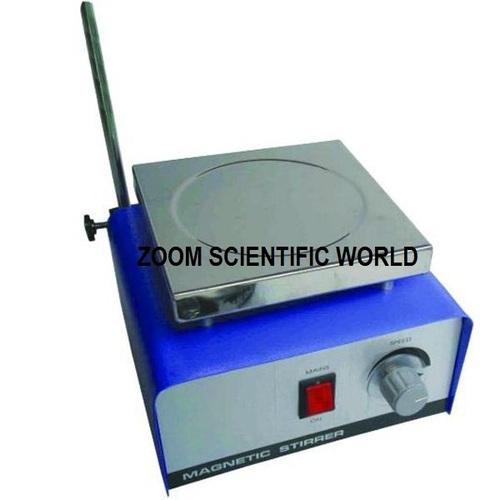
Magnetic Stirrer
Price 124 INR / Unit
Minimum Order Quantity : 1 , , Unit
Product Type : Magnetic Stirrer
Color : Silver And Purpal
Usage : Laboratoy
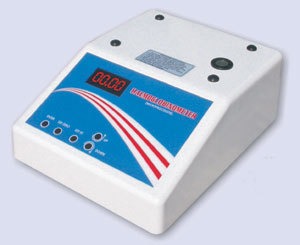
Haemoglobinometer
Price 127 INR / Unit
Minimum Order Quantity : 1 Unit
Product Type : Haemoglobinometer
Color : White
Usage : Laboratory
Material : Mild Steel

Orbital Shaking Incubators
Price 124 INR / Unit
Minimum Order Quantity : 1 , Unit
Product Type : Shaking Incubators
Color : Silver And Sky Blue
Usage : Laboratory
Material : Stainless Steel

GST : 06ALAPA6623N1Z8

- 4537/1 A, Bldg. 13, Deepak Market, Ist Ambala - 133001, Haryana, India
- Phone : 08045478393
- Export Import Code (IEC code) - 3312001811
SSI No. - 060021100476

- Mr Sahil Aggarwal (GENERAL MANAGER)
- Mobile : 08045478393

|



Developed and Managed by Infocom Network Private Limited.
