




 Send Inquiry
Resistance Boxes
Price 111 INR/ Piece
Resistance Boxes Specification
- Material
- Wooden
- Color
- Brown And Black
- Usage
- Laboratory
- Product Type
- Resistance Boxes
- Temperature Range
- 225 Celsius (oC)
- Number of Steps
- Up to 10 steps
- Insulation Resistance
- >100 Mega Ohms at 500V DC
- Step Value
- 1 Ohm, 10 Ohm, 100 Ohm, 1000 Ohm options
- Operating Environment
- Indoor use, Dry conditions
- Contact Material
- Brass/Copper
- Finish
- Lacquered/Polished
- Application
- Physics and Electrical Engineering Experiments
Resistance Boxes Trade Information
- Minimum Order Quantity
- 1 Piece
- Payment Terms
- Cash in Advance (CID), Cash Advance (CA)
- Supply Ability
- 1000 Pieces Per Week
- Delivery Time
- 1 Week
- Sample Available
- Yes
- Sample Policy
- Sample costs shipping and taxes has to be paid by the buyer
- Main Export Market(s)
- Western Europe, Australia, Eastern Europe, Middle East, South America, Asia, Central America, North America, Africa
- Main Domestic Market
- All India
Resistance Boxes About
Resistance Boxes Plug Type:-
ZOOM scientific is an esteemed manufacturer of electronic products.
Pye type or Gamberal type . Educational quality.
Accuracy : Constantan Coils 0.2% and Maganin coils 0.1%.
Precision and Versatility for Experiments
Resistance boxes are designed to deliver highly accurate resistive values, making them a staple in physics and electrical engineering laboratories. With step options ranging from 1 to 1000, users can create custom resistance arrangements for diverse experimental setups. The boxes robust construction ensures consistent performance, even with frequent handling and high-temperature exposure during experiments.
Superior Build Quality for Longevity
Manufactured from high-quality lacquered or polished wood and equipped with brass or copper contact points, these resistance boxes are built for dependable long-term use. The careful selection of materials guarantees excellent conductivity, thermal stability, and remarkable resistance to electrical insulation breakdown, ensuring safe and steady operation over years of repetitive academic and professional applications.
Ideal for Educational Environments
Engineered for use by students, educators, and professionals, resistance boxes are invaluable for teaching fundamental concepts in electricity and electronics. Their straightforward, user-friendly design and clear step labeling make them accessible to learners while fostering practical, hands-on investigation into Ohms law, circuit behavior, and instrument calibration.
FAQs of Resistance Boxes:
Q: How are resistance boxes typically used in laboratory experiments?
A: Resistance boxes are used to introduce known resistances into electrical circuits, allowing precise measurements and calibrations during physics and electrical engineering experiments. Users select and dial specific resistance values to study circuit responses or verify theoretical calculations.Q: What is the benefit of step values in resistance boxes?
A: Step values (for example, 1, 10, 100, and 1000) provide flexibility for users to combine different resistances, enabling a wide range of experiments with varying levels of complexity. This modular approach supports both basic and advanced studies in electrical resistance.Q: When should a resistance box be used during an experiment?
A: A resistance box is typically used when accurate, selectable resistance values are required to set up or calibrate a circuit. They are especially useful for comparing theoretical and observed values or for replacing variable resistors with stable reference values in sensitive tests.Q: What materials are used in the construction of these resistance boxes?
A: These resistance boxes are constructed from lacquered or polished wood for the main body, ensuring durability and insulation. The contact points are made of brass or copper, which offer excellent electrical conductivity and reliable long-term connection.Q: Where should resistance boxes be operated for optimal performance and safety?
A: They should be used indoors in dry environments, as specified, since high humidity or exposure to moisture can affect insulation and accuracy. Proper storage and careful handling also extend the products lifespan and maintain reliable measurements.Q: How does the insulation resistance feature contribute to user safety?
A: With insulation resistance greater than 100 Mega Ohms at 500V DC, these boxes offer substantial protection against electrical leakage, minimizing the risk of electric shock and ensuring experiments are conducted safely and accurately.Q: What educational advantage do resistance boxes offer?
A: Resistance boxes offer a practical, hands-on avenue for students to experiment with electrical circuits. They help demystify theoretical concepts, provide real-world context, and support the development of measurement and analytical skills essential in science and engineering disciplines.

Price:
- 50
- 100
- 200
- 250
- 500
- 1000+

More Products in Physics Lab Equipment Category

Calorimeters Copper
Minimum Order Quantity : 1 Piece
Usage : Heat Determination, Laboratory Experiments, Physics Studies
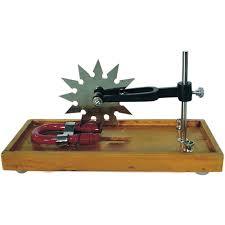
Barlow Wheel
Price 126 INR / Piece
Minimum Order Quantity : 1 Piece
Color : Brown And Black And Silver
Product Type : Barlow Wheel
Usage : Industrial
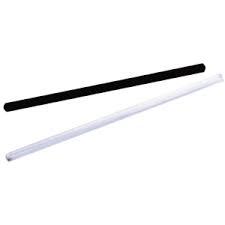
Rod Polythene
Price 99 INR / Piece
Minimum Order Quantity : 1 Piece
Color : White And Black
Product Type : Rod
Material : Borosilicate Glass
Usage : Chemical Laboratory
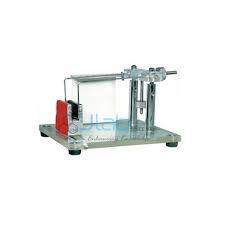
Force On A Conductor Balance
Price 120 INR / Piece
Minimum Order Quantity : 1 Piece
Color : Silver
Product Type : Conductor Balance
Material : Stainless Steel

GST : 06ALAPA6623N1Z8

- 4537/1 A, Bldg. 13, Deepak Market, Ist Ambala - 133001, Haryana, India
- Phone : 08045478393
- Export Import Code (IEC code) - 3312001811
SSI No. - 060021100476

- Mr Sahil Aggarwal (GENERAL MANAGER)
- Mobile : 08045478393

|



Developed and Managed by Infocom Network Private Limited.
