




 Send Inquiry
Rheostats
Price 145 INR/ Piece
Rheostats Specification
- Control Type
- Rotary Knob
- Power Supply
- Manual, no power supply required
- Accuracy
- ±5%
- Temperature Resistance
- Up to 100°C
- Features
- Sturdy construction, easy to operate, insulated for safety
- Shape
- Rectangular
- Type
- Rotary Rheostat
- Dimension (L*W*H)
- 235 x 82 x 120 mm
- Equipment Type
- Variable Resistance
- Equipment Materials
- Bakelite body with metal contacts
- Power
- 100W
- Voltage
- 250V Max
- Material
- Alloy wire on ceramic tube
- Application
- Electrical experiments, controlling current
- Insulation Resistance
- > 10 M
- Weight
- Approx. 850g
- Terminal Type
- Brass binding posts
- Color
- Black/Brown
- Adjustment Mechanism
- Sliding Contact Arm
- Contact Material
- Copper alloy
Rheostats About
RheostatZoom Power Rheostats are made with a variety of resistance & current carrying capacity so as to satisfy every need. They are wound with heavily oxidized eureka resistance wire upon a porcelain tube dia 44 mm aprox. The tube is carrying upon Bakelite rider and the heavy duty sliding contact is of the phosphor bronze with brass rod. 4 mm socket terminals are fitted, allowing for rheostat or potentiometer connection. Total resistance and maximum current capacity is marked on the slider. Total Permanent current loading should not exceed 75% of the marked values. The actual resistance of Wire Wound Rheostats shall be +20% -5% of the rated resistance as per our resistance chart. (as per ISI specification no. IS : 9051 S. No. 10.3), we are recognized as one of the major Electronic Rheostats Manufacturers and Exporters from India.
Enhanced Precision and Durability
Built with high-grade copper alloy contacts, brass binding posts, and a robust Bakelite body, the rotary rheostat ensures consistent performance and longevity. Its alloy wire wound ceramic tube and rectangular shape offer superior heat resistance and stable operation during extended use.
Safe and Versatile Application
Rated for up to 250V and 100W, the rheostat is ideal for educational laboratories, research institutions, and industrial current control tasks. The insulated construction and sliding contact arm provide safe, reliable adjustment of resistance values during electrical experiments and processes.
FAQs of Rheostats:
Q: How does the rotary rheostat adjust electrical resistance?
A: The rotary rheostat modifies electrical resistance using a manually operated sliding contact arm, controlled by a rotary knob. This mechanism changes the contact position along the alloy wire wound on a ceramic tube, varying the resistance delivered to the circuit.Q: What materials contribute to the rheostats durability and safety?
A: The rheostat features a Bakelite body for excellent insulation and heat resistance, copper alloy contacts for efficient conductivity, and brass binding posts for secure connections. The alloy wire and ceramic tube further enhance its longevity and operational stability.Q: When is this rheostat most beneficial for electrical experiments?
A: It is particularly useful when precise current regulation is required, such as during laboratory experiments or practical demonstrations. Its adjustable resistance and high accuracy allow users to finely tune current flow in a range of educational and research contexts.Q: Where can this rotary rheostat be used effectively?
A: This rotary rheostat is best suited for electrical laboratories, technical institutions, workshops, and research facilities. Its compliance with ISI standards makes it suitable for Indian educational and industrial environments.Q: What process should be followed to ensure accurate readings?
A: To obtain accurate results, securely connect the brass binding posts to the circuit, rotate the knob to set the desired resistance, and confirm that insulation resistance exceeds 10 M. Always operate within the specified power (100W) and voltage (250V) limits.Q: How does the insulation resistance enhance device safety during use?
A: Insulation resistance greater than 10 M minimizes the risk of electrical leakage, protecting users from accidental shocks and ensuring safe operation during high-voltage or prolonged use.Q: What are the benefits of choosing this ISI marked rotary rheostat?
A: Benefits include reliable and precise variable resistance control, sturdy construction for longevity, safety-focused design, compatibility with manual operation, and adherence to ISI quality standardsmaking it a preferred choice for Indian laboratories and industries.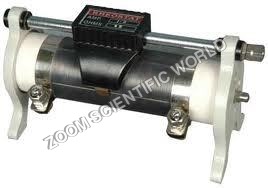

Price:
- 50
- 100
- 200
- 250
- 500
- 1000+

More Products in Physics instruments Category
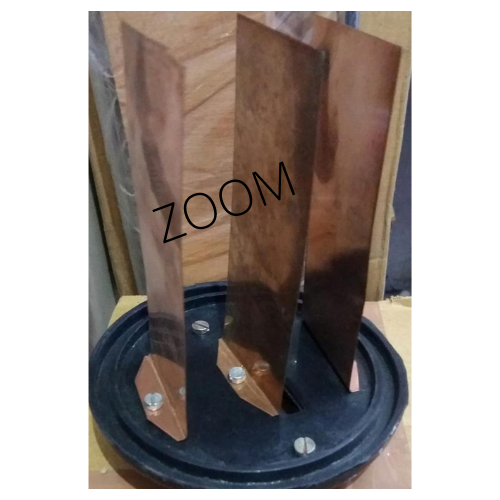
Copper Voltmeter
Price 350 INR / Unit
Minimum Order Quantity : 1 Unit
Material : Highgrade Copper
Application : Measuring Electrical Voltage
Features : Durable Construction, Corrosion Resistant, Easy to Read
Control Type : Dial

Digital Stop watch
Minimum Order Quantity : 1 Piece
Material : Plastic
Application : Sports, Laboratory, Schools, Athletics Timing
Features : Water Resistant, Split Time, Alarm, Calendar, Lightweight
Control Type : Manual Start/Stop/Reset Buttons

Wet - Dry Thermometer
Price 180 INR / Piece
Minimum Order Quantity : 1 Piece
Material : Glass and Acrylic


GST : 06ALAPA6623N1Z8

- 4537/1 A, Bldg. 13, Deepak Market, Ist Ambala - 133001, Haryana, India
- Phone : 08045478393
- Export Import Code (IEC code) - 3312001811
SSI No. - 060021100476

- Mr Sahil Aggarwal (GENERAL MANAGER)
- Mobile : 08045478393

|



Developed and Managed by Infocom Network Private Limited.
