




 Send Inquiry
Rotary Vacuum Film Evaporator
Price 140 INR/ Unit
MOQ : 1 Unit
Rotary Vacuum Film Evaporator Specification
- Color
- Yellow And White
- Voltage
- 110-240 Volt (v)
- Usage
- Laboratory
- Material
- Stainless Steel
- Product Type
- Rotary Vacuum
- Condenser Cooling
- Water or Dry Ice condenser available
- Bath Temperature Control
- Digital Thermostat
- Accessories
- Clamp set, Flask, Vacuum Seal Kit
- Plug Type
- Standard/Customizable
- Receiving Flask Capacity
- 1 L to 50 L
- Glass Material
- Borosilicate Glass 3.3
- Vacuum Range
- Up to 1 mbar
- Evaporation Flask Capacity
- 1 L, 2 L, 5 L, 10 L, 20 L, 50 L (model dependent)
- Heating Bath Material
- Stainless Steel with PTFE lining
Rotary Vacuum Film Evaporator Trade Information
- Minimum Order Quantity
- 1 Unit
- Payment Terms
- Cash Advance (CA), Cash in Advance (CID)
- Supply Ability
- 1000 Units Per Week
- Delivery Time
- 1 Week
- Sample Available
- Yes
- Sample Policy
- Sample costs shipping and taxes has to be paid by the buyer
- Main Export Market(s)
- Western Europe, Central America, Eastern Europe, Middle East, South America, Asia, North America, Australia, Africa
- Main Domestic Market
- All India
Rotary Vacuum Film Evaporator About
Rotary Vacuum Film Evaporator(Digital):- This model of evaporator is supplied with digital control and display in the Bath and specially designed mechanical jack for positioning the glass assembly.All parts are powder coated with apoxy/polyester hybird,textured,siemens grey finish.Efficient & Safe Laboratory Evaporation
This rotary vacuum film evaporator ensures safe, controlled, and efficient evaporation of volatile solvents. Its digital thermostat and PTFE-lined stainless steel heating bath offer precise temperature management, while the advanced vacuum system reduces boiling points, safeguarding sensitive compounds. It is ideal for laboratory-scale concentration, purification, and solvent removal tasks.
Versatile Configurations and Accessories
Available in flask sizes from 1 L to 50 L, the evaporator caters to a variety of laboratory needs, from small-scale extraction to bulk concentration. Included accessories like clamp set, flask, and vacuum seal kit provide everything necessary for immediate use. The systems robust construction ensures reliable, long-term operation in demanding lab environments.
Optimal Cooling & Chemical Resistance
Operators can choose between water or dry ice condensers for effective condensation, making the evaporator suitable for a wide range of solvents. The use of Borosilicate Glass 3.3 guarantees excellent thermal and chemical resistance, enhancing safety during high-vacuum processes and when working with corrosive substances.
FAQs of Rotary Vacuum Film Evaporator:
Q: How does a Rotary Vacuum Film Evaporator work?
A: A rotary vacuum film evaporator works by rotating a flask containing the sample solution under reduced pressure. The vacuum lowers the boiling point of solvents, enabling their evaporation at lower temperatures. A heating bath provides controlled heat while a condenser cools and collects the evaporated solvents efficiently.Q: What are the main benefits of using this evaporator in the lab?
A: The main benefits include rapid and gentle removal of solvents, protection of heat-sensitive compounds, reduced risk of oxidation, and improved solvent recovery. Its precise temperature control and chemical resistance allow safe handling of diverse laboratory tasks from concentration to distillation.Q: When should you use water and when should you use a dry ice condenser?
A: Choose a water condenser for standard solvents with higher boiling points, such as ethanol and water. Use a dry ice condenser for low-boiling-point solvents or when working at very low vacuum pressures, as it provides more effective condensation and prevents solvent vapors from escaping.Q: What capacity flasks are compatible with the Rotary Vacuum Film Evaporator?
A: The available flask sizes are 1 L, 2 L, 5 L, 10 L, 20 L, and 50 L, selectable based on the specific model. This variety accommodates small-scale to large-scale evaporation needs in laboratories.Q: Where is this device commonly used?
A: Rotary vacuum film evaporators are widely employed in academic research laboratories, pharmaceutical industries, chemical processing units, and quality control labs across India and globally, supporting processes like solvent removal, sample concentration, extraction, and purification.Q: What is included with the evaporator upon purchase?
A: Standard supplied accessories include a clamp set for secure assembly, a heat-resistant flask for sample processing, and a vacuum seal kit for maintaining optimal vacuum conditions. This ensures the equipment is ready for immediate laboratory use.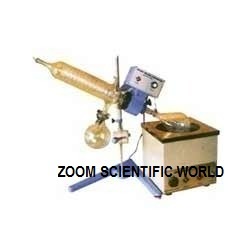
Tell us about your requirement

Price:
Quantity
Select Unit
- 50
- 100
- 200
- 250
- 500
- 1000+
Additional detail
Mobile number
Email

More Products in Scientific Product Category
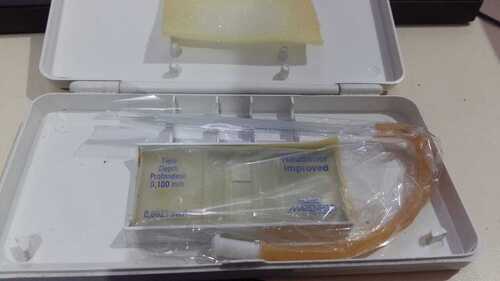
Zoom Haemocytometer
Price 650 INR / Unit
Minimum Order Quantity : 2 Units
Usage : Clinical, Hospital
Material : Rubber
Color : Orange And Transparent

Pathlogical medical microscope
Price 12500 INR / Unit
Minimum Order Quantity : 1 Unit
Usage : Surgery
Material : Mild Steel
Color : Black And White
Product Type : medical microscope
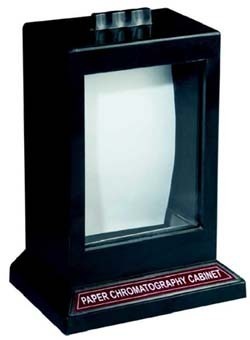
Paper Chromatography Kit
Price 142 INR / Unit
Minimum Order Quantity : 1 Unit
Usage : Medical Colleges, Research Institutes
Material : Plastic
Color : Black
Product Type : Chromatography Kit
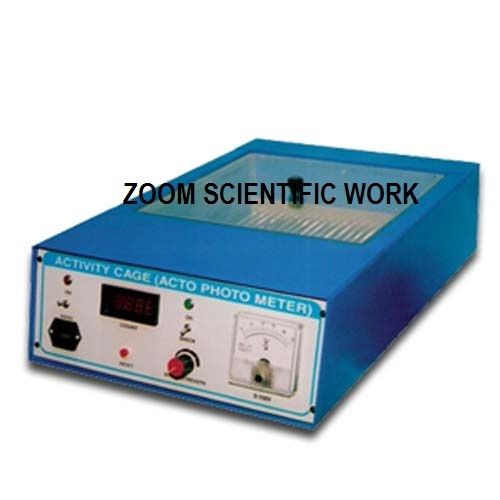
Activity Cage
Price 120 INR / Unit
Minimum Order Quantity : 1 , , Unit
Usage : Laboratory
Material : Aluminium Alloy
Color : Sky Blue And White

ZOOM SCIENTIFIC WORLD
GST : 06ALAPA6623N1Z8
GST : 06ALAPA6623N1Z8
Contact Details

- 4537/1 A, Bldg. 13, Deepak Market, Ist Ambala - 133001, Haryana, India
- Phone : 08045478393
- Export Import Code (IEC code) - 3312001811
SSI No. - 060021100476

- Mr Sahil Aggarwal (GENERAL MANAGER)
- Mobile : 08045478393

|



ZOOM SCIENTIFIC WORLD
All Rights Reserved.(Terms of Use)
Developed and Managed by Infocom Network Private Limited.
Developed and Managed by Infocom Network Private Limited.
