




 Send Inquiry
Round Bottom Flask Two Necks, At Angle Or Parallel
Price 10 INR/ Piece
Round Bottom Flask Two Necks, At Angle Or Parallel Specification
- Usage
- Laboratory
- Product Type
- Flask Two Necks
- Color
- Transparent
- Material
- Glass
- Joint Size
- Standard ground glass joints (e.g., 14/23, 19/26, 24/29)
- Neck Orientation
- Available at angle or parallel configuration
- Chemical Resistance
- High; suitable for most laboratory chemicals
- Autoclavable
- Yes
- Compliance
- Conforms to ISO/DIN standards
- Number of Necks
- 2
- Surface Finish
- Smooth, clear glass
Round Bottom Flask Two Necks, At Angle Or Parallel Trade Information
- Minimum Order Quantity
- 1 Piece
- Payment Terms
- Cash Advance (CA), Cash in Advance (CID)
- Supply Ability
- 1000 Pieces Per Week
- Delivery Time
- 1 Week
- Sample Available
- Yes
- Sample Policy
- Sample costs shipping and taxes has to be paid by the buyer
- Main Export Market(s)
- Western Europe, North America, Eastern Europe, Middle East, Central America, South America, Asia, Australia, Africa
- Main Domestic Market
- All India
Round Bottom Flask Two Necks, At Angle Or Parallel About
Round Bottom Flask Two Necks, At Angle Or Parallel:-
Catalogue No. Capacity ml. Centre Socket Side Socket
252/01 250 B 19 B 14
252/02 250 B 24 B 14
252/03 250 B 24 B 19
252/04 500 B 24 B 14
252/05 500 B 24 B 19
252/06 500 B 24 B 24
252/07 1000 B 24 B 14
252/08 1000 B 24 B 19
252/09 1000 B 24 B 24
252/10 1000 B 34 B 19
252/11 1000 B 34 B 24
252/12 2000 B 24 B 14
252/13 2000 B 24 B 19
252/14 2000 B 24 B 24
252/15 2000 B 34 B 19
252/16 2000 B 34 B 24
Versatile Two-Neck Design
This flask features two necks, which can be set at either an angle or parallel to one another. This adaptable neck arrangement is ideal for setups that require simultaneous connections to different apparatus, streamlining complex multi-step reactions and improving workflow efficiency in various laboratory protocols.
Superior Quality and Chemical Resistance
Manufactured from high-purity glass, this round bottom flask demonstrates excellent resistance against most laboratory chemicals. The glass construction ensures long-term durability and consistent performance, making it particularly reliable for repeated use in professional and educational laboratory settings.
Compliance and Safety Features
Conforming to ISO/DIN standards, the flask guarantees consistent joint sizes and quality. Its autoclavable design enhances user safety and simplifies sterilization, making it suitable for experiments where contamination prevention is critical. The smooth, transparent surface also aids in easy cleaning and observation during experimental procedures.
FAQs of Round Bottom Flask Two Necks, At Angle Or Parallel:
Q: How do I use the round bottom flask with two necks in laboratory experiments?
A: To use the flask, connect the standard ground glass joints to compatible laboratory equipment such as condensers or thermometers. The twin neck configuration allows you to introduce reagents or insert monitoring devices without interrupting reactions, especially during distillation, reflux, or synthesis setups.Q: What benefits does the angled or parallel neck configuration provide?
A: The option to have necks set at an angle or parallel allows you to tailor the flask setup to your experiments requirements. Angled necks minimize interference between attached apparatus, while parallel necks are useful for vertically aligned equipment, broadening the applications of the flask.Q: When should I sterilize the flask, and how do I do it?
A: You should sterilize the flask before and after procedures, especially for sensitive or biological experiments. This flask is fully autoclavable, so it can be safely sterilized using standard autoclave cycles as specified by laboratory protocol.Q: Where is this type of two-neck flask typically used?
A: These flasks are commonly used in research institutions, educational labs, and industrial settings where complex chemical reactions or multi-step experimental processes are performed, requiring simultaneous use of multiple pieces of equipment.Q: What is the advantage of the smooth, transparent glass surface?
A: A smooth, transparent glass surface allows for clear visual observation of your experiments and makes it easier to clean the flask after use, reducing the risk of contamination between procedures.Q: Which joints are compatible with this flask?
A: This round bottom flask features standard ground glass joints, such as 14/23, 19/26, or 24/29, ensuring compatibility with a wide range of laboratory glassware and accessories.

Price:
- 50
- 100
- 200
- 250
- 500
- 1000+

More Products in Lab Glassware Category
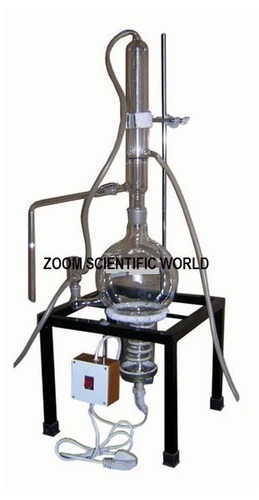
Automatic Electrically Heated All Glass Distillation Apparatus
Price 8850.0 INR / Piece
Minimum Order Quantity : 1 Piece
Color : Transparent
Material : Glass
Product Type : Distillation Apparatus
Usage : Chemical Laboratory
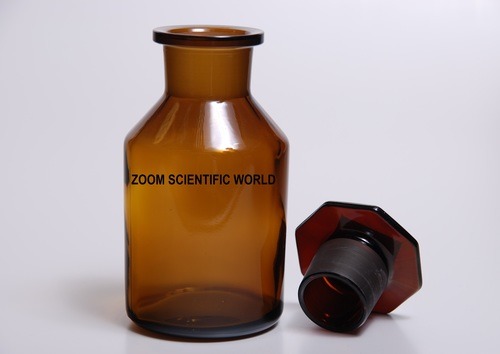
Stoppers For Regent Bottle
Price 10 INR / Piece
Minimum Order Quantity : 1 Piece
Color : Brown
Material : Glass
Product Type : Stoppers
Usage : Laboratory
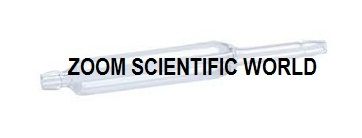
Murphy Drip
Price 10 INR / Piece
Minimum Order Quantity : 1 Piece
Color : Transparent
Material : Glass
Product Type : Drip
Usage : Chemical Laboratory
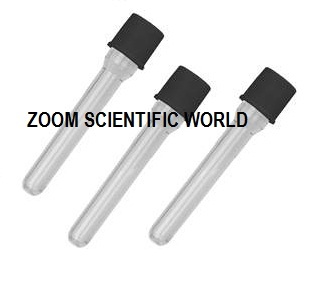
E.S.R. Tube
Price 10 INR / Piece
Minimum Order Quantity : 1 Piece
Color : Transparent And Black
Material : Glass
Product Type : Tube
Usage : Chemical Laboratory

GST : 06ALAPA6623N1Z8

- 4537/1 A, Bldg. 13, Deepak Market, Ist Ambala - 133001, Haryana, India
- Phone : 08045478393
- Export Import Code (IEC code) - 3312001811
SSI No. - 060021100476

- Mr Sahil Aggarwal (GENERAL MANAGER)
- Mobile : 08045478393

|



Developed and Managed by Infocom Network Private Limited.
