




 Send Inquiry
Sectional Model Of Steam Engine
MOQ : 1 Piece
Sectional Model Of Steam Engine Specification
- Power Source
- Manual Operation
- Feature
- Section cut to show internal operation of steam engine
- Core Components
- Cylinder, Piston, Connecting Rod, Flywheel
- Automation Grade
- Manual
- Model No
- TSE-201 or equivalent
- Equipment Materials
- Metallic Alloys and High-Grade Plastic
- Type
- Educational Sectional Model
- Usage
- Teaching and Demonstrative Purposes
- Display Type
- Sectional/Visual Model
- Dimension (L*W*H)
- Approx. 350 mm x 150 mm x 200 mm Millimeter (mm)
- Weight
- Approx. 35 kg (varies with manufacturer) Kilograms (kg)
- Color Scheme
- Multi-colored for Distinguishing Parts
- Maintenance
- Simple Cleaning Required; No Lubrication Needed
- Safety
- All Edges Smoothened for Classroom Use
- Assembly
- Pre-Assembled
- Application
- Fluid Mechanics & Thermodynamics Education
- Educational Level
- Suitable for School, College and Engineering Institute Demonstrations
- Movable Parts
- Sectioned Piston, Connecting Rod, and Crank Mechanism
- Surface Finish
- Rust-Resistant Painted & Polished
- Base Type
- Mounted on Heavy Duty Wooden/Metal Base
Sectional Model Of Steam Engine Trade Information
- Minimum Order Quantity
- 1 Piece
- Payment Terms
- Paypal, Letter of Credit (L/C), Telegraphic Transfer (T/T), Cash in Advance (CID)
- Supply Ability
- 100 Pieces Per Month
- Delivery Time
- 7 Days
- Main Export Market(s)
- Australia, North America, South America, Eastern Europe, Middle East, Western Europe, Central America, Asia, Africa
- Main Domestic Market
- All India
- Certifications
- ISO 9001: 2105 CE Certified CO
Sectional Model Of Steam Engine About
Zoom is a esteemed manufacturer and exporter. It has all types of lab equipments and microscope.The engine model comprises a section cut metal cylinder covered with transparent acrylic plate to observe the working parts -piston, valves, link motion and reversing methods.
Detailed Engineering for Education
This sectional steam engine model offers a vivid, interactive platform for learning. The multi-colored surface distinctly marks each component, enhancing comprehension during classroom demonstrations. Sectioning reveals the internal structure and movements, rendering complex thermodynamic processes easy to grasp.
Durable and Safe Construction
Constructed with rust-resistant materials and smoothened edges, this model prioritizes safety while ensuring durability. The sturdy wooden or metal base provides stability during demonstrations, making it a reliable educational tool for repeated hands-on use.
Effortless Maintenance and Operation
Maintenance is simplejust periodic dusting is needed, without lubrication. The pre-assembled design eliminates setup hassles, and manual operation ensures safe, controlled demonstrations within ambient classroom conditions.
FAQs of Sectional Model Of Steam Engine:
Q: How does the sectional model of the steam engine aid in classroom demonstrations?
A: The sectional model visually exposes the internal workings of a steam engine, allowing students to observe the movement of parts like the piston, connecting rod, and crank mechanism. This hands-on display helps clarify theoretical concepts in fluid mechanics and thermodynamics.Q: What are the main features that distinguish this educational steam engine model?
A: Key features include a rust-resistant painted surface, multi-colored components for clarity, sectioned construction to showcase internal mechanisms, and smoothened edges for safety. It is mounted on a robust base and constructed from durable metallic alloys and high-grade plastics.Q: When is this model most effectively used during academic sessions?
A: It is best used during demonstrations that require an understanding of engine mechanics, thermodynamic cycles, or fluid dynamicstypically in science or engineering classes at the school or college level.Q: Where should the model be positioned during demonstrations?
A: The model should be placed on a stable, flat surface such as a laboratory or classroom table. The heavy-duty wooden or metal base provides extra stability to ensure safe and clear viewing for all students.Q: What maintenance is required to keep the demonstration model in good condition?
A: Maintenance only involves occasional cleaning to remove dust or fingerprints. No lubrication or special care is needed thanks to the models polished, rust-resistant finish.Q: How is the model powered for demonstrations?
A: Operation is entirely manual. Users can move the piston and other parts by hand to demonstrate how a real steam engine functions, without any power source or actual steam generation involved.Q: What benefits does this model offer to educational institutions?
A: It provides a tangible, interactive method for students to study mechanical principles, improving engagement and understanding. Its robust design allows for repeated hands-on demonstrations, making it a valuable long-term teaching resource.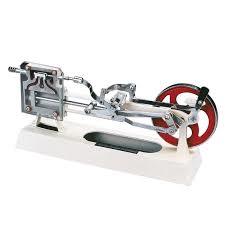
Tell us about your requirement

Price:
Quantity
Select Unit
- 50
- 100
- 200
- 250
- 500
- 1000+
Additional detail
Mobile number
Email

More Products in Physics Lab Equipment Category
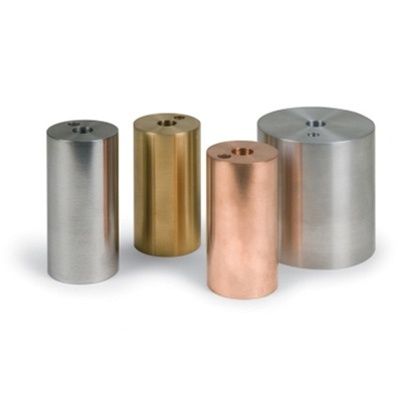
Calorimeters Metal Block
Minimum Order Quantity : 1 Piece
Usage : For Physics Laboratory / Calorimetry Experiment
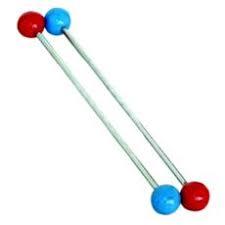
Magnet Ball Ended
Price 75 INR / Piece
Minimum Order Quantity : 10 Pieces
Usage : Holding, lifting, or retrieving metal objects
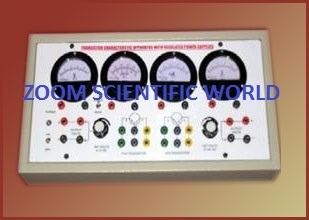
Transistor characteristic apparatus with regulated power supply
Price 126 INR / Piece
Minimum Order Quantity : 1 Piece
Usage : Laboratory
Material : Mild Steel
Color : White
Product Type : Regulated power supply
Ring Magnet Ceramic
Price 102 INR / Piece
Minimum Order Quantity : 1 Piece
Usage : Industrial
Material : Iron
Color : Black
Product Type : Magnet

ZOOM SCIENTIFIC WORLD
GST : 06ALAPA6623N1Z8
GST : 06ALAPA6623N1Z8
Contact Details

- 4537/1 A, Bldg. 13, Deepak Market, Ist Ambala - 133001, Haryana, India
- Phone : 08045478393
- Export Import Code (IEC code) - 3312001811
SSI No. - 060021100476

- Mr Sahil Aggarwal (GENERAL MANAGER)
- Mobile : 08045478393

|



ZOOM SCIENTIFIC WORLD
All Rights Reserved.(Terms of Use)
Developed and Managed by Infocom Network Private Limited.
Developed and Managed by Infocom Network Private Limited.
