




 Send Inquiry
Sherrington Rotating Drum
Price 121 INR/ Unit
MOQ : 1 Unit
Sherrington Rotating Drum Specification
- Voltage
- 220 Volt (v)
- Material
- Mild Steel
- Color
- White
- Usage
- Laboratory
- Product Type
- Rotating Drum
- Safety Feature
- Overload protection
- Drum Material
- Acrylic
- Motor Power
- 15 W
- Rotation Speed
- 10-50 rpm adjustable
- Chamber Material
- Borosilicate Glass
- Number of Chambers
- 6
- Control Method
- Microprocessor Controlled
Sherrington Rotating Drum Trade Information
- Minimum Order Quantity
- 1 Unit
- Payment Terms
- Cash in Advance (CID), Cash Advance (CA)
- Supply Ability
- 1000 Units Per Week
- Delivery Time
- 1 Week
- Sample Available
- Yes
- Sample Policy
- Sample costs shipping and taxes has to be paid by the buyer
- Main Export Market(s)
- Western Europe, Australia, Middle East, Central America, Eastern Europe, South America, Asia, North America, Africa
- Main Domestic Market
- All India
Sherrington Rotating Drum About
Sherrington Rotating Drum:- Electrical E-8 Student Kymograh with special heavy duty motor, oil lapped gear systems,speeds from 0.12 mm/Sec. to 640 mm/Sec. in 8 steps, jerk free running, instantaneous start & stop clutch, Stainless steel spindle with screw lift 15*15cm cylinder,with levelling screws, pilot lamp, plug & cord.Versatile Chamber Design
The Sherrington Rotating Drum features an acrylic chamber divided into six compartments, which enables simultaneous, multi-sample processing or observation. This configuration enhances efficiency in laboratories where multiple tests must be conducted in parallel, making it a valuable tool for teaching and research environments.
Precision Control and Safety
Equipped with a microprocessor-controlled system, the drums rotation speed can be finely adjusted between 10 and 50 rpm. An overload protection mechanism safeguards against accidental damage, allowing users to operate the instrument with confidence and ensuring longevity in daily laboratory applications.
Robust Build and Reliable Performance
Manufactured with a durable mild steel body and a transparent acrylic drum, the instrument is engineered for both strength and visibility. Its 15 W motor delivers consistent, reliable performance, while operation at 220 volts makes it compatible with standard laboratory electrical systems in India.
FAQs of Sherrington Rotating Drum:
Q: How does the Sherrington Rotating Drum operate in laboratory settings?
A: The drum is powered by a 15 W motor with an adjustable speed setting from 10 to 50 rpm, controlled by a microprocessor. This allows precise manipulation of rotation for various experiments requiring gentle agitation or sample mixing.Q: What are the main benefits of the drums six-chamber acrylic design?
A: The six-chamber design allows users to conduct several tests or observations simultaneously, which increases efficiency and supports comparative studies within the same experimental conditions. The acrylic material also provides visibility for easy monitoring.Q: When should I use the rotating drum for laboratory research?
A: The instrument is best suited for applications involving mild agitation, behavioral experiments with small animals, mixing samples, or demonstrations in educational settings, whenever controlled rotational motion is needed.Q: Where is the Sherrington Rotating Drum commonly used?
A: It is widely utilized in research institutes, educational laboratories, and scientific demonstration settings in India, given its robust build and compatibility with the standard 220 V power supply.Q: What process is involved in setting up the rotating drum for usage?
A: First, ensure the drum is securely placed on a stable surface and connected to a 220 V power source. Place samples into the acrylic chambers, set the desired rpm using the microprocessor controls, and activate the motor. The safety overload protection ensures safe operation throughout the process.Q: What advantages does microprocessor control provide for this product?
A: Microprocessor control allows for precise, repeatable adjustments to rotation speed, enhancing experimental accuracy. It also supports safety features such as overload protection, which prevents damage from operational errors.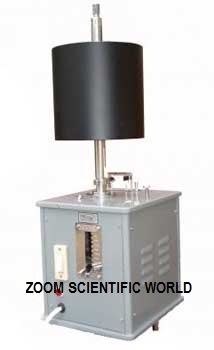
Tell us about your requirement

Price:
Quantity
Select Unit
- 50
- 100
- 200
- 250
- 500
- 1000+
Additional detail
Mobile number
Email

More Products in Scientific Product Category

Fermentation Vessels
Price 140 INR / Unit
Minimum Order Quantity : 1 Unit
Color : Transparent
Product Type : Fermentation Vessels
Usage : Laboratory
Material : Glass

Andresen's Pipettes
Price 10 INR / Piece
Minimum Order Quantity : 1 Piece
Color : Transparent
Product Type : Pipettes
Usage : Chemical Laboratory
Material : Plastic And Glass
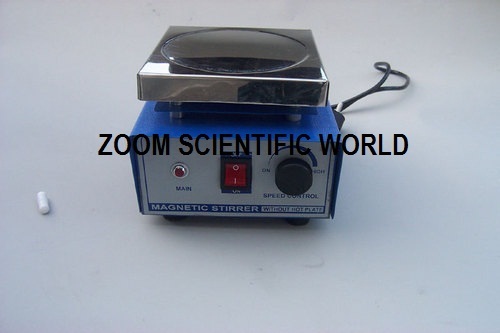
Magnetic Stirrer Without Hot plate
Price 123 INR / Unit
Minimum Order Quantity : 1 Unit
Color : Blue And Silver
Product Type : Magnetic Stirrer

Orbital Shaking Incubators
Price 124 INR / Unit
Minimum Order Quantity : 1 , Unit
Color : Silver And Sky Blue
Product Type : Shaking Incubators
Usage : Laboratory
Material : Stainless Steel

ZOOM SCIENTIFIC WORLD
GST : 06ALAPA6623N1Z8
GST : 06ALAPA6623N1Z8
Contact Details

- 4537/1 A, Bldg. 13, Deepak Market, Ist Ambala - 133001, Haryana, India
- Phone : 08045478393
- Export Import Code (IEC code) - 3312001811
SSI No. - 060021100476

- Mr Sahil Aggarwal (GENERAL MANAGER)
- Mobile : 08045478393

|



ZOOM SCIENTIFIC WORLD
All Rights Reserved.(Terms of Use)
Developed and Managed by Infocom Network Private Limited.
Developed and Managed by Infocom Network Private Limited.
