




 Send Inquiry
Tablet Hardness Tester
Price 100 INR/ Piece
MOQ : 1 Piece
Tablet Hardness Tester Specification
- Application
- Laboratory
- Material
- Plastic
- Product Type
- Tester
- Color
- Transparent
- Operation
- Hand Operated
- Force Gauge Type
- Dial
- Maximum Tablet Diameter
- Up to 25 mm
- Reading Units
- Kg / Newton
Tablet Hardness Tester Trade Information
- Minimum Order Quantity
- 1 Piece
- Payment Terms
- Cash in Advance (CID), Cash Advance (CA)
- Supply Ability
- 1000 Pieces Per Week
- Delivery Time
- 1 Week
- Sample Available
- Yes
- Sample Policy
- Sample costs shipping and taxes has to be paid by the buyer
- Main Export Market(s)
- Western Europe, Australia, Middle East, Central America, South America, Asia, Eastern Europe, North America, Africa
- Main Domestic Market
- All India
Tablet Hardness Tester About
Tablet Hardness Tester Monsanto Type: A fairly handy instrument for taking quick readings for the hardness of tablets it is made of brass turned parts. Heavily chrome plated the scale is 0 to 2KG. The index mark and division is in reading. Scale is adjustable for zero setting as per size of the tablets.Efficient Tablet Hardness Testing for Laboratories
This Tablet Hardness Tester is tailored for fast and straightforward hardness evaluation of tablets up to 25 mm in diameter. Its hand-operated design ensures ease of use and portability, ideal for laboratories that require reliable performance without the need for complex equipment. Built from transparent plastic, users can clearly observe the testing process while benefiting from durable construction. With readings available in kilograms and Newtons, this device fits the needs of quality control units, educational institutions, and R&D environments.
FAQs of Tablet Hardness Tester:
Q: How does the Tablet Hardness Tester operate?
A: The tester is hand-operated. Tablets are placed into the device and pressure is applied manually until the tablet breaks. The force required is measured using the dial, which displays the result in either kilograms or Newtons.Q: What is the maximum tablet size the device can test?
A: This tester can measure the hardness of tablets with a diameter of up to 25 mm, making it compatible with most standard pharmaceutical tablets.Q: What materials is the Tablet Hardness Tester made from?
A: The body of the tester is constructed from transparent plastic. This enhances both durability and visibility during the measurement process.Q: Where is this instrument commonly used?
A: The Tablet Hardness Tester is primarily used in laboratory settings, such as pharmaceutical quality control labs, research and development facilities, and educational institutions.Q: Why is it beneficial to use a hand-operated tester with no set AQL?
A: Without a fixed Acceptable Quality Level, the tester allows laboratories to establish their own quality standards depending on specific requirements, providing flexibility for various testing protocols.Q: What unit options are available for reading measurements?
A: Results can be read directly from the dial force gauge in either kilograms or Newtons, enabling users to select their preferred measurement system.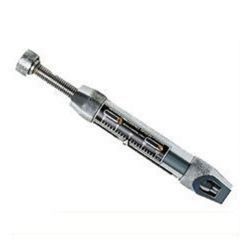
Tell us about your requirement

Price:
Quantity
Select Unit
- 50
- 100
- 200
- 250
- 500
- 1000+
Additional detail
Mobile number
Email

More Products in Scientific Product Category
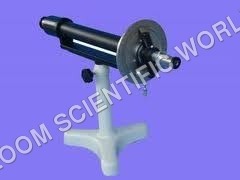
Student Polarimeter
Price 143 INR / Unit
Minimum Order Quantity : 1 Unit
Product Type : Polarimeter
Usage : Industrial
Color : Black And White
Material : Stainless Steel

Universal water bath
Price 140 INR / Unit
Minimum Order Quantity : 1 Unit
Product Type : water bath
Usage : Laboratory
Color : Sky Blue And White
Material : Mild Steel
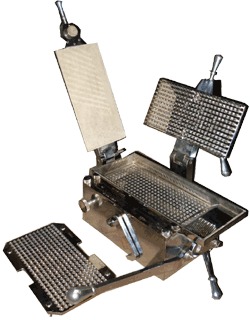
Capsule Filling Machine
Price 19500 INR / Piece
Minimum Order Quantity : 1 Piece
Product Type : Filling Machine
Usage : Pharmaceutical Industry
Color : Black And Silver
Material : Stainlsee Steal

Histamine Chamber
Price 180 INR / Unit
Minimum Order Quantity : 1 Unit
Product Type : Chamber
Usage : Hospital
Color : White
Material : Mild Steel

ZOOM SCIENTIFIC WORLD
GST : 06ALAPA6623N1Z8
GST : 06ALAPA6623N1Z8
Contact Details

- 4537/1 A, Bldg. 13, Deepak Market, Ist Ambala - 133001, Haryana, India
- Phone : 08045478393
- Export Import Code (IEC code) - 3312001811
SSI No. - 060021100476

- Mr Sahil Aggarwal (GENERAL MANAGER)
- Mobile : 08045478393

|



ZOOM SCIENTIFIC WORLD
All Rights Reserved.(Terms of Use)
Developed and Managed by Infocom Network Private Limited.
Developed and Managed by Infocom Network Private Limited.
