




 Send Inquiry
Test Tube With Socket Without Stopper
Price 10 INR/ Piece
Test Tube With Socket Without Stopper Specification
- Usage
- Laboratory
- Product Type
- Test Tube
- Color
- Transparent And Red
- Material
- Glass
- Stopper Included
- No
- Autoclavable
- Yes
- Socket Size
- Standard laboratory socket size (typically B14, B19, or B24 as per requirement)
- Graduation Marks
- No
- Reusable
- Yes
- Packaging Type
- Individual or bulk pack as per order
Test Tube With Socket Without Stopper Trade Information
- Minimum Order Quantity
- 1 Piece
- Payment Terms
- Cash in Advance (CID), Cash Advance (CA)
- Supply Ability
- 1000 Pieces Per Week
- Delivery Time
- 1 Week
- Sample Available
- Yes
- Sample Policy
- Sample costs shipping and taxes has to be paid by the buyer
- Main Export Market(s)
- Western Europe, Australia, South America, Middle East, Central America, Asia, Eastern Europe, North America, Africa
- Main Domestic Market
- All India
Test Tube With Socket Without Stopper About
Test Tube With Socket Without Stopper:-
Catalogue No. Socket Size Dia. mm overall length mm Approx. Cap. ml.
190/01 B 10 14 64 2
190/02 B 10 14 100 5
190/03 B 12 16 100 10
190/04 B 14 18 100 14
190/05 B 14 18 125 15
190/06 B 14 18 150 19
190/07 B 19 22 100 19
190/08 B 19 22 150 31
190/09 B 24 28 150 54
190/10 B 24 28 200 75
190/11 B 34 40 250 195
Key Features of Test Tube With Socket Without Stopper
This test tube is fabricated from high-quality glass for chemical resistance and durability. Featuring a standard laboratory socket, it is compatible with widely used joints in labs. The omission of a stopper provides flexibility for direct connections to other glassware or for processes that do not require sealing, such as distillation or gas transfer. Its autoclavable nature ensures decontamination and repeated safe use.
Applications and Versatility
Ideal for laboratory applications like sample collection, mixing, reactions, or transfer of liquids and gases, this test tube adapts easily within modular glass setups. Its transparent and red design not only aids easy observation but also adds to the safety and tracking of experiments. The lack of graduation marks and stopper enhances its adaptability for many experimental setups.
FAQs of Test Tube With Socket Without Stopper:
Q: How is the Test Tube With Socket Without Stopper used in laboratory settings?
A: This test tube is typically connected to other laboratory apparatus via its socket joint, facilitating processes such as distillation, chemical transfers, or gas collection when a sealed stopper is not required.Q: What types of laboratory assemblies are compatible with the socket of this test tube?
A: The socket is compatible with standard laboratory joint sizes, such as B14, B19, or B24, allowing integration with a wide range of condensers, adapters, and other glassware components.Q: When should I choose a test tube without a stopper over one with a stopper?
A: A stopper-free test tube is chosen for applications that require continuous flow, regular sampling, or connection to other glassware, rather than needing a closed environment.Q: Where is this test tube typically used?
A: This test tube is widely used in educational institutions, research laboratories, and industrial testing facilities for chemical handling and experimental procedures.Q: What are the benefits of this glass test tube being autoclavable and reusable?
A: The ability to autoclave and reuse the test tube ensures it can be sterilized for safe repeat use, reducing waste and keeping running costs low in laboratory environments.Q: How should this test tube be sterilized between uses?
A: The test tube should be cleaned with appropriate laboratory detergents and then autoclaved under standard laboratory conditions to maintain sterility for sensitive experiments.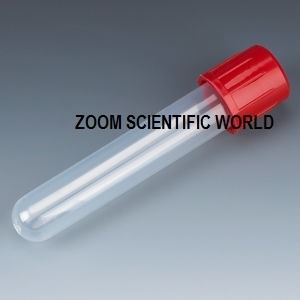

Price:
- 50
- 100
- 200
- 250
- 500
- 1000+

More Products in Lab Glassware Category
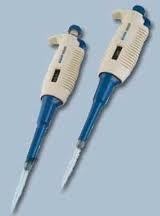
Micropipettes
Price 10 INR / Piece
Minimum Order Quantity : 1 Piece
Color : White And Blue
Material : Plastic
Usage : Laboratory
Product Type : Micropipettes

Cover Slips
Price 12 INR / Piece
Minimum Order Quantity : 1 Piece
Color : Transparent
Material : Glass
Usage : Chemical Laboratory
Product Type : Slips
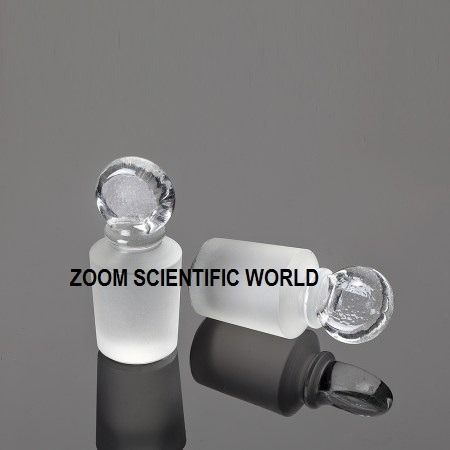
Stoppers For B.O.D Bottle
Price 10 INR / Piece
Minimum Order Quantity : 1 Piece
Color : Transparent
Material : Glass
Usage : Laboratory
Product Type : Stoppers

Stopcocks Straight Bore
Price 15 INR / Piece
Minimum Order Quantity : 1 , , Piece
Color : Transparent
Material : Glass
Usage : Laboratory
Product Type : Stopcocks

GST : 06ALAPA6623N1Z8

- 4537/1 A, Bldg. 13, Deepak Market, Ist Ambala - 133001, Haryana, India
- Phone : 08045478393
- Export Import Code (IEC code) - 3312001811
SSI No. - 060021100476

- Mr Sahil Aggarwal (GENERAL MANAGER)
- Mobile : 08045478393

|



Developed and Managed by Infocom Network Private Limited.
