




 Send Inquiry
Tube Sealed
Price 17 INR/ Piece
Tube Sealed Specification
- Usage
- Chemical
- Product Type
- Tube
- Color
- Transparent
- Material
- Glass
- Application
- Laboratory
- Surface Finish
- Smooth
- Compliance
- ISO/ASTM standard glassware
- Closure Type
- Sealed ends
- Sterilization
- Autoclavable
- Resistance
- Resistant to acids and alkalis
Tube Sealed Trade Information
- Minimum Order Quantity
- 1 Piece
- Payment Terms
- Cash Advance (CA), Cash in Advance (CID)
- Supply Ability
- 1000 Pieces Per Week
- Delivery Time
- 1 Week
- Sample Available
- Yes
- Sample Policy
- Sample costs shipping and taxes has to be paid by the buyer
- Main Export Market(s)
- Western Europe, Australia, North America, Eastern Europe, Middle East, Central America, South America, Asia, Africa
- Main Domestic Market
- All India
Tube Sealed About
Tube Sealed: (Pipe Line Filters) with reduced ends,with sintered.
Catalogue No. Disc Dia mm. Porosity Grade
803/01 30 G 1
803/02 30 G 2
803/03 30 G 3
803/04 30 G 4
803/05 40 G 1
803/06 40 G 2
803/07 40 G 3
803/08 40 G 4
803/09 50 G 1
803/10 50 G 2
803/11 50 G 3
803/12 50 G 4
803/13 65 G 1
803/14 65 G 2
803/15 65 G 3
803/16 65 G 4
803/17 90 G 1
803/18 90 G 2
803/19 90 G 3
803/20 90 G 4
Exceptional Chemical Resistance
Crafted from premium glass, this laboratory tube is engineered to withstand harsh chemicals, including acids and alkalis. Its superior resistance ensures safe handling of reactive substances, minimizing risks during experiments or sample storage. Whether youre working with volatile or stable compounds, its quality makes it a reliable choice for any lab environment.
Secure and Compliant Design
The tube features sealed ends to safeguard against leaks and contamination. Its compliance with stringent ISO/ASTM laboratory glassware standards guarantees quality and uniformity. This makes it ideal not only for everyday lab tasks but also for procedures where regulatory compliance is essential. The transparent body supports easy visual monitoring.
Sterilizable for Reuse
Designed with laboratory efficiency in mind, the glass tube is fully autoclavable. It can be sterilized using standard laboratory autoclaves, promoting safe reuse across multiple experiments. The smooth surface finish further simplifies cleaning and decontamination, ensuring reliable sample containment with each use.
FAQs of Tube Sealed:
Q: How is this glass tube used in laboratory settings?
A: The glass tube is typically employed for chemical reactions, sample storage, or as part of laboratory experiments where a chemically resistant container is required. Its sealed ends ensure substances remain safely contained during use.Q: What types of chemicals can this tube safely hold?
A: Thanks to its resistance to both acids and alkalis, this glass tube can securely hold a broad range of chemicals encountered in laboratories, making it versatile for many experimental purposes.Q: When should I sterilize the tube, and how is that done?
A: Sterilize the tube before and after use to prevent contamination, especially when switching between different chemicals. It is autoclavable, meaning you can sterilize it using a standard laboratory autoclave.Q: Where is this tube commonly manufactured and supplied from?
A: This laboratory glass tube is manufactured, exported, and supplied by a reputable organization based in India and is available through various scientific suppliers and traders.Q: What standards does this tube comply with?
A: This tube complies with ISO/ASTM standards for laboratory glassware, ensuring it meets recognized benchmarks for quality, safety, and performance.Q: Can the tube be used multiple times?
A: Yes, the tube can be cleaned, autoclaved, and reused multiple times, provided it remains intact and is properly sterilized between uses.Q: What is the primary benefit of using a tube with sealed ends in laboratories?
A: Sealed ends provide an added level of containment, minimizing risk of leaks, spills, or contamination, which is essential for safe laboratory procedures.

Price:
- 50
- 100
- 200
- 250
- 500
- 1000+

More Products in Lab Glassware Category
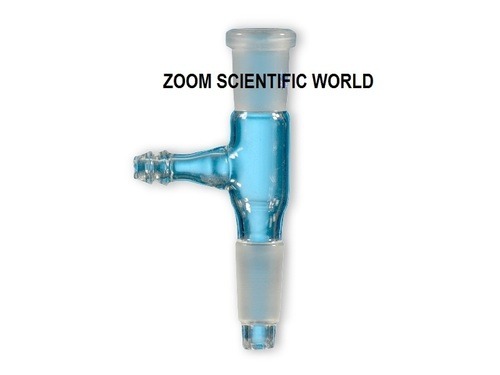
Adapter Socket To Cone With Tee Connection
Price 10 INR / Piece
Minimum Order Quantity : 1 Piece
Color : Transparent
Usage : Laboratory
Material : Glass
Product Type : Adapter Socket
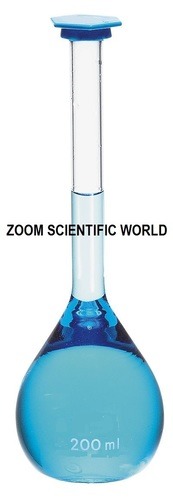
Flasks Volumetric (Measuring)
Price 51 INR / Piece
Minimum Order Quantity : 1 Piece
Color : Transparent
Usage : Chemical Laboratory
Material : Glass
Product Type : Flasks Volumetric

Adapters With stopcock Right Angle Or Straight Connection
Price 10 INR / Piece
Minimum Order Quantity : 1 Piece
Color : Transparent And White And Red
Usage : Laboratory
Material : Glass
Product Type : Adapters With stopcock
Flask Buchner Filtration
Price 10 INR / Piece
Minimum Order Quantity : 1 Piece
Color : Transparent
Usage : Laboratory
Material : Glass
Product Type : Flask Buchner

GST : 06ALAPA6623N1Z8

- 4537/1 A, Bldg. 13, Deepak Market, Ist Ambala - 133001, Haryana, India
- Phone : 08045478393
- Export Import Code (IEC code) - 3312001811
SSI No. - 060021100476

- Mr Sahil Aggarwal (GENERAL MANAGER)
- Mobile : 08045478393

|



Developed and Managed by Infocom Network Private Limited.
