




 Send Inquiry
Vacuum Distillation
Price 14 INR/ Piece
Vacuum Distillation Specification
- Usage
- Chemical Laboratory
- Product Type
- Vacuum Distillation
- Color
- Transparent
- Material
- Glass
- Vacuum Range
- 0.1 to 760 mmHg
- Connector Ports
- Standard 24/29 joints, customizable
- Cooling System
- Integrated Condenser with Water/Coolant Inlet
- Compliance
- ISO 9001:2015 Certified
Vacuum Distillation Trade Information
- Minimum Order Quantity
- 1 , Piece
- Payment Terms
- Cash in Advance (CID), Cash Advance (CA)
- Supply Ability
- 1000 Pieces Per Week
- Delivery Time
- 1 Week
- Sample Available
- Yes
- Sample Policy
- Sample costs shipping and taxes has to be paid by the buyer
- Main Export Market(s)
- Western Europe, Asia, Australia, Eastern Europe, Middle East, Central America, South America, North America, Africa
- Main Domestic Market
- All India
Vacuum Distillation About
Vacuum Distillation:-
Catalogue No. 400 :- Consisting of R.B flask 1000 ml.,receiver bend, jacketed coil condenser 150 mm., receiver adapter bend with vacuum connection & R.B. flask 250 ml.
Efficient Separation for Heat-Sensitive Compounds
Vacuum distillation enables the purification of chemicals or mixtures at reduced temperatures, minimizing the risk of thermal decomposition. The reduced pressure environment expands its applicability in handling heat-sensitive or high-boiling-point substances frequently encountered in chemical laboratories. Integration of a condenser with water or coolant inlet ensures reliable condensation and collection of the distillate.
Laboratory-Grade Glassware with Versatile Joints
Constructed from transparent glass, the apparatus ensures chemical compatibility and easy observation. Standard 24/29 connector joints streamline assembly and facilitate compatibility with a range of supporting laboratory devices. Customization options for joint sizes further extend its use across specialized laboratory setups and research applications.
FAQs of Vacuum Distillation:
Q: How does vacuum distillation differ from regular distillation?
A: Vacuum distillation operates under reduced pressure, enabling substances to be distilled at lower temperatures compared to regular (atmospheric) distillation. This is crucial for heat-sensitive compounds that might decompose at higher temperatures.Q: What types of substances are best purified using vacuum distillation?
A: This method is ideal for compounds with high boiling points or those prone to thermal decomposition, such as certain organic chemicals, pharmaceuticals, or specialty solvents.Q: Where is vacuum distillation commonly used?
A: Vacuum distillation is widely employed in chemical laboratories, research institutes, and industrial settings where sensitive or high-boiling materials need purification.Q: What is the process for setting up vacuum distillation in a laboratory?
A: To set up, assemble the glassware using the standard joints, connect the vacuum source to achieve the desired pressure (0.1 to 760 mmHg), and ensure the condenser is properly supplied with water or coolant. Start with a test run using water or a suitable solvent before processing target materials.Q: What are the main benefits of using vacuum distillation in chemical research?
A: Vacuum distillation allows for efficient separation and purification of complex or sensitive materials while minimizing product degradation. Its glass construction and standard joints also improve versatility and laboratory compatibility.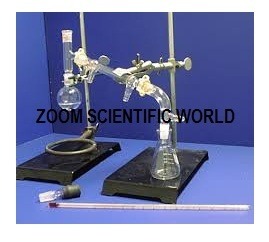

Price:
- 50
- 100
- 200
- 250
- 500
- 1000+

More Products in Lab Glassware Category
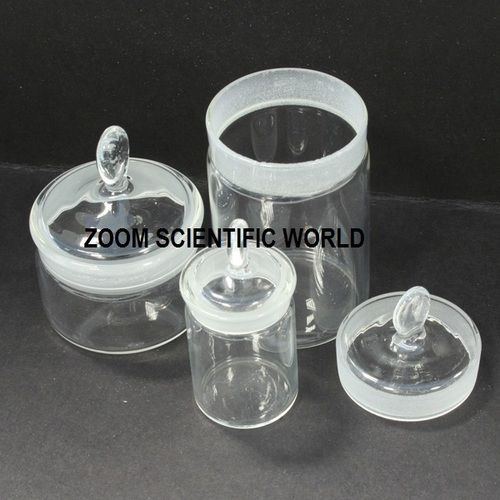
Weighing Bottles
Price 33.0 INR / Piece
Minimum Order Quantity : 1 Piece
Usage : Chemical Laboratory
Material : Glass
Product Type : Bottles
Color : Transparent
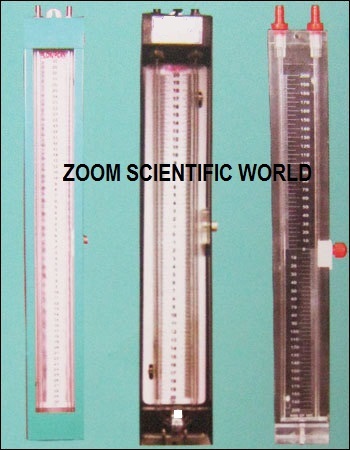
Manometer 'U' Tube
Price 17 INR / Piece
Minimum Order Quantity : 1 , , Piece
Usage : pressure measurement
Material : Acrylic and Glasstube
Product Type : Manometer Tube
Color : Transparent

Dropping Funnels Cylindrical With Interchangeable Stopper & Stopcock,Plain Stem
Price 16 INR / Piece
Minimum Order Quantity : 1 , , Piece
Usage : Chemical Laboratory
Material : Glass
Product Type : Dropping Funnels
Color : Transparent
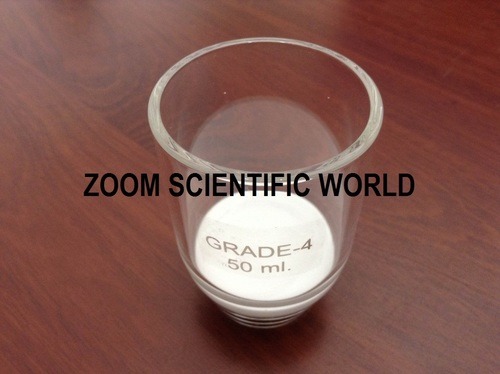
Sintered Crucibles Gooch Type
Price 17 INR / Piece
Minimum Order Quantity : 1 Piece
Usage : Chemical Laboratory
Material : Glass
Product Type : Sintered Crucibles
Color : Transparent

GST : 06ALAPA6623N1Z8

- 4537/1 A, Bldg. 13, Deepak Market, Ist Ambala - 133001, Haryana, India
- Phone : 08045478393
- Export Import Code (IEC code) - 3312001811
SSI No. - 060021100476

- Mr Sahil Aggarwal (GENERAL MANAGER)
- Mobile : 08045478393

|



Developed and Managed by Infocom Network Private Limited.
