




 Send Inquiry
Petri Plates
Price 11 INR/ Piece
Petri Plates Specification
- Color
- Transparent
- Material
- Glass
- Product Type
- Plates
- Usage
- Chemical Laboratory
- Surface
- Smooth, Flat Surface for Even Culture Spread
- Shape
- Circular
- Sterilization
- Autoclavable at 121C
- Reusability
- Yes, Can Be Cleaned and Sterilized for Reuse
- Chemical Resistance
- High resistance to laboratory chemicals
Petri Plates Trade Information
- Minimum Order Quantity
- 1 Piece
- Payment Terms
- Cash in Advance (CID), Cash Advance (CA)
- Supply Ability
- 1000 Pieces Per Week
- Delivery Time
- 1 Week
- Sample Available
- Yes
- Sample Policy
- Sample costs shipping and taxes has to be paid by the buyer
- Main Export Market(s)
- Western Europe, Middle East, Central America, Eastern Europe, South America, Asia, North America, Australia, Africa
- Main Domestic Market
- All India
Petri Plates About
Petri Dish, Petri Plates:-
A Petri dish (or Petri plate or cell culture dish) is a shallow glass or plastic cylindrical lidded dish that biologists use to culture cells or small moss plants.
Petri dishes are often used to make agar plates for microbiology studies. The dish is partially filled with warm liquid containing agar and a mixture of specific ingredients that may include nutrients, blood, salts, carbohydrates, dyes, indicators, amino acids and antibiotics.
Superior Glass Quality and Transparency
Our Petri Plates are made from premium glass, offering exceptional transparency for clear visual assessment of cultures during experiments. The smooth, circular design supports uniform culture growth and effortless sample handling, enhancing accuracy and reproducibility in laboratory routines. Whether for research, teaching, or industrial purposes, these plates deliver reliable performance in every setting.
Chemical Resistance and Sterilizability
Specifically engineered for laboratory environments, these Petri Plates are highly resistant to a wide range of chemicals commonly used in experiments. Their robust construction allows for repeated sterilization in autoclaves at 121C, ensuring they remain contaminant-free and ready for reuse, providing an economical and safe solution for culture work.
Reusable and Easy to Maintain
Designed with sustainability in mind, the Petri Plates can be thoroughly cleaned and sterilized for multiple uses without compromising quality. This reusability not only reduces laboratory waste, but also guarantees long-term cost savings without sacrificing scientific integrity. Maintenance is straightforward, making them a practical choice for busy labs.
FAQs of Petri Plates:
Q: How do I sterilize glass Petri Plates for reuse?
A: Glass Petri Plates can be sterilized using an autoclave at 121C. Ensure that the plates are first thoroughly cleaned. Stack them with spacers (if available) to allow steam circulation, and follow standard laboratory autoclaving protocols to achieve effective sterilization before reuse.Q: What makes these Petri Plates suitable for laboratory use?
A: These Petri Plates are made from high-quality, transparent glass, featuring smooth, flat surfaces for even culture distribution. They are chemically resistant, easily sterilized, and sustain repeated use, making them ideal for chemical, microbiology, and research laboratories.Q: When should I use reusable glass Petri Plates instead of disposable alternatives?
A: Reusable glass Petri Plates are recommended when frequent, high-volume culturing is required, and when long-term cost-effectiveness and reduced waste are priorities. They are especially beneficial in laboratories equipped with autoclaves for reliable sterilization, supporting sustainable practices.Q: Where can these Petri Plates be used?
A: These Petri Plates are versatile and suitable for various applications, including educational laboratories, research institutions, industrial quality control labs, and any setting requiring microbial or chemical culturing with reliable results.Q: What is the advantage of a smooth, flat surface in Petri Plates?
A: A smooth, flat surface ensures that culture media spreads evenly, which is crucial for the consistent growth and evaluation of microorganisms. This design minimizes irregularities and supports accurate experimental outcomes.Q: What are the proper storage practices for glass Petri Plates?
A: After cleaning and sterilization, store the glass Petri Plates in a clean, dry environment, ideally within a closed cabinet to protect them from dust and airborne contaminants. Handle with care to avoid chipping or breakage.Q: Are these Petri Plates resistant to laboratory chemicals?
A: Yes, the glass used in these Petri Plates offers high resistance to a wide range of laboratory chemicals, ensuring that chemical exposure during experiments does not compromise plate integrity or experimental results.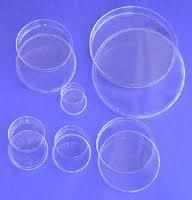

Price:
- 50
- 100
- 200
- 250
- 500
- 1000+

More Products in Lab Plasticware Category
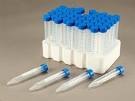
CENTRIFUGE TUBE CONICAL BOTTOM
Price 10 INR / Unit
Minimum Order Quantity : 1 Unit
Color : White And Blue
Material : Polypropylene
Usage : Clinical
Product Type : Conical bottom

CONICAL MEASURES
Price 10 INR / Piece
Minimum Order Quantity : 1 Piece
Color : Transparent
Material : Polypropylene
Usage : Chemical Laboratory
Product Type : Conical Measures
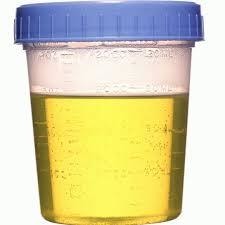
Urine Container
Price 10 INR / Piece
Minimum Order Quantity : 1 Piece
Color : Transparent And Purpal
Material : Plastic
Usage : Hospital
Product Type : Urine Container
Centrifuge Tubes with round bottom
Price 10 INR / Piece
Minimum Order Quantity : 1 Piece
Color : White
Material : Polypropylene
Usage : Centrifugation
Product Type : Centrifuge Tubes

GST : 06ALAPA6623N1Z8

- 4537/1 A, Bldg. 13, Deepak Market, Ist Ambala - 133001, Haryana, India
- Phone : 08045478393
- Export Import Code (IEC code) - 3312001811
SSI No. - 060021100476

- Mr Sahil Aggarwal (GENERAL MANAGER)
- Mobile : 08045478393

|



Developed and Managed by Infocom Network Private Limited.
