




 Send Inquiry
Abbe Refractometer
Price 107 INR/ Unit
Abbe Refractometer Specification
- Voltage
- 220 Volt (v)
- Usage
- Laboratory
- Color
- Black And White
- Product Type
- Refractometer
- Temperature Range
- 15 to 45 Celsius (oC)
- Calibration
- Manual using standard liquid
- Prism Size
- 32 mm x 20 mm
- Application
- Measurement of refractive index and Brix of liquids and solids
- Thermometer Range
- 0C to 50C
- Magnification
- 6x (Eyepiece)
- Light Source
- LED/Tungsten Lamp
- Sample Size
- 0.1 - 0.5 ml
- Compliance
- ISO 9001 Certified
Abbe Refractometer Trade Information
- Minimum Order Quantity
- 1 Unit
- Payment Terms
- Cash in Advance (CID), Cash Advance (CA)
- Supply Ability
- 1000 Units Per Week
- Delivery Time
- 1 Week
- Sample Available
- Yes
- Sample Policy
- Sample costs shipping and taxes has to be paid by the buyer
- Main Export Market(s)
- Australia, South America, Western Europe, Middle East, Central America, Asia, Eastern Europe, North America, Africa
- Main Domestic Market
- All India
Abbe Refractometer About
Abbe Refractometer
Abbe Refractometer: A standred and accurate model of abbe-Refractometer for measurement of refractive index, dispersion and sugar concentration scale reading upto third decimal, but can be easily estimated to the fourth decimal place complete in wooden box. Measuring Range: nD 1.3000 to nD 1.7000 Accuracy: 0.0001 Sugar Percentage: 0 to 95% in steps or 1 div. Dispersion: nD 0.0005
Accurate Laboratory Analysis
The Abbe Refractometer provides dependable readings for both liquids and solids, enabling precise determination of refractive index and Brix levels. Its wide temperature range allows flexibility in varied environments, making it ideal for laboratory testing where reliability and repeatability are essential. ISO 9001 certification ensures quality standards are maintained throughout its use.
Manual Calibration for Trustworthy Results
With a straightforward manual calibration using a standard liquid, the Abbe Refractometer allows users to maintain measurement fidelity. This hands-on process ensures results remain consistent and enables users to re-calibrate easily in case of changes in conditions or after extended use, making the instrument practical for laboratory professionals and production settings.
Flexible Usage and Application
Suitable for many laboratory applications, the Abbe Refractometer accommodates small sample volumes (0.10.5 ml) and measures over a broad temperature range (1545C). Its optical design, combining an LED/Tungsten lamp light source and a 6x magnification eyepiece, delivers clear and accurate readings, facilitating efficient research, quality control, and product analysis.
FAQs of Abbe Refractometer:
Q: How do I calibrate the Abbe Refractometer?
A: Calibration of the Abbe Refractometer is performed manually using a standard reference liquid. Follow the manufacturers instructions to ensure the device is properly set before measuring samples, which maintains accuracy and reliability of results.Q: What types of samples can be measured with an Abbe Refractometer?
A: This instrument is optimized for measuring both liquids and solids, determining their refractive index and Brix levels with precision, making it suitable for diverse laboratory applications such as food, chemicals, and industrial testing.Q: When should the Abbe Refractometer be recalibrated?
A: Its recommended to recalibrate the refractometer when environmental conditions change significantly, after long periods of use, or whenever measurement accuracy is in question to maintain optimal performance.Q: Where is the Abbe Refractometer most commonly used?
A: The Abbe Refractometer is widely employed in laboratory settings for research, quality control, and analysis, especially by exporters, manufacturers, suppliers, and wholesalers across India.Q: What is the ideal temperature range for measurements?
A: The recommended operating temperature range for accurate measurements is between 15 and 45 degrees Celsius, ensuring the device functions reliably in most laboratory environments.Q: How does LED/Tungsten lamp illumination benefit measurements?
A: The integrated LED/Tungsten lamp provides consistent light, enhancing visual clarity through the 6x eyepiece and ensuring precise, repeatable readings for both refractive index and Brix determination.Q: What are the benefits of manual calibration in laboratory settings?
A: Manual calibration gives laboratory personnel direct control over the instruments accuracy and responsiveness, allowing quick adjustment to maintain precision regardless of sample or environmental changes.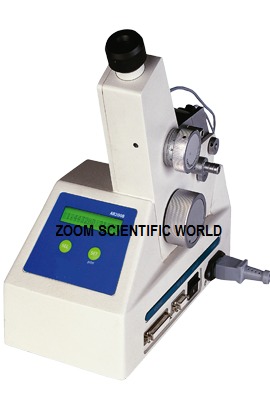

Price:
- 50
- 100
- 200
- 250
- 500
- 1000+

More Products in Scientific Product Category
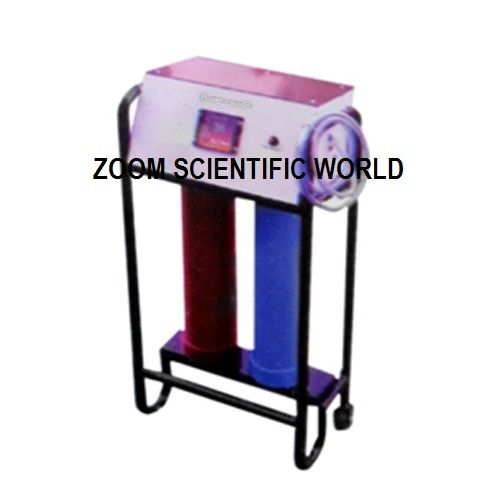
Water Deionzation Apparatus
Price 127 INR / Unit
Minimum Order Quantity : 1 Unit
Color : Blue And Red And White And Black
Material : Mild Steel
Product Type : Deionzation Apparatus
Usage : Laboratory, Industrial
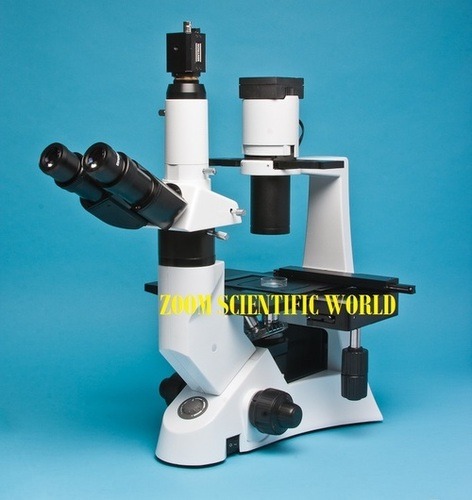
Research Trinocular microscope
Price 123 INR / Unit
Minimum Order Quantity : 1 Unit
Color : White And Black
Material : Aluminium
Product Type : microscope
Usage : Hospital School
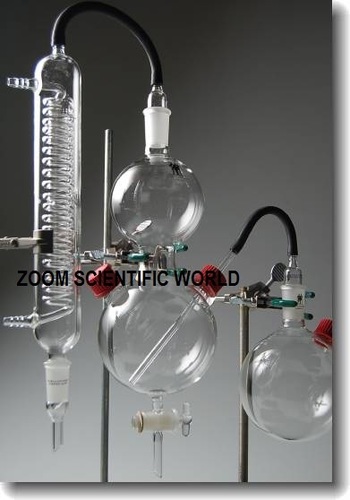
All Glass Distillation Sets
Price 107 INR / Unit
Minimum Order Quantity : 1 Unit
Color : Transparent
Material : Glass
Product Type : Distillation Sets
Usage : Chemical Laboratory
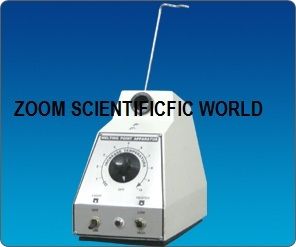
Melting Point Apparatus
Price 130 INR / Unit
Minimum Order Quantity : 1 Unit
Color : White
Material : Mild Steel
Product Type : Melting Point Apparatus

GST : 06ALAPA6623N1Z8

- 4537/1 A, Bldg. 13, Deepak Market, Ist Ambala - 133001, Haryana, India
- Phone : 08045478393
- Export Import Code (IEC code) - 3312001811
SSI No. - 060021100476

- Mr Sahil Aggarwal (GENERAL MANAGER)
- Mobile : 08045478393

|



Developed and Managed by Infocom Network Private Limited.
