




 Send Inquiry
Cam Analysis Apparatus
Price 123 INR/ Unit
MOQ : 1 Unit
Cam Analysis Apparatus Specification
- Usage
- Industrial Use
- Product Type
- Analysis Apparatus
- Color
- Red And Blue
- Voltage
- 230 Volt (v)
- Material
- Stainless Steel
- Follower Material
- Alloy Steel
- Base Construction
- Powder Coated Base
- Follower Type
- Roller, Knife Edge & Flat Follower (Interchangeable)
- Maintenance
- Easy to Maintain
- Number of Cams Included
- 3 Types (Tangential, Circular, Heart)
- Cam Material
- Hardened Steel (Polished)
- Noise Level
- Low, Lab Standard
- Drive System
- Belt Driven
Cam Analysis Apparatus Trade Information
- Minimum Order Quantity
- 1 Unit
- Payment Terms
- Cash in Advance (CID), Cash Advance (CA)
- Supply Ability
- 100 Units Per Week
- Delivery Time
- 1 Week
- Sample Available
- Yes
- Sample Policy
- Sample costs shipping and taxes has to be paid by the buyer
- Main Export Market(s)
- Western Europe, Australia, North America, Eastern Europe, Central America, Middle East, South America, Asia, Africa
- Main Domestic Market
- All India
Cam Analysis Apparatus About
Cam Analysis ApparatusWe, Zoom Scientific World , Are Engaged In Engineering Lab Equipment . We , Zoom Scientific World , Are Offering You Cam Analysis Apparatus Which Is Used Under Theory Of Machine Lab . We Are Offering You This Unit At A Very Competitive Rate Which Cannot Be Beat Up In The Market By Any One Else.Also We Have Experts In This Field Having An Experience Of Over 15 Years .
About The Product :
- Properly Guided In Gunmetal Bushes
- Can Be Changed According To The Cam Under Test
- Powerful And Efficient Dial Gauge
- A Spring Is Used To Provide Controlling Force To The Follower System
- Customer Specific
- Very Useful For Testing The Cam Performance For Jump Phenomenon During Operation
Experiments :
With The Help Of Combination Of Provided Cams And Followers Following Experiments Can Be Conducted :
- To Plot The N-Q (Follower Displacement Vs Angle Of Rotation) Curves For Different Cam Follower Pairs
- The Follower Bounce Can Be Observed By Using A Stroboscope (Optional) & Effect Of Follower Weight On Bounce Can Be Studied
- To Study The Effect Of Follower Weight On Bounce
- To Study The Effect Of Spring Compression On Bounce
- The Tests Can Be Repeated By Changing Compression Springs, Follower Weights And Cam Speed
- The Apparatus Is Very Useful For Testing The Cam Performance For Jump Phenomenon During Operation
- Electricity : 0.5 Kw, 220 V, Single Phase
- Stroboscope (Optional)
- Cam Shaft Material Stainless Steel
- Cams Tangent, Eccentric, Circular Arc Type
- Followers Roller, Knife Edge, Mushroom
- Compression Spring Provided
- Weight 1 Kg., 500Gm, 200 Gm & 100Gm
- Motor Variable Speed, 1/2 Hp., 0-1500 Rpm With Speed Controller
- Dial Gauge Baker & Mercer/Standard Make
- Sturdiness
- Perfect Finish
- Optimum Functionality
- Eccentric Arc Cam
- Tangent Arc Cam
- Circular Arc Cam
- Knife Edge Follower
- Roller Follower
- Flat Face Follower
- Table Size: 600 X 300 Mm
- Hp 1500 Rpm Pmdc Motor With Controller
- No. Of Cams And Followers: 3 Each As Specified Above
- No. Of Spring Of Different Stiffness: 2 Nos
- No. Of Masses: 2 Nos
- Dial Indicator 0-10 Mm
- Full Protractor With Angle Measurement Arrangement
- Detailed Technical Manual And On-Site Training
- 230 V.A.C. Single Phase Supply
- Rigid Platform Or Sturdy Table With Preferably A Solid Foundation
- Hand Held Tachometer
Versatile Cam and Follower Demonstrations
This apparatus is supplied with three distinct cam profiles (tangential, circular, and heart) and versatile followers (roller, knife edge, and flat), enabling users to observe and compare different motion behaviors and follower responses. The sturdy stainless steel and alloy construction ensures long service life, with all parts precisely machined for accuracy in experiment outcomes.
Low Noise Operation and Robust Design
Equipped with a belt-driven system, this Cam Analysis Apparatus offers remarkably quiet performance during use, ideal for a laboratory setting. Its powder-coated base combined with polished and hardened steel components provides exceptional stability and durability, even under frequent use in educational or industrial environments.
Reliable and Straightforward to Maintain
Maintenance of the apparatus is straightforward due to its robust materials and design. The stainless steel construction reduces the risk of wear and minimizes the upkeep required, making it highly suitable for continuous instructional or research operation. Regular checks and light cleaning ensure sustained reliability and accurate performance.
FAQs of Cam Analysis Apparatus :
Q: How does the Cam Analysis Apparatus function in a laboratory setting?
A: The apparatus is used to study the motion of cams and followers. By interchanging cam profiles and follower typestangential, circular, heart cams with roller, knife edge, and flat followersstudents can observe how different designs influence displacement, velocity, and acceleration. Its typically operated via an electric belt drive, ensuring consistent rotational speed and precise experimental results.Q: What materials are used in the construction of the Cam Analysis Apparatus?
A: The apparatus features a powder-coated base for enhanced durability, with the main working parts constructed from stainless steel to provide corrosion resistance. The cams themselves are made of hardened, polished steel, while followers are crafted from high-quality alloy steel for strength and wear resistance.Q: When should maintenance be carried out on this apparatus?
A: Routine maintenance should be carried out after regular laboratory sessions. Maintenance mainly involves simple cleaning and visual inspection for any signs of wear on moving parts. Given its robust construction, only minimal upkeep is necessary to keep the unit functioning optimally.Q: Where can the Cam Analysis Apparatus be used?
A: It is ideal for use in mechanical engineering laboratories, research institutions, polytechnic colleges, and universities, as well as in industrial training facilities. Its sturdy design makes it suitable for frequent student and researcher use across India.Q: What are the benefits of using the Cam Analysis Apparatus in educational settings?
A: The apparatus enables hands-on study and visualization of cam-follower behavior, supporting theoretical lessons with practical experiments. It helps students grasp key concepts in kinematics and dynamic mechanisms, enhancing understanding and skill development.Q: How is the apparatus powered and what is its operation noise level?
A: The unit operates on a standard 230 Volt power supply and utilizes a belt-driven mechanism, which ensures low noise during usageideal for maintaining a focused academic environment.Q: What is the process to switch between different cams and followers?
A: Switching between cam profiles and followers is straightforward. The interchangeable design allows users to easily mount and remove cams and followers, enabling quick setup for various experimental sequences without requiring specialized tools.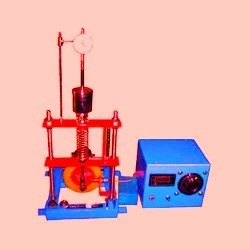
Tell us about your requirement

Price:
Quantity
Select Unit
- 50
- 100
- 200
- 250
- 500
- 1000+
Additional detail
Mobile number
Email

More Products in Engineering Electronics College Products Category
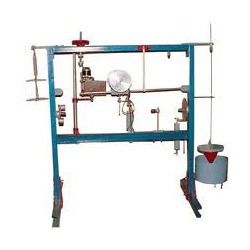
Universal Vibration Apparatus
Price 73950.0 INR / Unit
Minimum Order Quantity : 1 Unit
Color : Green And White
Voltage : 230 Volt (v)
Usage : industries
Product Type : Vibration Apparatus
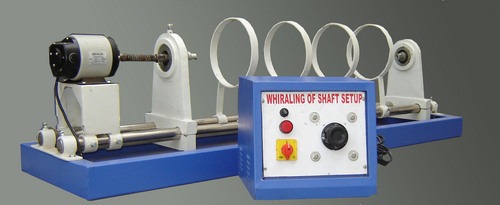
Whirling of Shaft Demonstrator
Price 34500.0 INR / Unit
Minimum Order Quantity : 1 Unit
Color : White And Blue
Voltage : 220 Volt (v)
Usage : Laboratory
Product Type : Demonstrator
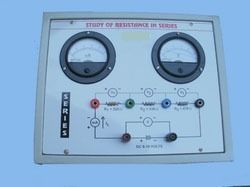
Study Of Resistance In Series
Price 1950.0 INR / Unit
Minimum Order Quantity : 1 Unit
Color : White
Voltage : 110220 Volt (v)
Usage : laboratory
Product Type : Resistance In Series
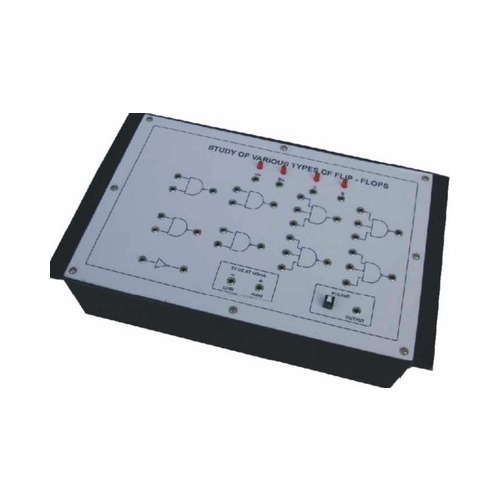
Logic Gates Experiment (Six in One)
Price 2950.0 INR / Unit
Minimum Order Quantity : 1 Unit
Color : White And Black
Voltage : 110220 Volt (v)
Usage : laboratory
Product Type : Logic Gates Experiment

ZOOM SCIENTIFIC WORLD
GST : 06ALAPA6623N1Z8
GST : 06ALAPA6623N1Z8
Contact Details

- 4537/1 A, Bldg. 13, Deepak Market, Ist Ambala - 133001, Haryana, India
- Phone : 08045478393
- Export Import Code (IEC code) - 3312001811
SSI No. - 060021100476

- Mr Sahil Aggarwal (GENERAL MANAGER)
- Mobile : 08045478393

|



ZOOM SCIENTIFIC WORLD
All Rights Reserved.(Terms of Use)
Developed and Managed by Infocom Network Private Limited.
Developed and Managed by Infocom Network Private Limited.
