




 Send Inquiry
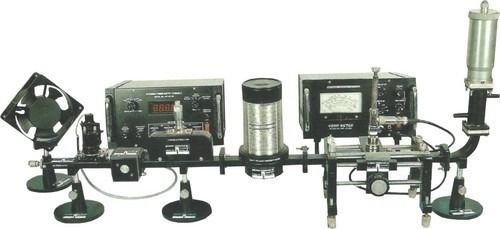
To Measure Dielectric Constant Of Solid And Liquid
Price 45500.0 INR/ Unit
To Measure Dielectric Constant Of Solid And Liquid Specification
- Shape
- Rectangular
- Display Type
- Analog/Needle meter
- Control Type
- Rotary switch
- Features
- Interchangeable sample holders, Stable base, Simple calibration, Portable design
- Temperature Resistance
- Up to 100°C
- Power Supply
- AC mains
- Accuracy
- ±1% of reading
- Glass Type
- Borosilicate (if applicable for liquid cell)
- Usage
- Laboratory
- Type
- To Measure Dielectric Constant Of Solid And Liquid
- Dimension (L*W*H)
- 36 x 30 x 23 cm
- Product Type
- Measure Dielectric Constant
- Equipment Type
- Measuring Instrument
- Equipment Materials
- High grade metal, Bakelite grip
- Color
- Silver And Black
- Power
- 50 W
- Voltage
- 110-220 Volt (v)
- Material
- Metal
- Application
- Laboratory dielectric measurements
- Cell Holder
- Removable, non-reactive finish
- Weight
- Approx. 5 kg
- Finish
- Corrosion-resistant
- Measurement Range
- 1 - 20 (dielectric constant value range)
- Sample Supported
- Solid & Liquid
- Test Frequency
- 50 Hz / 1 kHz
To Measure Dielectric Constant Of Solid And Liquid Trade Information
- Minimum Order Quantity
- 1 Unit
- Payment Terms
- Cash in Advance (CID), Cash Advance (CA)
- Supply Ability
- 100 Units Per Week
- Delivery Time
- 1 Week
- Sample Available
- Yes
- Sample Policy
- Sample costs shipping and taxes has to be paid by the buyer
- Main Export Market(s)
- Australia, North America, Eastern Europe, Middle East, Central America, South America, Western Europe, Asia, Africa
- Main Domestic Market
- All India
To Measure Dielectric Constant Of Solid And Liquid About
To Measure Dielectric Constant Of Solid And Liquid
Experiment to Measure Dielectric Constant of Solid
& Liquid and to Measure Phase Shift & 'O' of a Cavity
Experiments:
1. To measure dielectric constant of liquid.
2. To measure dielectric constant of solids.
3. To measure phase shift.
4. To measure 'Q' of a cavity.
|
Components Name |
Qty. |
|
|
|
Klystron Power Supply |
1 |
Klystron Mount |
1 |
|
Klystron Tube |
1 |
Isolator |
1 |
|
Frequency Meter |
1 |
Variable Attenuator |
1 |
|
Slotted Section |
1 |
Tunable probe |
1 |
|
Detector Mount |
1 |
Solid dielectric cell |
1 |
|
Liquid Dielectric cell |
1 |
VSWR meter solid state |
1 |
|
Stand |
4 |
Wave guide cavity |
1 |
|
BNC Cable |
1 |
Cooling Fan |
1 |
|
Movable Short precision |
1 |
Phase Shifetr |
1 |
|
Set of Dielectric |
1 |
|
|
Versatile Solid and Liquid Dielectric Measurement
This instrument supports the testing of both solid and liquid samples, thanks to its interchangeable holders and non-reactive, corrosion-resistant finish. It operates efficiently at test frequencies of either 50 Hz or 1 kHz, making it suitable for a range of laboratory experiments. Its borosilicate glass liquid cell (for liquids) and stable rectangular base add convenience and reliability.
Precision and Ease of Use in Lab Settings
With an analog needle meter display and rotary switch controls, measurements are fast, clear, and accurate within 1% of the reading. The portable design, simple calibration, and safe Bakelite grip ensure user-friendliness. The equipment is crafted to serve researchers, manufacturers, and educational labs seeking reliable dielectric constant measurements.
FAQs of To Measure Dielectric Constant Of Solid And Liquid:
Q: How does this instrument measure the dielectric constant of solids and liquids?
A: The device determines the dielectric constant by applying an AC voltage (at either 50 Hz or 1 kHz) to a sample placed in the removable, non-reactive holder or borosilicate glass liquid cell. The analog/needle meter then accurately displays the dielectric constant value, which falls within the 120 range.Q: What types of samples can be tested using this measuring instrument?
A: This equipment is designed to evaluate both solid and liquid samples, accommodating a broad range of substances commonly found in laboratory and industrial research environments.Q: When should I use the 50 Hz vs. 1 kHz frequency settings?
A: Choice of frequency depends on the material characteristics and testing requirements. Use 50 Hz for standard applications and 1 kHz for cases where higher frequency response is necessary, aligning with specific experimental protocols.Q: Where is this dielectric constant measuring instrument typically utilized?
A: It is mainly used in laboratory settings, research institutions, educational facilities, and quality control labs within industry for material analysis and research studies involving dielectric properties.Q: What is the process for calibrating the instrument?
A: Calibration is straightforward due to the simple rotary switch and clear analog display. Typically, a standard sample with a known dielectric constant is measured, and the instrument is adjusted accordingly to ensure accurate readings.Q: How does the non-reactive, corrosion-resistant finish benefit users?
A: These features protect the device from contamination and chemical damage, ensuring long-term stability, accurate measurements, and suitability for a wide variety of sample types, including those with reactive or corrosive properties.Q: What are the main benefits of using this measuring instrument?
A: Users benefit from accurate and rapid measurement capabilities, ease of handling, portability, compatibility with both solids and liquids, and reliable operation across a range of laboratory environments, all supported by a robust and user-safe design.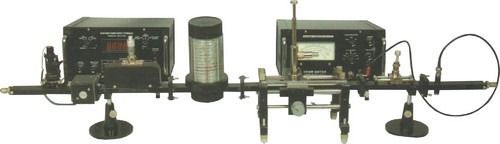

Price:
- 50
- 100
- 200
- 250
- 500
- 1000+

More Products in Engineering Electronics College Products Category
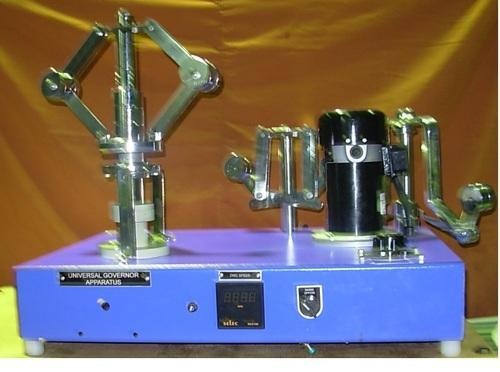
Universal Governor Apparatus
Price 32500.0 INR / Unit
Minimum Order Quantity : 1 Unit
Material : MIld Steel
Product Type : Governor Apparatus
Usage : Laboratory
Voltage : 230 Volt (v)
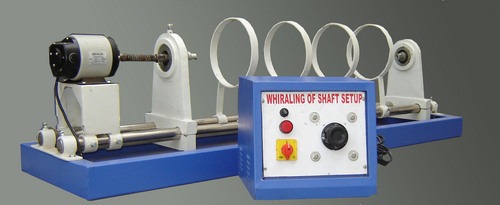
Whirling of Shaft Demonstrator
Price 34500.0 INR / Unit
Minimum Order Quantity : 1 Unit
Material : Stainless steel
Product Type : Demonstrator
Usage : Laboratory
Voltage : 220 Volt (v)
Study Of Microwave Component
Price 42500.0 INR / Unit
Minimum Order Quantity : 1 Unit
Material : Metal
Product Type : Microwave Component
Usage : Laboratory
Voltage : 110220 Volt (v)
To Measure The Polar Pattern Of The Antenna
Price 111 INR / Unit
Minimum Order Quantity : 1 Unit
Material : Metal
Product Type : Measure The Polar Pattern
Usage : Laboratory
Voltage : 110220 Volt (v)

GST : 06ALAPA6623N1Z8

- 4537/1 A, Bldg. 13, Deepak Market, Ist Ambala - 133001, Haryana, India
- Phone : 08045478393
- Export Import Code (IEC code) - 3312001811
SSI No. - 060021100476

- Mr Sahil Aggarwal (GENERAL MANAGER)
- Mobile : 08045478393

|



Developed and Managed by Infocom Network Private Limited.
