


 Send Inquiry
Model | ZSW-02 Digital Model | ZSW-03 Digital Model |
Std. Glass Filter | 8 | 5 |
Mini Volume | 1 ml. | 1 ml. |
Display | 2 1/2 Digit LED | 2 1/2 Digit LED |
Range | 400-700 nm | 400-700 nm |
Output | OD (0 to 1.99) | OD (0 to 1.99) |
Resolution | OD : 0.01 | OD : 0.01 |
Accuracy | 0.5% FSI | 0.5% FSI |
Detector | Selenium Photocell | Selenium Photocell |
Light Source | 6.8v, 300mA | 6.8v, 300mA |
Power | 230v + 10% | 230v + 10% |
Accessories | Test Tube set of 5, Spare Lamp, Dust Cover, Manual 8 Filters - 400, 420, 480, 500, 520, 540, 620, 680 nm | |
Filters | ||

Digital Photo Colorimeter
Price 127 INR/ Unit
MOQ : 1 Unit
Digital Photo Colorimeter Specification
- Voltage
- 110-220 Volt (v)
- Color
- White
- Product Type
- Colorimeter
- Usage
- Industrial, Laboratory
- Material
- Laboratory
Digital Photo Colorimeter Trade Information
- Minimum Order Quantity
- 1 Unit
- Payment Terms
- Cash in Advance (CID), Cash Advance (CA)
- Supply Ability
- 1000 Units Per Week
- Delivery Time
- 1 Week
- Sample Available
- Yes
- Sample Policy
- Sample costs shipping and taxes has to be paid by the buyer
- Main Export Market(s)
- Western Europe, Asia, Australia, Eastern Europe, Middle East, Central America, South America, North America, Africa
- Main Domestic Market
- All India
Digital Photo Colorimeter About
Digital Photo Colorimeter 8 Filter:-
Photo Colorimeter are compact and easy to operate instruments for colorimetric analysis of a solution of any concentration. Output is available on the display in terms of optical density (absorbance). This is a unique system that combines convenience with accuracy and precision in analysis.
This instrument includes a wide range of filter covering wavering wavelength from 400nm to 700nm in the form of built-in-filter. The filter setting is controlled by a rotating disc. A shutter switch is provided to avoid fatigue of the photocell. When switched ON, lamp glow and light passes through the solution to the photocell and measurement is taken light source is prefocused tungsten lamp.
Technical Specifications:-
Accurate Color Analysis for Laboratories and Industry
Our Digital Photo Colorimeter offers precise measurement capabilities essential for both industrial and laboratory settings. Featuring a wide operating voltage range (110-220V), this device adapts effortlessly to various workspaces. The high-grade materials ensure its longevity and dependability, supporting critical tasks such as quality control, formulation, and research. From small laboratories to large-scale manufacturing units, it stands out for its accuracy and reliability.
FAQs of Digital Photo Colorimeter:
Q: How is the Digital Photo Colorimeter typically used in laboratory and industrial environments?
A: The Digital Photo Colorimeter is primarily used to determine the concentration of substances by measuring the absorbance of specific wavelengths of light. In laboratories, it aids in analyzing chemical solutions, while in industrial settings, it supports processes such as quality control and material verification.Q: What are the main benefits of using this colorimeter for analytical work?
A: This colorimeter offers precise, efficient, and repeatable measurements, reducing manual error and ensuring accurate colorimetric analysis. Its robust construction and adaptable voltage support make it suitable for diverse laboratory and industrial requirements.Q: When should a Digital Photo Colorimeter be calibrated or maintained?
A: Regular calibration is recommended before each critical use, or at least monthly, depending on the frequency of operation and the precision required. Routine maintenance helps sustain performance and prolongs the instruments lifespan.Q: Where can I purchase this Digital Photo Colorimeter in India?
A: You can obtain this device from authorized exporters, manufacturers, suppliers, traders, and wholesalers across India. Many vendors offer nationwide distribution to support both industrial and laboratory needs.Q: What is the standard process for operating the Digital Photo Colorimeter?
A: To operate, fill the colorimeter cuvette with your test sample, insert it into the device, select the appropriate wavelength, and follow the device-guided steps to obtain absorbance and concentration readings. Always consult the user manual for precise instructions.Q: How does the broad voltage compatibility (110-220V) benefit users?
A: The wide voltage range enables seamless integration with different power systems, making the colorimeter suitable for various laboratory and industrial settings without the need for additional voltage converters.Q: What materials make up the construction of the Digital Photo Colorimeter?
A: This apparatus is built from laboratory-grade materials that ensure chemical resistance, structural reliability, and extended durability, meeting the rigorous demands of industrial and laboratory operations.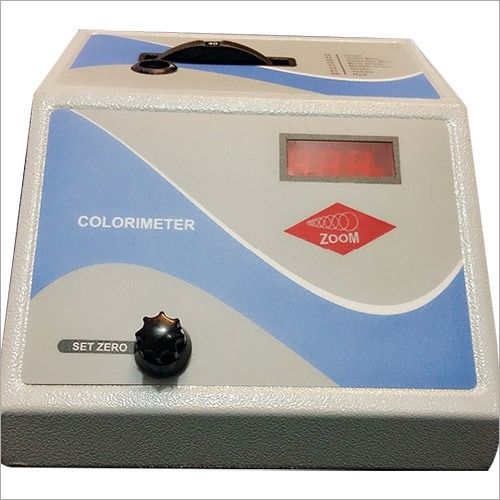
Tell us about your requirement

Price:
Quantity
Select Unit
- 50
- 100
- 200
- 250
- 500
- 1000+
Additional detail
Mobile number
Email

More Products in Scientific Product Category
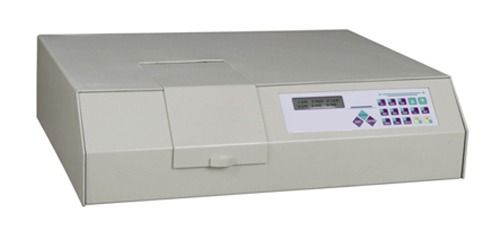
DOUBLE BEAM SPECTROPHOMETER
Price 140 INR / Unit
Minimum Order Quantity : 1 , Unit
Material : Mild Steel
Usage : Laboratory Use
Color : White
Product Type : Spectrophotometer
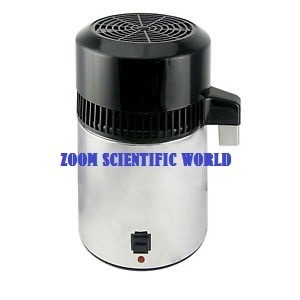
Double Distillation Still
Price 123 INR / Unit
Minimum Order Quantity : 1 Unit
Material : Mild Steel
Usage : Laboratory Use
Color : White Amd Black
Product Type : Distillation Still

Histamine Chamber
Price 180 INR / Unit
Minimum Order Quantity : 1 Unit
Material : Mild Steel
Usage : Hospital
Color : White
Product Type : Chamber
Disintegrator
Price 120 INR / Unit
Minimum Order Quantity : 1 Unit
Material : Mild Steel
Usage : Hospital
Color : Black And White
Product Type : Disintegrator

ZOOM SCIENTIFIC WORLD
GST : 06ALAPA6623N1Z8
GST : 06ALAPA6623N1Z8
Contact Details

- 4537/1 A, Bldg. 13, Deepak Market, Ist Ambala - 133001, Haryana, India
- Phone : 08045478393
- Export Import Code (IEC code) - 3312001811
SSI No. - 060021100476

- Mr Sahil Aggarwal (GENERAL MANAGER)
- Mobile : 08045478393

|



ZOOM SCIENTIFIC WORLD
All Rights Reserved.(Terms of Use)
Developed and Managed by Infocom Network Private Limited.
Developed and Managed by Infocom Network Private Limited.
