




 Send Inquiry
Electroscope .
MOQ : 1 Piece
Electroscope . Specification
- Control Type
- Manual
- Shape
- Cylindrical (jar)
- Glass Type
- Borosilicate glass jar
- Features
- Leaf gold or aluminium foils; removable brass rod with plate or disk; transparent glass body for easy observation
- Temperature Resistance
- Up to 100°C (approx., for glass container)
- Type
- Electroscope
- Dimension (L*W*H)
- 8 cm x 14 cm x 20 cm (approx.) Centimeter (cm)
- Equipment Type
- Laboratory Electroscope
- Equipment Materials
- Brass rod with metal disc, glass jar, insulating stopper
- Material
- Glass, metal (brass and aluminium)
- Application
- Detection and demonstration of electric charge
Electroscope . Trade Information
- Minimum Order Quantity
- 1 Piece
- Supply Ability
- 100 Pieces Per Month
- Delivery Time
- 7 Days
Electroscope . About
This rugged, sensitive electroscope can accept various accessories to change its capacitance. A sensitive aluminium vane is balanced in a vertical position on a metal support which is insulated from its base. The vane is easily observed and projected on a chalkboard (Light Source, not included) on which an arbitrary scale has been marked. Height without attachments is about 9". Four attachment, each equipped with a banana plug which fits the vane system top, are included : a 1" conducting sphere; a 3" conducting sphere; a proof plane with detachable insulating handle; and an aluminium cup (Faraday ice pail). Attachments can be charged using either our Electrophorus or our Power Supply (not included). With instructions.Unmatched Sensitivity for Charge Detection
This electroscope distinguishes itself by sensing even weak electrical charges. With gold or aluminium leaf foils, it responds to minimal variations, making it a valuable educational and research tool. Its qualitative output offers clear visual confirmation whenever electrical charge is present, enhancing experimental reliability and learning experiences.
Durable and Transparent Construction
Housed in a cylindrical borosilicate glass jar, the electroscope is both robust and highly resistant to heat, tolerating temperatures up to 100C (approx.). The transparent design ensures unobstructed views of leaf deflection. Brass and aluminium components provide longevity, while the removable brass rod and disc facilitate ease of use and maintenance.
FAQs of Electroscope:
Q: How does the electroscope indicate the presence of an electric charge?
A: The electroscope detects electric charge when its metal leavesmade of gold or aluminiumseparate or deflect. This occurs because the introduced charge travels down the brass rod to the leaves, causing them to repel due to like charges accumulating.Q: What is the recommended process for maintaining the electroscope after use?
A: After each use, clean the glass jar and all metal parts gently. Handle the delicate metal leaves with care to avoid damage. Proper maintenance ensures the device remains sensitive and reliable for future experiments.Q: When should the electroscope be used in a laboratory setting?
A: The electroscope is ideal for demonstrations, experiments, or practical sessions needing visual proof of electric charge. Its sensitivity makes it suitable anytime you need to reveal the presence (but not the amount) of electrical charge in educational or research environments.Q: Where should the electroscope be stored?
A: Store the electroscope in a dry environment to prevent moisture from affecting the delicate metal leaves. Proper storage prolongs the lifespan of its components and ensures optimal performance during each use.Q: What are the main benefits of using this laboratory electroscope?
A: It offers quick and reliable qualitative detection of electric charge, with an easy-to-observe design and high sensitivity. Its robust construction and manual operation ensure portability, ease of use, and minimal maintenance costs.Q: How is the electroscope typically used in demonstrations or experiments?
A: To use, charge a test object and touch it to the metal disc atop the brass rod. The transfer of charge causes the internal leaves to deflect if electricity is present. The transparent glass jar lets observers watch this reaction in real time.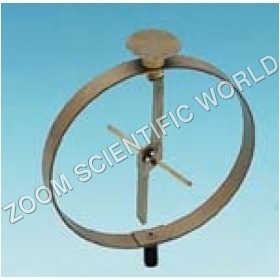
Tell us about your requirement

Price:
Quantity
Select Unit
- 50
- 100
- 200
- 250
- 500
- 1000+
Additional detail
Mobile number
Email

More Products in Physics instruments Category
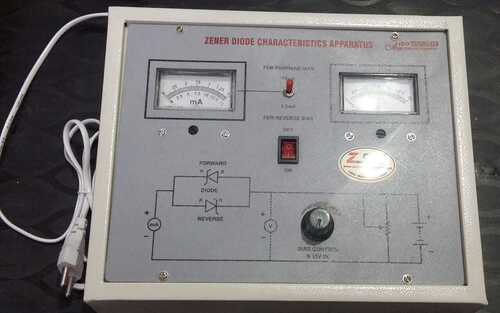
Zener Diode Characteristics Apparatus
Price 1600 INR / Unit
Minimum Order Quantity : 1 Unit
Material : MS
Features : Good Quality
Usage : Industrial
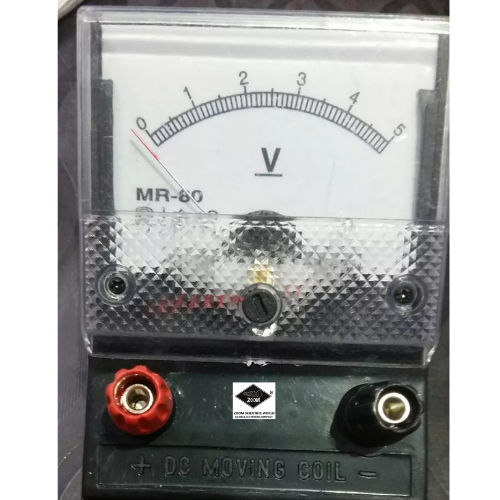
AC DC Voltmeter
Price 190 INR / Piece
Minimum Order Quantity : 1 Piece
Material : Plastic
Usage : Industrial

Ring & Ball Appratus
Minimum Order Quantity : 1 Piece
Material : Brass steel glass
Features : Durable construction accurate measurement
Application : Used to determine softening point of bituminous materials

ZOOM SCIENTIFIC WORLD
GST : 06ALAPA6623N1Z8
GST : 06ALAPA6623N1Z8
Contact Details

- 4537/1 A, Bldg. 13, Deepak Market, Ist Ambala - 133001, Haryana, India
- Phone : 08045478393
- Export Import Code (IEC code) - 3312001811
SSI No. - 060021100476

- Mr Sahil Aggarwal (GENERAL MANAGER)
- Mobile : 08045478393

|



ZOOM SCIENTIFIC WORLD
All Rights Reserved.(Terms of Use)
Developed and Managed by Infocom Network Private Limited.
Developed and Managed by Infocom Network Private Limited.
