




 Send Inquiry
Filter Photo Colorimeters
Price 107 INR/ Unit
MOQ : 1 , , Unit
Filter Photo Colorimeters Specification
- Voltage
- 110-220 Volt (v)
- Product Type
- Colorimeters
- Color
- White
- Weight
- 1-2 Kilograms (kg)
- Material
- PVC
- Operating Humidity
- < 85% RH
- Sample Volume
- Minimum 1 ml
- Cuvette Holder
- Standard 10 mm path length
- Lamp Type
- Tungsten Halogen Lamp
- Output
- Direct Optical Density Display
- No. of Filters
- 8 (Red, Orange, Yellow, Green, Blue, Violet, Indigo, Neutral)
- Shutter Control
- Manual
Filter Photo Colorimeters Trade Information
- Minimum Order Quantity
- 1 , , Unit
- Payment Terms
- Cash Advance (CA), Cash in Advance (CID)
- Supply Ability
- 100 Units Per Week
- Delivery Time
- 1 Week
- Sample Available
- Yes
- Sample Policy
- Sample costs shipping and taxes has to be paid by the buyer
- Main Export Market(s)
- Central America, Eastern Europe, Middle East, South America, Western Europe, Asia, North America, Australia, Africa
- Main Domestic Market
- All India
Filter Photo Colorimeters About
Filter Photo Colorimeters:- (a) Filter photo colorimeter 5 filters mains operated with optical density and %age transmission. (b) Filter photo colorimeter 8 filters mains operated with optical density and %age transmission. (c) Filter photo colorimetr 5 filters mains operated with optical density in 2.5 digit LED display. (d) Filter photo colorimeter 8 filters mains operated with optical density in 2.5 digit LED display.Versatile Filter Selection for Accurate Analysis
With eight distinct filters covering the visible spectrumincluding red, orange, yellow, green, blue, violet, indigo, and a neutral optionthis colorimeter allows precise measurement of solution absorbance at different wavelengths. This robust selection ensures reliable, reproducible results for a broad array of chemical analyses in research, teaching, and industrial environments.
User-Friendly, High-Performance Design
Featuring a standard 10 mm path length cuvette holder and direct optical density display, the colorimeter streamlines laboratory workflows. The tungsten halogen lamp ensures steady illumination and quick warm-up. Its simple operation, compact weight (12 kg), and broad voltage compatibility mean it fits seamlessly into laboratories, educational facilities, and field testing setups across India.
FAQs of Filter Photo Colorimeters:
Q: How do I use a filter photo colorimeter for solution analysis?
A: To use the colorimeter, fill a standard 10 mm cuvette with your prepared solution, insert it into the cuvette holder, select the desired filter for your wavelength of interest, and read the optical density on the direct display. Always calibrate with a blank solution before sample measurement for accurate results.Q: What are the main benefits of a filter photo colorimeter with eight filters?
A: Having eight filters allows for precise measurements across all primary and secondary colors in the visible spectrum. This versatility is especially useful for chemical, biological, and industrial applications where accurate absorbance readings at multiple wavelengths are required.Q: When should I choose a filter photo colorimeter over a spectrophotometer?
A: Choose a filter colorimeter when you require routine, reliable measurements at fixed wavelengths, especially in educational settings or quality control labs where simplicity, portability, and cost-efficiency are priorities.Q: Where can filter photo colorimeters be used effectively?
A: These colorimeters are ideal for chemistry and biology labs, educational institutions, quality assurance departments, and on-site testing in industries where rapid and reproducible absorbance measurements are needed.Q: What is the process for switching between filters on the device?
A: Filters are typically changed using a dial or switch on the instrument, allowing you to select the wavelength appropriate for your analysis. Always ensure the instrument is aligned and that no cuvette is present while changing filters to avoid misalignment or damage.Q: How does the direct optical density display benefit users?
A: The direct optical density display enables immediate reading of results without complex calculations, streamlining laboratory procedures, and reducing the potential for operator error.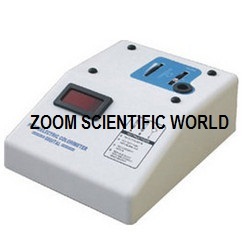
Tell us about your requirement

Price:
Quantity
Select Unit
- 50
- 100
- 200
- 250
- 500
- 1000+
Additional detail
Mobile number
Email

More Products in Scientific Product Category
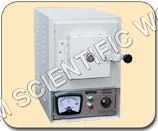
Muffle Furnace
Price 135 INR / Piece
Minimum Order Quantity : 1 Unit
Color : White
Product Type : Muffle Furnace
Voltage : 220/230 Volt (v)
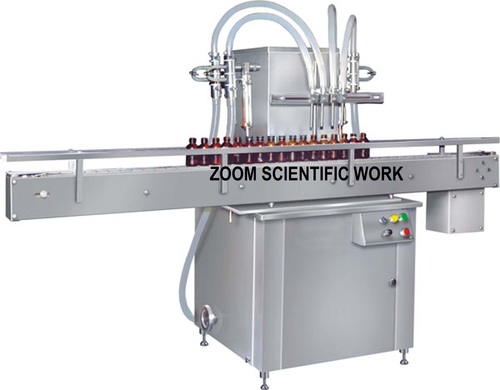
Filling Machine
Price 140 INR / Unit
Minimum Order Quantity : 1 , , Unit
Color : Gray
Product Type : Filling Machine
Voltage : 110240 Volt (v)
Material : Mild Steel
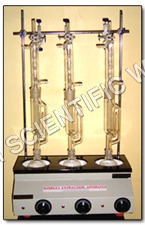
Soxhlet Extraction
Price 149 INR / Unit
Minimum Order Quantity : 1 Unit
Color : White And Black
Product Type : Extraction
Voltage : 220 240 Volt (v)
Material : Stainless Steel
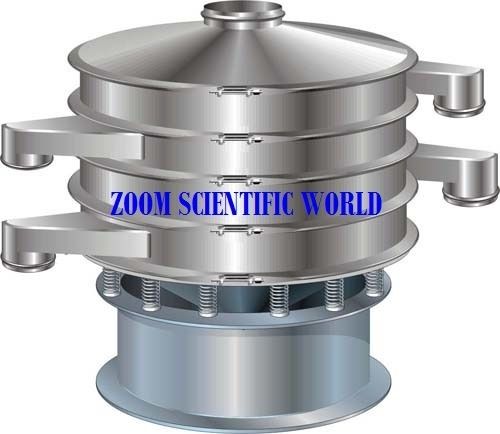
Shaking machine
Price 131 INR / Unit
Minimum Order Quantity : 1 Unit
Color : Silver
Product Type : machine
Voltage : 110220 Volt (v)
Material : Mild Steel

ZOOM SCIENTIFIC WORLD
GST : 06ALAPA6623N1Z8
GST : 06ALAPA6623N1Z8
Contact Details

- 4537/1 A, Bldg. 13, Deepak Market, Ist Ambala - 133001, Haryana, India
- Phone : 08045478393
- Export Import Code (IEC code) - 3312001811
SSI No. - 060021100476

- Mr Sahil Aggarwal (GENERAL MANAGER)
- Mobile : 08045478393

|



ZOOM SCIENTIFIC WORLD
All Rights Reserved.(Terms of Use)
Developed and Managed by Infocom Network Private Limited.
Developed and Managed by Infocom Network Private Limited.
