




 Send Inquiry
Reagent Bottles
Price 55.0 INR/ Piece
Reagent Bottles Specification
- Glass Type
- Borosilicate Glass (commonly used for laboratory reagent bottles)
- Shape
- Round/Flat Bottom
- Temperature Resistance
- Resistant up to approx. 140°C (for borosilicate glass)
- Features
- Chemical resistant, airtight screw cap or stopper, reusable, autoclavable
- Usage
- Laboratory
- Type
- Reagent Bottle
- Dimension (L*W*H)
- Varies with capacity, commonly standard laboratory sizes
- Product Type
- Bottles
- Equipment Type
- Laboratory Bottle
- Color
- Transparent
- Equipment Materials
- Glass
- Material
- Glass
- Application
- Used for storing chemical reagents in laboratories
- Capacity (Ltr)
- Commonly available in 125 ml, 250 ml, 500 ml, 1000 ml and other laboratory standard sizes
- Closure Type
- Screw Cap or Glass Stopper
- Autoclavable
- Yes
- Leakproof
- Yes
- Graduation Markings
- Yes (typically available)
Reagent Bottles Trade Information
- Minimum Order Quantity
- 1 Piece
- Payment Terms
- Cash in Advance (CID), Cash Advance (CA)
- Supply Ability
- 1000 Pieces Per Week
- Delivery Time
- 1 Week
- Sample Available
- Yes
- Sample Policy
- Sample costs shipping and taxes has to be paid by the buyer
- Main Export Market(s)
- South America, Western Europe, Middle East, Central America, Asia, Eastern Europe, North America, Australia, Africa
- Main Domestic Market
- All India
Reagent Bottles About
Our Reagent Bottles is widely used for various applications like to hold solids during weighing, as a surface for the evaporation of liquids and as a cover of the beaker. Glass Reagent Bottles offered by us are scratch and leak proof in nature. We are well reckoned as one of the preeminent Laboratory Watch Glass Manufacturers and Suppliers in India.
Features
- Scratch less body
- Leak proof
- High capacity
- High durability
Specifications
- 45mm
- 50mm
- 60mm
- 70mm
- 80mm
- 90mm
- 100mm
- 120mm
Technical Specifications
| Volume | 60 ml, 125 ml, 250 ml, 500 ml, 1000 ml, 2000 ml, 5000 ml, 10000 ml, 20000 ml |
Exceptional Chemical and Thermal Resilience
Borosilicate glass, commonly used in reagent bottles, offers remarkable durability against a variety of chemicals. Its resistance to thermal stress, withstanding temperatures up to approximately 140C, ensures bottles can be safely autoclaved for sterilization without compromising their integrity. This property is invaluable for laboratories aiming to maintain a contamination-free environment.
Leakproof Storage for Laboratory Safety
Each reagent bottle is equipped with either an airtight screw cap or a robust glass stopper, engineered to prevent leakage and maximize safety. The leakproof design is critical for avoiding unwanted spills, cross-contamination, or evaporation, maintaining the purity and stability of chemical reagents throughout every laboratory procedure.
Transparent Design with Clear Graduations
The bottles transparent nature allows easy visual inspection of contents, while graduation markings facilitate accurate measurement. This combination streamlines workflow, reduces errors during reagent dispensing, and ensures consistent results in scientific practices, making these bottles a staple in research and educational laboratories.
FAQs of Reagent Bottles:
Q: How do I properly autoclave a glass reagent bottle with a screw cap or glass stopper?
A: To autoclave a glass reagent bottle, ensure it is empty and clean. Loosen the screw cap or remove the glass stopper before placing the bottle in the autoclave, which helps prevent pressure buildup. Borosilicate glass bottles are resistant to temperatures up to approximately 140C, making them suitable for standard autoclave cycles.Q: What are the main benefits of using borosilicate glass reagent bottles in laboratories?
A: Borosilicate glass reagent bottles offer outstanding chemical resistance, thermal stability, and transparency. They are leakproof, reusable, and autoclavable, ensuring reliable storage and safety for chemical reagents. Their graduation markings assist in precise measurement and transfer of liquids during experiments.Q: When should I choose a screw cap over a glass stopper for my reagent bottle?
A: Screw caps are ideal when airtightness and leakproof storage are priorities, especially for volatile liquids or chemicals prone to evaporation. Glass stoppers are suitable for substances that do not require complete airtight sealing or where simplicity and chemical resistance are preferred.Q: Where are transparent glass reagent bottles typically used in laboratory settings?
A: These reagent bottles are widely used in research, teaching, and industrial laboratories for securely storing, mixing, and measuring chemical reagents. Their versatile design makes them suitable for a range of scientific applications involving acids, bases, solvents, and other chemicals.Q: What is the typical process for cleaning and reusing a laboratory reagent bottle?
A: After use, wash the bottle with laboratory-grade detergent and rinse thoroughly with distilled water. Inspect for residue, dry completely, and sterilize via autoclaving if necessary. The robust borosilicate glass construction allows multiple cleaning and reuse cycles without degrading performance.Q: Is it possible to accurately measure the volume of liquids stored in these bottles?
A: Yes, most reagent bottles feature graduation markings, which enable users to measure and dispense precise volumes of liquids. However, for highly accurate measurements, laboratory glassware like volumetric flasks or graduated cylinders may be recommended.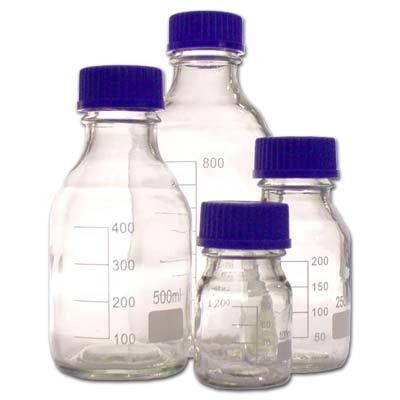

Price:
- 50
- 100
- 200
- 250
- 500
- 1000+

More Products in Lab Glassware Category

Bends With Multiple Connection(Pig)
Price 10 INR / Piece
Minimum Order Quantity : 1 Piece
Product Type : Bends With Multiple
Usage : Laboratory
Material : Glass
Color : Transparent

Dropping Funnels Cylindrical,Graduated Interchangeable Stopper & Stopcock,Plain Stem
Price 13 INR / Piece
Minimum Order Quantity : 1 , , Piece
Product Type : Dropping Funnels
Usage : Chemical Laboratory
Material : Glass
Color : Transparent
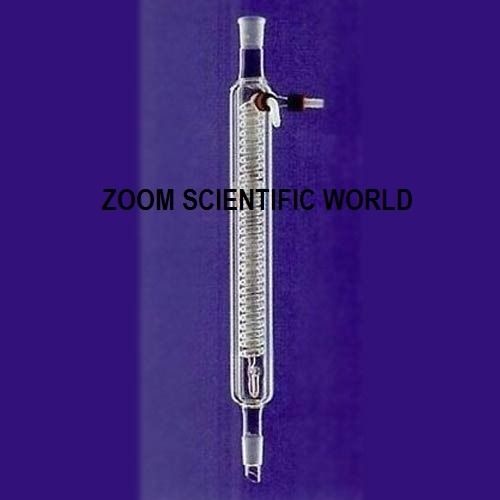
Immersion Condenser (Cold Finger)
Price 10 INR / Piece
Minimum Order Quantity : 1 Piece
Product Type : Immersion Condenser
Usage : Laboratory
Material : Glass
Color : Transparent
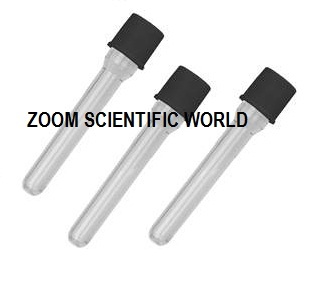
E.S.R. Tube
Price 10 INR / Piece
Minimum Order Quantity : 1 Piece
Product Type : Tube
Usage : Chemical Laboratory
Material : Glass
Color : Transparent And Black

GST : 06ALAPA6623N1Z8

- 4537/1 A, Bldg. 13, Deepak Market, Ist Ambala - 133001, Haryana, India
- Phone : 08045478393
- Export Import Code (IEC code) - 3312001811
SSI No. - 060021100476

- Mr Sahil Aggarwal (GENERAL MANAGER)
- Mobile : 08045478393

|



Developed and Managed by Infocom Network Private Limited.
