




 Send Inquiry
Static and Dynamic Balancing App
Price 47500.0 INR/ Unit
MOQ : 1 Unit
Static and Dynamic Balancing App Specification
- Temperature Resistance
- Standard Lab Conditions
- Shape
- Rectangular
- Power Supply
- 220-240V AC, 50Hz
- Display Type
- Analog Scale and LED Indicator
- Accuracy
- ±1% of reading
- Control Type
- Manual Controls
- Features
- Portable, Durable, Corrosion Resistant, Easy Maintenance
- Speed Range
- 10-3000 RPM
- Usage
- Engineering Labs
- Type
- Static And Dynamic Balancing App
- Dimension (L*W*H)
- 100 cm x 40 cm x 60 cm (Approx.)
- Product Type
- Dynamic Balancing
- Equipment Type
- Laboratory Apparatus
- Equipment Materials
- Mild Steel, Powder Coated
- Color
- Silver And Sky Blue
- Power
- Electric
- Voltage
- 220 Volt (v)
- Material
- Stainless Steel
- Application
- Used for demonstration and experiments in engineering laboratories
- Safety Features
- Overload Protection, Guarded Enclosures
- Finish Type
- Powder Coated
- Drive System
- Belt Driven with Electric Motor
- Experiment Capability
- Allows calculation of unbalance amount and angular position
- Balancing Type
- Supports both Static and Dynamic Balancing demonstrations
- Accessories
- Comes with Weights, Mandrels, and Manual
- Mounting Type
- Floor Mounted
- Frame Material
- Heavy Duty Steel Frame
Static and Dynamic Balancing App Trade Information
- Minimum Order Quantity
- 1 Unit
- Payment Terms
- Cash in Advance (CID), Cash Advance (CA)
- Supply Ability
- 100 Units Per Week
- Delivery Time
- 1 Week
- Sample Available
- Yes
- Sample Policy
- Sample costs shipping and taxes has to be paid by the buyer
- Main Export Market(s)
- Australia, Middle East, Central America, South America, Western Europe, Asia, Eastern Europe, North America, Africa
- Main Domestic Market
- All India
Static and Dynamic Balancing App About
Static And Dynamic Balancing AppWe, Zoom Scientific World , Are Engaged In Engineering Lab Equipment . We , Zoom Scientific World , Are Offering You Static And Dynamic Balancing Apparatus Which Is Used Under Theory Of Machine Lab . We Are Offering You This Unit At A Very Competitive Rate Which Cannot Be Beat Up In The Market By Any One Else.Also We Have Experts In This Field Having An Experience Of Over 15 Years .
Features:
- Durability
- Robustness
- High Functionality'
- Table Size: 600 X 300 X 600 Mm
- 1/8 Hp 6000 Rpm Dc Motor With Controller
- No. Of Discs: 4 Nos
- No. Of Weights: 8 Nos
- Detailed Technical Manual And On-Site Training
- 230 V.A.C. Single Phase Supply
- Rigid Platform Or Sturdy Table With Preferably A Solid Foundation
- Hand Held Tachometer
- Consists Of A Stainless Steel Shaft Fixed In A Rectangular Frame
- A Set Of Four Blocks With A Clamping Arrangement
- Each Block Is Individually Clamped On Shaft
- A Moment Polygon Is Drawn Using Relative Weights And Angular And Axial Position Of Blocks Is Determined
- Block Are Clamped On Shaft Is Rotated By A Motor To Check Dynamic Balance Of The System
- System Is Provided With Angular And Longitudinal Scales And Is Suspended With Chains For Dynamic Balancing
- To Balance The Masses Statically And Dynamically Of A Single Rotating Mass System
- To Observation Of Effect Of Unbalance In A Rotating Mass System.
- Electricity : 0.5 Kw, 220 V, Single Phase
- Drive Motor Fhp Motor, Variable Speed, With Speed Controller
- Balancing Weight 4 Nos. Of Stainless Steel With Different Sized Eccentric Mass For Varying Unbalance
- Rotating Shaft Material Stainless Steel
Precision Balancing for Lab Learning
This apparatus enables hands-on demonstrations of both static and dynamic balancing methods. Its robust stainless and mild steel build, along with powder-coated protection, ensures consistent performance year after year. Students and instructors benefit from its clear display features, while the included manual and accessories ensure all experiments can be conducted seamlessly.
Comprehensive Safety and Control Features
Safety is paramount in educational equipment. The apparatus features overload protection and guarded enclosures, reducing risk during rapid or heavy-load demonstrations. Manual controls and clear indicators provide users with reliable, real-time feedback on apparatus performance, ensuring secure and controlled operation throughout each experiment.
Versatile and Durable Laboratory Solution
Designed to accommodate a variety of balancing demonstrations, the apparatus supports a broad speed range and accurate performance (1%). Its floor-mounted, portable rectangular shape and corrosion-resistant materials make it a resilient addition for any laboratory setting. Maintenance is straightforward, guaranteeing a long service lifespan with minimal upkeep.
FAQs of Static and Dynamic Balancing App:
Q: How does the Static and Dynamic Balancing Apparatus operate?
A: The apparatus works by mounting a rotor on mandrels and applying weights to create unbalance. A belt-driven electric motor rotates the setup, allowing users to observe and analyze both static and dynamic balancing principles. Manual controls and displays aid in precise adjustments and measurement during experiments.Q: What experiments can be performed with this apparatus in engineering labs?
A: This equipment supports a wide array of balancing experiments, including calculation of unbalance amount and angular position for rotors. Students can learn to distinguish between static and dynamic unbalance, measure corrective weights, and practice balancing procedures according to lab curricula.Q: When is this apparatus typically used?
A: It is commonly utilized during laboratory sessions in mechanical and engineering courses when illustrating vibration, balancing, and rotor dynamics concepts. Its durability and precision make it suitable for frequent student use and demonstrations throughout the academic year.Q: Where should the apparatus be installed in a laboratory setting?
A: The device is designed for floor mounting, offering stability and safety during operation. It is suitable for use in dedicated engineering or physics laboratories with access to a 220-240V AC, 50Hz power supply and standard lab environmental conditions.Q: What is the process for calculating unbalance using this equipment?
A: To calculate unbalance, users mount a rotor, add weights at specific positions, and measure the resulting vibrations as the rotor spins. The analog scale and LED indicator display the magnitude and position of unbalance, aiding in correction and analysis based on collected data.Q: How does the apparatus enhance laboratory learning?
A: By providing hands-on experience with real balancing systems, students gain practical understanding of key mechanical concepts, improve problem-solving skills, and become proficient with industrial balancing equipment, all within safe, controlled, and accurate experimental conditions.Q: What are the benefits of the heavy-duty steel frame and powder-coated finish?
A: The heavy-duty steel frame ensures sturdiness and longevity, while the powder-coated finish provides additional resistance to corrosion and laboratory wear. This combination assures reliable, low-maintenance operation, even in environments with frequent use.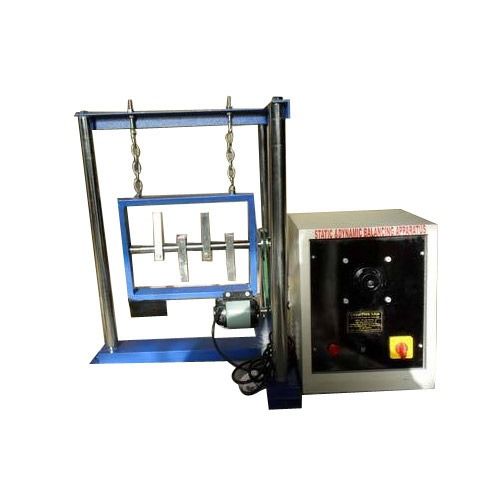
Tell us about your requirement

Price:
Quantity
Select Unit
- 50
- 100
- 200
- 250
- 500
- 1000+
Additional detail
Mobile number
Email

More Products in Engineering Electronics College Products Category
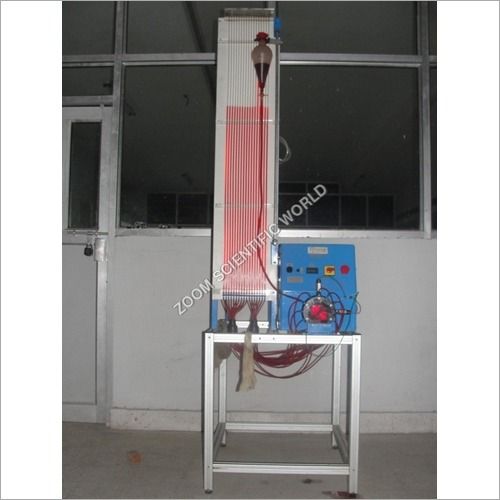
Journal Bearing Apparatus
Price 64500.0 INR / Unit
Minimum Order Quantity : 1 Unit
Product Type : Bearing Apparatus
Voltage : 230 Volt (v)
Material : Stainless steel
Usage : Laboratory
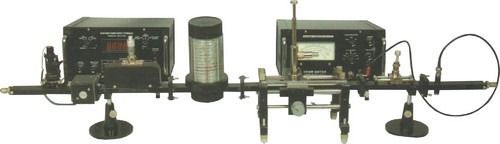
To Measure Dielectric Constant Of Solid And Liquid
Price 45500.0 INR / Unit
Minimum Order Quantity : 1 Unit
Product Type : Measure Dielectric Constant
Voltage : 110220 Volt (v)
Material : Metal
Usage : Laboratory
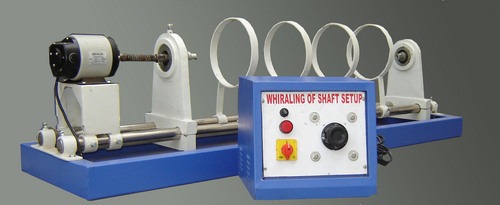
Whirling of Shaft Demonstrator
Price 34500.0 INR / Unit
Minimum Order Quantity : 1 Unit
Product Type : Demonstrator
Voltage : 220 Volt (v)
Material : Stainless steel
Usage : Laboratory
Study Of Microwave Component
Price 42500.0 INR / Unit
Minimum Order Quantity : 1 Unit
Product Type : Microwave Component
Voltage : 110220 Volt (v)
Material : Metal
Usage : Laboratory

ZOOM SCIENTIFIC WORLD
GST : 06ALAPA6623N1Z8
GST : 06ALAPA6623N1Z8
Contact Details

- 4537/1 A, Bldg. 13, Deepak Market, Ist Ambala - 133001, Haryana, India
- Phone : 08045478393
- Export Import Code (IEC code) - 3312001811
SSI No. - 060021100476

- Mr Sahil Aggarwal (GENERAL MANAGER)
- Mobile : 08045478393

|



ZOOM SCIENTIFIC WORLD
All Rights Reserved.(Terms of Use)
Developed and Managed by Infocom Network Private Limited.
Developed and Managed by Infocom Network Private Limited.
