




 Send Inquiry
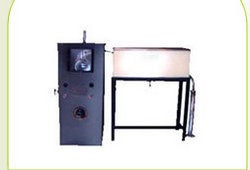
Bomb Calorimeter Apparatus
Price 140 INR/ Unit
Bomb Calorimeter Apparatus Specification
- Usage
- Laboratory
- Product Type
- Apparatus
- Color
- Silver And Black
- Voltage
- 220-240 Volt (v)
- Material
- Stainless Steel
- Pressure Gauge
- Up to 60 atm
- Compliance
- IS 1350, ASTM D5865, ISO 1928 (depends on model)
- Oxygen Filling Kit
- Included
- Sample Weight Range
- Up to 3g (typical for solid fuel)
- Sample Cup Material
- Stainless Steel
- Stirrer
- Provided (Fitted motorized stirrer)
- Timer
- Integrated / Manual (up to 30 min)
- Thermometer Type
- Mercury / Digital (0C to 50C range)
Bomb Calorimeter Apparatus Trade Information
- Minimum Order Quantity
- 1 , Unit
- Payment Terms
- Cash in Advance (CID), Cash Advance (CA)
- Supply Ability
- 10 Units Per Week
- Delivery Time
- 1 Week
- Sample Available
- Yes
- Sample Policy
- Sample costs shipping and taxes has to be paid by the buyer
- Main Export Market(s)
- Western Europe, Middle East, South America, Asia, Central America, Eastern Europe, North America, Australia, Africa
- Main Domestic Market
- All India
Bomb Calorimeter Apparatus About
Our company symbolizes dedication and quality in the business of manufacturing and supplying an exclusive range of Bomb Calorimeter Apparatus. In petrochemical research centers the apparatus is used for determining the heat occurred during combustion of an organic matter. To design the apparatus our expert personnel team uses best quality copper and stainless steel. We have made the Bomb Calorimeter Apparatus available for the clients in different designs, finishing and sizes as per their requirements.
Features:
-
Hassle free operation
-
Highly efficient
-
Long working life
Further Details:
|
Bomb Calorimeter Outfit provide a simple and inexpensive method for determination of heat of combustion of organic matter and the calorific value & sulphur content of solid & liquid fuel. The outfit supplied is complete for analysis as per the method recommended by British Standard Institution . All parts of the outfit have been finished and tested according to the specification laid down by Institute of petroleum and British Standard Institute. It comes with all essential accessories like, Bomb, Calorimeter vessel with bomb support, water jacket, stirrer, electronic firing unit with digital backman thermometer etc
|
|
Testing of Bomb :
|
|
Calorimeter Vessel :
|
|
Water Jacket :
|
|
Offset Stirrer :
|
|
Electronic Firing Unit with Digital Backman Thermometer :
|
|
Crucible :
|
High-Precision Calorimetry for Laboratories
The Bomb Calorimeter Apparatus is engineered for reliable heat measurement in combusted samples, supporting both solid and liquid fuels. With stainless steel construction, a motorized stirrer for uniform temperature distribution, and compliance with leading international standards, it offers accuracy and safety for laboratories, academic institutions, and research facilities. Its versatility supports a wide range of calorimetry experiments.
Ease of Operation and Versatile Applications
The apparatus comes equipped with an oxygen filling kit and sample cup, ensuring safe and consistent sample preparation. Compatible with both mercury and digital thermometers, it accommodates various user preferences. Its typical sample weight capacity up to 3 grams makes it suitable for most laboratory solid fuel testing needs, meeting requirements for educational, industrial, and research settings.
FAQs of Bomb Calorimeter Apparatus:
Q: How does the Bomb Calorimeter Apparatus work?
A: The Bomb Calorimeter Apparatus measures the heat of combustion by burning a prepared sample in pure oxygen within a sealed stainless steel bomb. The heat released from combustion raises the temperature of the surrounding water bath, and this temperature change is recorded using a thermometer. The calorific value of the sample is then calculated based on the temperature rise and known water mass.Q: What types of samples can be analyzed using the apparatus?
A: This apparatus is designed to test the calorific value of a wide range of solid and, in some cases, liquid fuel samples, such as coal, biomass, and petrochemical products, that can be safely and completely combusted in the stainless steel sample cup.Q: When should the oxygen filling kit be used during operation?
A: The oxygen filling kit must be used after placing your fuel sample in the bomb, before sealing it for combustion. The kit fills the bomb with oxygen at pressures up to 60 atm, providing the necessary environment for complete sample combustion and accurate heat measurement.Q: Where is the Bomb Calorimeter Apparatus typically used?
A: It is widely used in laboratories of educational institutions, research & development departments, industrial quality control labs, and any facility requiring precise calorific value measurement of solid and liquid fuels.Q: What process should be followed to prepare a sample for testing?
A: To prepare a sample, carefully weigh up to 3 grams of solid fuel and place it in the stainless steel sample cup. Insert the cup into the assembled bomb, fill with oxygen using the filling kit, seal the bomb, and then place it in the calorimeters water bath before initiating combustion.Q: What are the primary benefits of using this bomb calorimeter?
A: The apparatus delivers reliable, accurate, and repeatable calorific value measurements. It supports international testing standards (IS 1350, ASTM D5865, ISO 1928), ensures user safety with robust stainless steel construction, and is easy to operate, making it well-suited for both routine and advanced laboratory applications.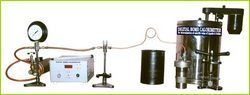

Price:
- 50
- 100
- 200
- 250
- 500
- 1000+

More Products in Oil & Petroleum Testing Instruments Category
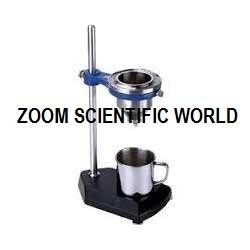
Flowcup Viscometer
Price 101 INR / Unit
Minimum Order Quantity : 1 Unit
Usage : Laboratory
Product Type : Viscometer
Color : Silver And Black
Material : Stainless Steel
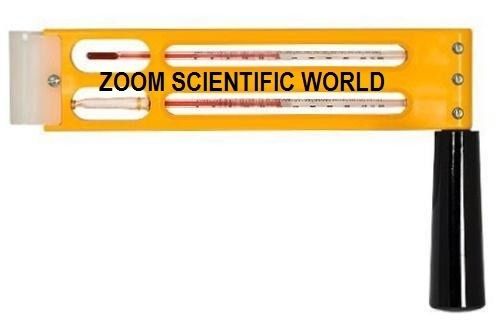
Whirling Hygrometer
Price 10 INR / Piece
Minimum Order Quantity : 1 , Piece
Usage : Pharmaceutical
Product Type : Hygrometer
Color : Yellow
Material : Pinewood frame
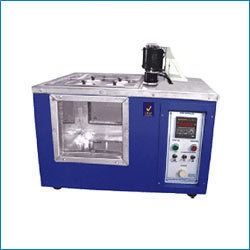
Kinematic Viscometer Bath
Price 120 INR / Unit
Minimum Order Quantity : 1 Unit
Usage : labortory
Product Type : Viscometer Bath
Color : White And Blue
Material : Mild Steel
Distillation Apparatus
Price 140 INR / Unit
Minimum Order Quantity : 1 Unit
Usage : labortory
Product Type : Apparatus
Color : White And Black
Material : Stainless Steel

GST : 06ALAPA6623N1Z8

- 4537/1 A, Bldg. 13, Deepak Market, Ist Ambala - 133001, Haryana, India
- Phone : 08045478393
- Export Import Code (IEC code) - 3312001811
SSI No. - 060021100476

- Mr Sahil Aggarwal (GENERAL MANAGER)
- Mobile : 08045478393

|



Developed and Managed by Infocom Network Private Limited.
