




 Send Inquiry
L.C.R. Bridge
Price 112 INR/ Unit
L.C.R. Bridge Specification
- Usage
- For Laboratory
- Product Type
- L.C.R. Bridge
- Color
- White
- Voltage
- 220 Volt (v)
- Material
- Aluminium Alloy
- Measurement Range
- Wide Range for L, C, and R values as per model
- Knob Type
- Precision Rotary Switches
- Operating Temperature
- 10C to 40C
- Frequency Range
- Typically operates at 1 kHz to 10 kHz
- Balance Detector
- Integrated Galvanometer
- Operational Mode
- Manual Balancing
L.C.R. Bridge Trade Information
- Minimum Order Quantity
- 1 Unit
- Payment Terms
- Cash in Advance (CID), Cash Advance (CA)
- Supply Ability
- 100 Units Per Week
- Delivery Time
- 1 Week
- Sample Available
- Yes
- Sample Policy
- Sample costs shipping and taxes has to be paid by the buyer
- Main Export Market(s)
- Western Europe, Australia, North America, Eastern Europe, Central America, Middle East, South America, Asia, Africa
- Main Domestic Market
- All India
L.C.R. Bridge About
L.C.R. Bridge Fully Solid state instrument, workable on 220 V 50 Hz or on 9 Volts Battery, useful for the wide range measurement of Resistance, Capacitance and Inductance. Dimension 14"x9"x5". |
Versatile L.C.R. Measurement
The L.C.R. Bridge offers a wide measurement range for inductance, capacitance, and resistance, catering to the needs of laboratories and technical institutions. Its compatibility with various electrical components makes it indispensable for detailed circuit analysis, quality control, and educational experimentation. Accurate readings ensure your research and instructional outcomes are reliable and consistent.
Robust Construction & Reliable Operation
Built from high-grade aluminium alloy, the L.C.R. Bridge stands up to the demands of frequent laboratory use. The integrated galvanometer provides clear balance detection, while precision rotary switches simplify operation. Capable of functioning smoothly from 10C to 40C and with a standard 220 Volt power supply, it provides stability and safety across diverse environments.
FAQs of L.C.R. Bridge:
Q: How is the L.C.R. Bridge used in a laboratory setting?
A: The L.C.R. Bridge is primarily used to accurately determine the values of inductance, capacitance, and resistance in electrical components. Set the frequency, connect the component, balance manually using the rotary switches, and read the value as indicated.Q: What is the benefit of manual balancing in this L.C.R. Bridge?
A: Manual balancing gives users greater control and precision in measurements, allowing for more accurate results, especially in research and instructional settings where fine tuning is essential.Q: Where can the L.C.R. Bridge be effectively utilized?
A: This device is commonly used in physics and electronics laboratories, academic institutions for teaching purposes, and industrial settings for quality testing and component analysis.Q: What temperature range is safe for operating the L.C.R. Bridge?
A: The bridge operates safely and accurately within a temperature range of 10C to 40C, ensuring stable performance in most laboratory environments.Q: What is the construction material and why is it important?
A: The body is made of aluminium alloy, which provides durability, corrosion resistance, and reliability during continuous usage.Q: Which detection and adjustment methods are incorporated?
A: It features an integrated galvanometer for balance detection and precision rotary switches for fine manual adjustment, ensuring accurate and repeatable measurements.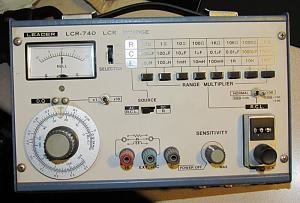

Price:
- 50
- 100
- 200
- 250
- 500
- 1000+

More Products in Engineering Electronics College Products Category
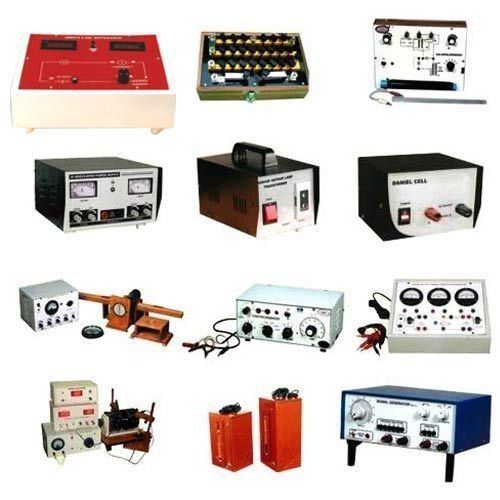
Electronic Instruments
Price 1950.0 INR / Unit
Minimum Order Quantity : 1 Unit
Product Type : Instruments
Voltage : 230 Volt (v)
Material : Stainless Steel
Color : Red And WhiteAnd Blue
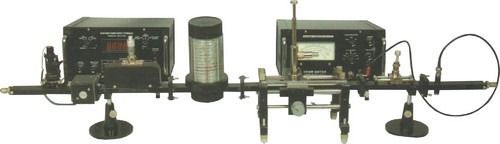
To Measure Dielectric Constant Of Solid And Liquid
Price 45500.0 INR / Unit
Minimum Order Quantity : 1 Unit
Product Type : Measure Dielectric Constant
Voltage : 110220 Volt (v)
Material : Metal
Color : Silver And Black
Ultrasonic Interferometer or Liquids
Price 110 INR / Unit
Minimum Order Quantity : 1 Unit
Product Type : Interferometer
Voltage : 220 Volt (v)
Material : Mild Steel
Color : White And Black
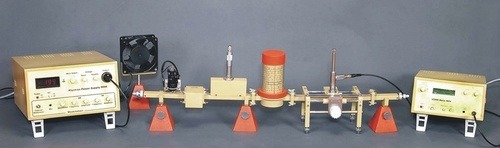
To Study Of Gunn Diode Microwave Test Bench
Price 109 INR / Unit
Minimum Order Quantity : 1 Unit
Product Type : Microwave Test Bench
Voltage : 110220 Volt (v)
Material : Stainless steel
Color : White

GST : 06ALAPA6623N1Z8

- 4537/1 A, Bldg. 13, Deepak Market, Ist Ambala - 133001, Haryana, India
- Phone : 08045478393
- Export Import Code (IEC code) - 3312001811
SSI No. - 060021100476

- Mr Sahil Aggarwal (GENERAL MANAGER)
- Mobile : 08045478393

|



Developed and Managed by Infocom Network Private Limited.
