




 Send Inquiry
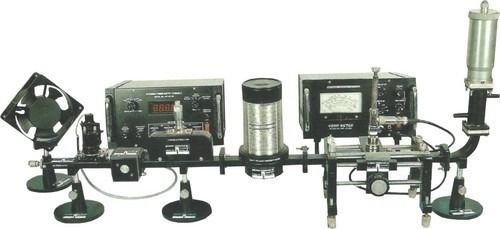
Study Of Microwave Test Bench Universal Model
Price 143 INR/ Unit
Study Of Microwave Test Bench Universal Model Specification
- Usage
- For Laboratory
- Product Type
- Microwave Test Bench
- Color
- Silver And Black
- Voltage
- 230 Volt (v)
- Material
- Metal
- Signal Source
- Gunn Oscillator or Klystron (as specified)
- Waveguide Components
- Comprehensive set included (Slotted line, Detector, Frequency Meter, etc.)
- Measurement Parameters
- VSWR, Attenuation, Frequency, Power, Wavelength
- Operating Temperature
- 0C to 50C
- Detectors
- Crystal Detector, Mounts Provided
- Safety
- Fused and overload protected
- Moveable Components
- Precise linear movement with micrometer scale
Study Of Microwave Test Bench Universal Model Trade Information
- Minimum Order Quantity
- 1 Unit
- Payment Terms
- Cash in Advance (CID), Cash Advance (CA)
- Supply Ability
- 100 Units Per Week
- Delivery Time
- 1 Week
- Sample Available
- Yes
- Sample Policy
- Sample costs shipping and taxes has to be paid by the buyer
- Main Export Market(s)
- Australia, Middle East, Central America, South America, Western Europe, Asia, Eastern Europe, North America, Africa
- Main Domestic Market
- All India
Study Of Microwave Test Bench Universal Model About
Study of microwave test bench universal model
Experiments:
- To study the characteristics of reflex klystron & Gunn Diode.
- To study frequency, guide wavelength & free space wave length.
- Top measure SWR & reflection coefficient. & impedance of a load.
- To measure polar pattern & gain of antennas.
- To measure the dielectric constant of Liquid & Solid cells
- To measure phase shift & "Q" of a cavity
- To study Magic Tee. E & H Plane Tee, Directional Coupler. Isolators Circulators & Return Loss Measurement.
Component Name | Qty. |
Klystron power supply | 1 |
Gunn Power Supply | 1 |
Pin Modulator | 1 |
Frequency Meter | 1 |
Slotted Section | 1 |
Detector Mount | 1 |
Matched Termination | 1 |
Stand | 4 |
BNC Cable | 3 |
Fixed Short | 1 |
Pyramidal Horn | 2 |
Parabolic Disc | 1 |
Bends E & H Plane | 1 |
Liquid Dielectric Cell | 1 |
Fixed Attenuator | 2 |
Circulator | 1 |
Klystron Mount & Tube | 1 |
Gunn Oscillator | 1 |
Isolator | 1 |
Variable Attenuator | 1 |
Tunable Probe | 1 |
Movable Short | 1 |
VSWR Meter Solid State | 1 |
S S Tunner | 1 |
Cooling Fan | 1 |
Radiation Pattern Turn table | 1 |
Coaxial to Wave Guide Adopter | 1 |
Comprehensive Microwave Education
This universal test bench provides all necessary waveguide accessories and modules for teaching, demonstrating, and testing core microwave principles. Learners can investigate attenuation, frequency, and power with real-time measurements, building a strong conceptual foundation.
Safe and Durable Laboratory Use
Constructed from high-quality metal with fused and overload protection, the bench is designed for long-term safety and reliability. Its robust components withstand repeated educational or research use, ensuring consistent results even in demanding environments.
Precision and Versatility in Measurement
The system features a micrometer scale for precise linear movement, enabling highly accurate measurements of microwave parameters. Whether analyzing VSWR, frequency, power, or wavelength, users benefit from seamless adjustment and reliable data collection.
FAQs of Study Of Microwave Test Bench Universal Model:
Q: How is the Study Of Microwave Test Bench Universal Model used in laboratory experiments?
A: The test bench is utilized for experiments involving microwave measurements such as VSWR, attenuation, frequency, power, and wavelength. Students and researchers assemble the waveguide components and use the signal source (Gunn Oscillator or Klystron) to conduct various tests and analyses.Q: What benefits does this universal microwave test bench offer to educational institutions?
A: It offers a hands-on approach to learning fundamental and advanced microwave principles. The comprehensive set of waveguide accessories and precise measuring capabilities make it an invaluable educational resource for both teaching and research.Q: When should fused and overload protection features be considered during usage?
A: Safety features like fused and overload protection should always be verified before powering on the system. They help prevent electrical accidents and ensure the safe operation of the equipment in laboratory settings.Q: Where can this microwave test bench model be installed and operated?
A: The test bench is suitable for installation in laboratory environments such as universities, research institutes, or technical training centers. It operates reliably within ambient temperatures from 0C to 50C and requires a stable 230 Volt power supply.Q: What is the process for measuring microwave parameters with this apparatus?
A: Users assemble the included waveguide elements, set up the desired signal source, and utilize the detector and frequency meter to perform measurements. The micrometer scale enables precise adjustments and accurate data collection throughout the experiments.Q: How does the precise linear movement benefit measurements and analysis?
A: Precise linear movement with the micrometer scale allows for exact positioning of components, which is essential for achieving accurate readings of microwave parameters. This leads to reliable experimental results and better understanding of the underlying concepts.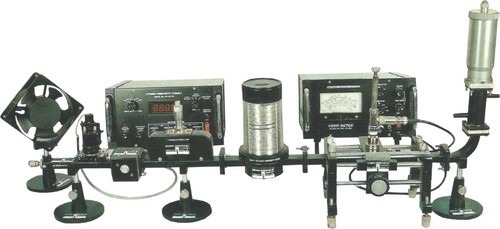

Price:
- 50
- 100
- 200
- 250
- 500
- 1000+

More Products in Engineering Electronics College Products Category
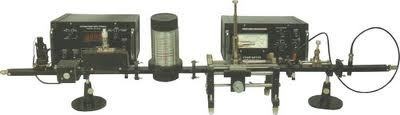
Study Of Microwave Component
Price 42500.0 INR / Unit
Minimum Order Quantity : 1 Unit
Product Type : Microwave Component
Usage : Laboratory
Color : Silver And Black
Voltage : 110220 Volt (v)
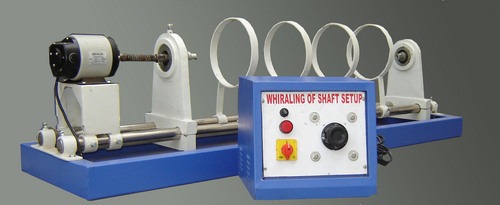
Whirling of Shaft Demonstrator
Price 34500.0 INR / Unit
Minimum Order Quantity : 1 Unit
Product Type : Demonstrator
Usage : Laboratory
Color : White And Blue
Voltage : 220 Volt (v)
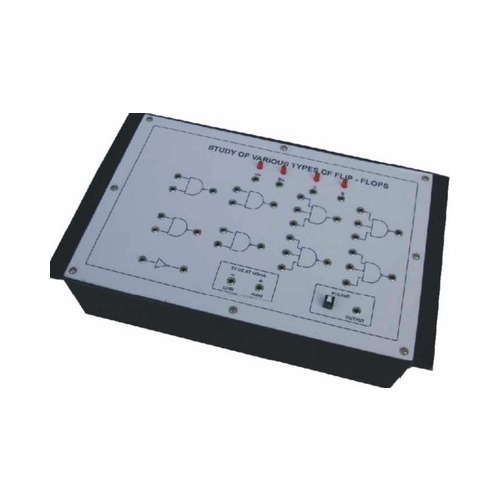
Logic Gates Experiment (Six in One)
Price 2950.0 INR / Unit
Minimum Order Quantity : 1 Unit
Product Type : Logic Gates Experiment
Usage : laboratory
Color : White And Black
Voltage : 110220 Volt (v)
To Measure The Polar Pattern Of The Antenna
Price 111 INR / Unit
Minimum Order Quantity : 1 Unit
Product Type : Measure The Polar Pattern
Usage : Laboratory
Color : Silver And Black
Voltage : 110220 Volt (v)

GST : 06ALAPA6623N1Z8

- 4537/1 A, Bldg. 13, Deepak Market, Ist Ambala - 133001, Haryana, India
- Phone : 08045478393
- Export Import Code (IEC code) - 3312001811
SSI No. - 060021100476

- Mr Sahil Aggarwal (GENERAL MANAGER)
- Mobile : 08045478393

|



Developed and Managed by Infocom Network Private Limited.
