




 Send Inquiry
Study Of Resistence In Parallel
Price 140 INR/ Unit
Study Of Resistence In Parallel Specification
- Usage
- For Laboratory
- Product Type
- Resistence In Parallel
- Color
- White
- Voltage
- 230 Volt (v)
- Material
- Stainless steel
- Resistor Value Indication
- Clearly marked on panel
- Panel Material
- Bakelite
- Number of Resistances
- Three or more (varies by model)
- Suitable For
- Physics and Electrical Engineering Experiments
- Safety
- Shock proof design
Study Of Resistence In Parallel Trade Information
- Minimum Order Quantity
- 1 Unit
- Payment Terms
- Cash in Advance (CID), Cash Advance (CA)
- Supply Ability
- 100 Units Per Week
- Delivery Time
- 1 Week
- Sample Available
- Yes
- Sample Policy
- Sample costs shipping and taxes has to be paid by the buyer
- Main Export Market(s)
- Australia, Eastern Europe, Western Europe, Middle East, Central America, South America, Asia, North America, Africa
- Main Domestic Market
- All India
Study Of Resistence In Parallel About
Study Of Resistence In Parallel
To verify properties of Resistence when connected in series & parallel. Instrument comprises of two moving coil meters to measure voltage & current, circuit diagram for series & parallel connections, Resistence mounted along with circuit diagram.
Robust Laboratory Design
Engineered with a combination of stainless steel for the base and Bakelite for the panel, this apparatus withstands frequent laboratory use while maintaining a secure, stable setup. The shock-proof feature further enhances laboratory safety for students and instructors.
Clear Panel Markings for Easy Learning
Each resistor value is visibly marked on the Bakelite panel, streamlining the process of circuit connection and measurement. These clear designations facilitate both demonstrations and independent student experimentation.
Supports Comprehensive Experimentation
With the ability to accommodate three or more resistors, the model allows for a wide range of parallel resistance configurations. This versatility makes it an excellent teaching tool for illustrating the behavior of electrical resistance in parallel circuits.
FAQs of Study Of Resistence In Parallel:
Q: How is the Study of Resistance in Parallel apparatus used in experiments?
A: The apparatus is used to connect multiple resistors in parallel on the Bakelite panel, then observe and measure the total resistance and current distribution using standard laboratory equipment. It supports hands-on learning of parallel circuit concepts.Q: What materials are used in the construction of the apparatus?
A: The apparatus is built with a stainless steel base for durability and a Bakelite panel, which ensures both insulation and safety during experiments.Q: When should this equipment be utilized in the curriculum?
A: This apparatus is ideal for physics or electrical engineering courses when introducing the topic of resistance in parallel circuits, typically after basic circuit theory instruction.Q: Where can this study apparatus be installed or set up?
A: It is designed for laboratory and classroom use, where it can be securely placed on a stable surface near a power source (230 Volt) for safe and effective demonstration.Q: What is the process of measuring resistance in a parallel setup using this device?
A: You connect the resistors as indicated on the panel, supply the circuit with 230V, and measure the current and voltage across each resistor and the total branch using a voltmeter and ammeter to calculate the resulting resistance.Q: What are the main benefits of using this parallel resistance study apparatus?
A: This tool enables safe, clear, and practical demonstration of parallel resistance concepts, supports hands-on experiments, and is robustly constructed for long-term use in educational environments.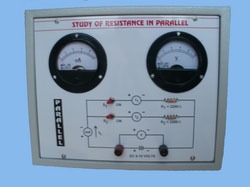

Price:
- 50
- 100
- 200
- 250
- 500
- 1000+

More Products in Engineering Electronics College Products Category
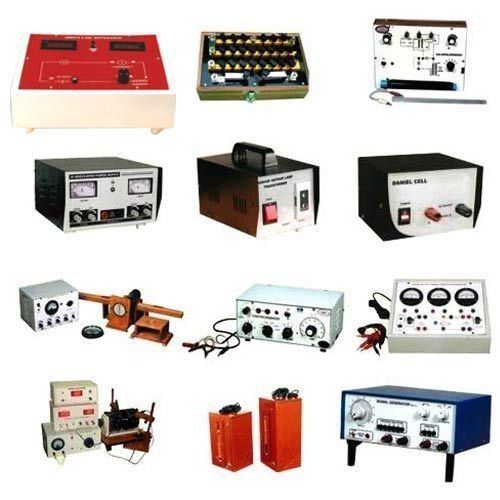
Electronic Instruments
Price 1950.0 INR / Unit
Minimum Order Quantity : 1 Unit
Product Type : Instruments
Material : Stainless Steel
Color : Red And WhiteAnd Blue
Usage : Laboratory
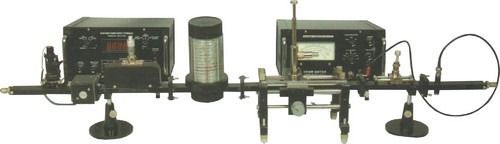
To Measure Dielectric Constant Of Solid And Liquid
Price 45500.0 INR / Unit
Minimum Order Quantity : 1 Unit
Product Type : Measure Dielectric Constant
Material : Metal
Color : Silver And Black
Usage : Laboratory
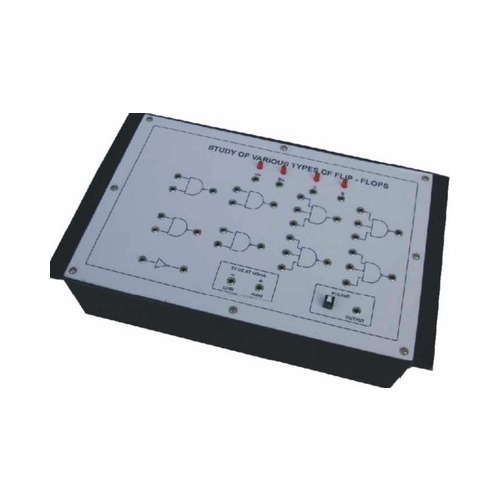
Logic Gates Experiment (Six in One)
Price 2950.0 INR / Unit
Minimum Order Quantity : 1 Unit
Product Type : Logic Gates Experiment
Material : Plastic, Metal
Color : White And Black
Usage : laboratory
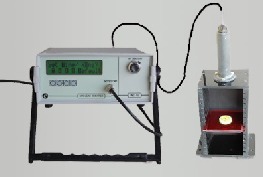
G.M.Counter
Price 140 INR / Unit
Minimum Order Quantity : 1 Unit
Product Type : G.M.Counter
Material : Stainless Steel
Color : White
Usage : Laboratory

GST : 06ALAPA6623N1Z8

- 4537/1 A, Bldg. 13, Deepak Market, Ist Ambala - 133001, Haryana, India
- Phone : 08045478393
- Export Import Code (IEC code) - 3312001811
SSI No. - 060021100476

- Mr Sahil Aggarwal (GENERAL MANAGER)
- Mobile : 08045478393

|



Developed and Managed by Infocom Network Private Limited.
